


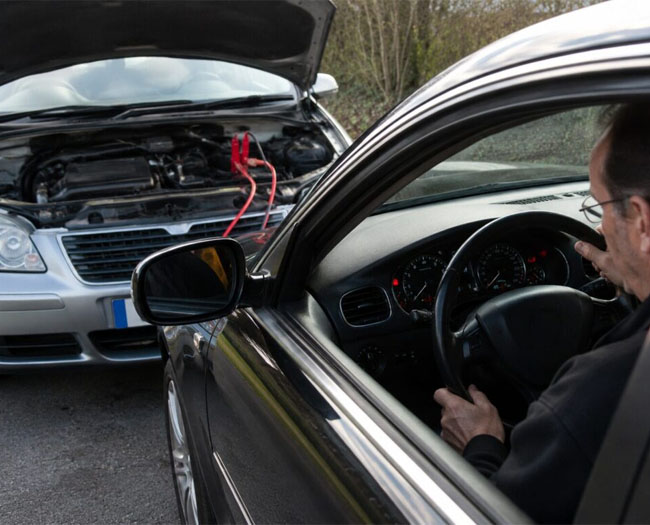
A flat car battery always seems to happen at the worst possible time.
You turn the key, press the start button, and instead of the engine firing into life, you get a click, a slow crank, or nothing at all.
The good news is that in many cases, a flat battery can be brought back to life with a set of jump leads or a portable jump starter pack.
The important part is knowing how to jump start a car safely, because connecting the leads in the wrong order can damage the battery, the vehicle’s electrical system, or put you at risk of injury.
This guide explains how to jump start a car with another vehicle, how to use a jump starter pack, what to check before you start, and what to do afterwards.
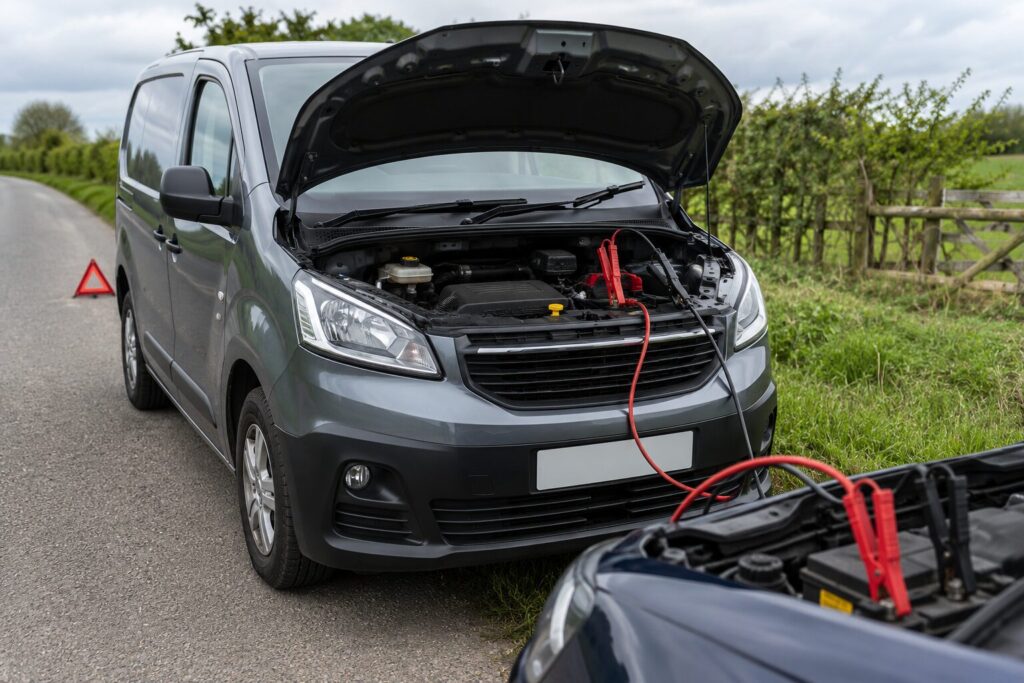
How To Jump Start A Car Quickly
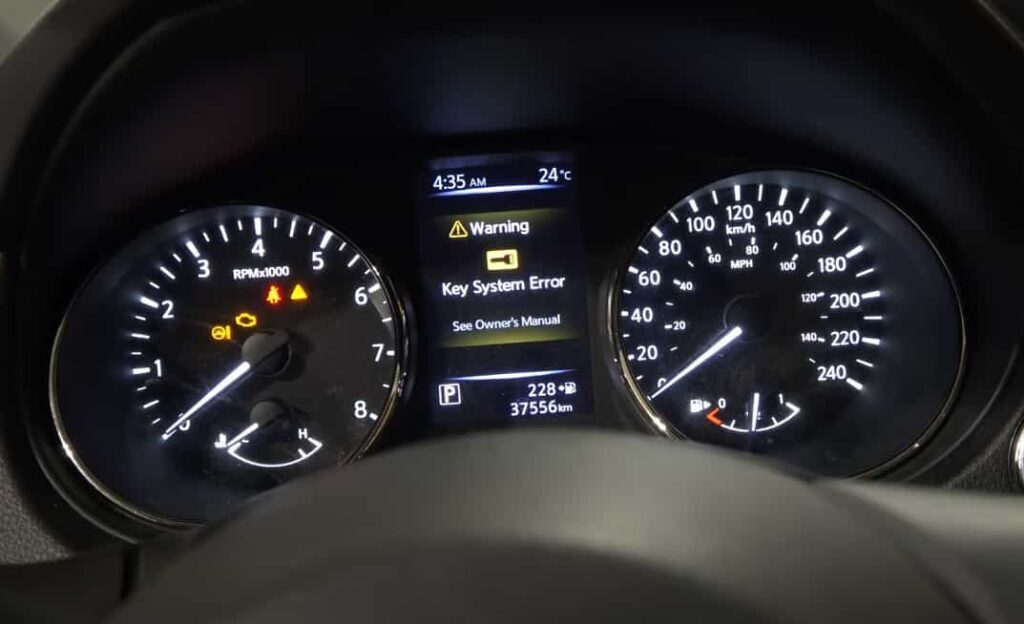
Signs Your Car Battery Is Flat
A flat battery is one of the most common reasons a car will not start.
It can happen after leaving lights on, using electrical accessories with the engine off, making lots of short journeys, or simply because the battery is old and no longer holding charge properly.
Common signs of a flat car battery include:
| Symptom | What It Usually Means |
|---|---|
| Clicking sound when turning the key | The battery has enough power for the relay, but not enough to start the engine |
| Engine turns over slowly | The battery is weak or low on charge |
| Dashboard lights flicker | The battery voltage may be too low |
| No lights or electrical power | The battery may be completely flat |
| Car starts after a jump but dies again later | The battery or alternator may need checking |
What Do You Need To Jump Start A Car?
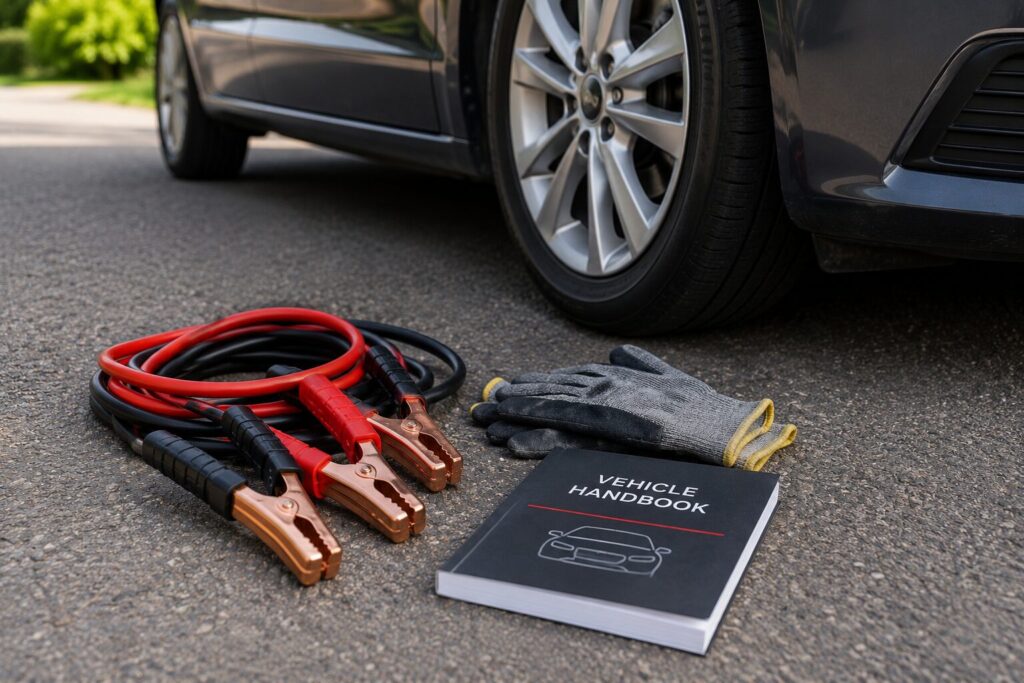
To jump start a car using another vehicle, you will need:
A set of jump leads
Another vehicle with a healthy 12V battery
Access to both vehicle batteries or jump start terminals
The vehicle handbook if you are unsure where the battery or terminals are
Safety gloves if available
Some modern vehicles have the battery hidden under a seat, in the boot, or behind covers.
In these cases, the car may have dedicated jump start points under the bonnet.
Always check the vehicle handbook if the battery is not easy to access.
Shop Related Categories
Safety Checks Before Jump Starting A Car
Before you connect anything, take a few minutes to check both vehicles and the surrounding area.
This is the part people often rush, but it is also the part that prevents expensive mistakes.
Check The Battery
Do not try to jump start a battery if it is cracked, leaking, swollen, frozen, or badly corroded.
A damaged battery can be dangerous and should be checked by a professional.
Check The Jump Leads
Make sure the jump leads are not damaged, split, melted, or showing exposed wire.
The clamps should be clean, secure, and strong enough to grip the battery terminals properly.
Check The Vehicles
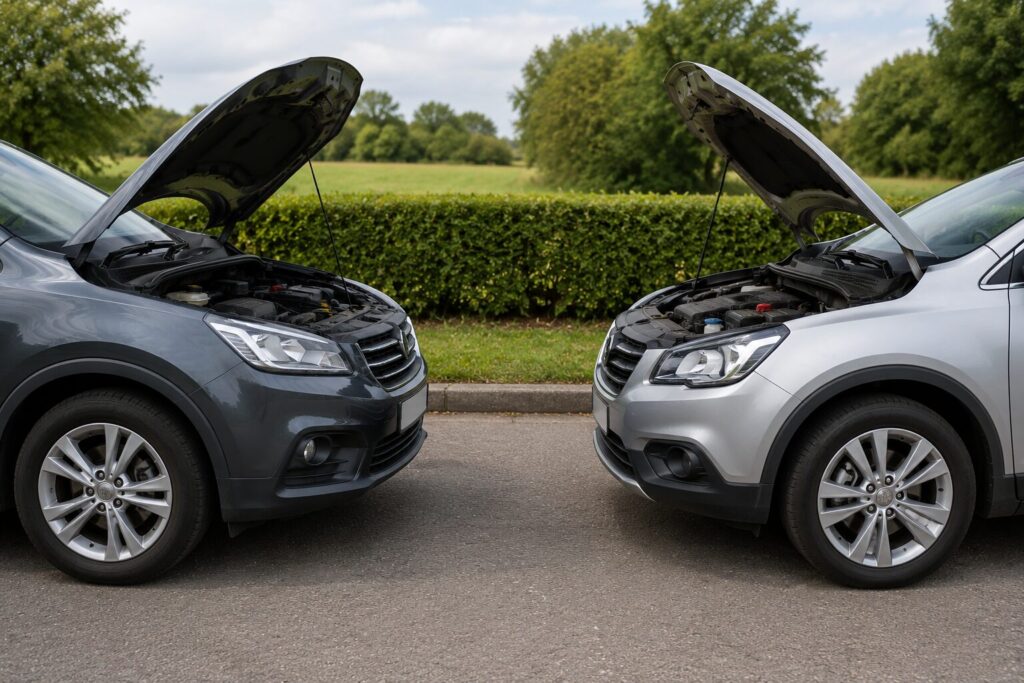
Both vehicles should be switched off before connecting the leads.
The vehicles should be close enough for the jump leads to reach, but they should not be touching.
Apply the handbrake on both vehicles and make sure both are in neutral or park.
Switch Everything Off
Turn off lights, heaters, radios, heated screens, chargers, and any other electrical accessories.
This reduces load on the battery and helps protect the vehicle electrics.
How To Jump Start A Car With Jump Leads
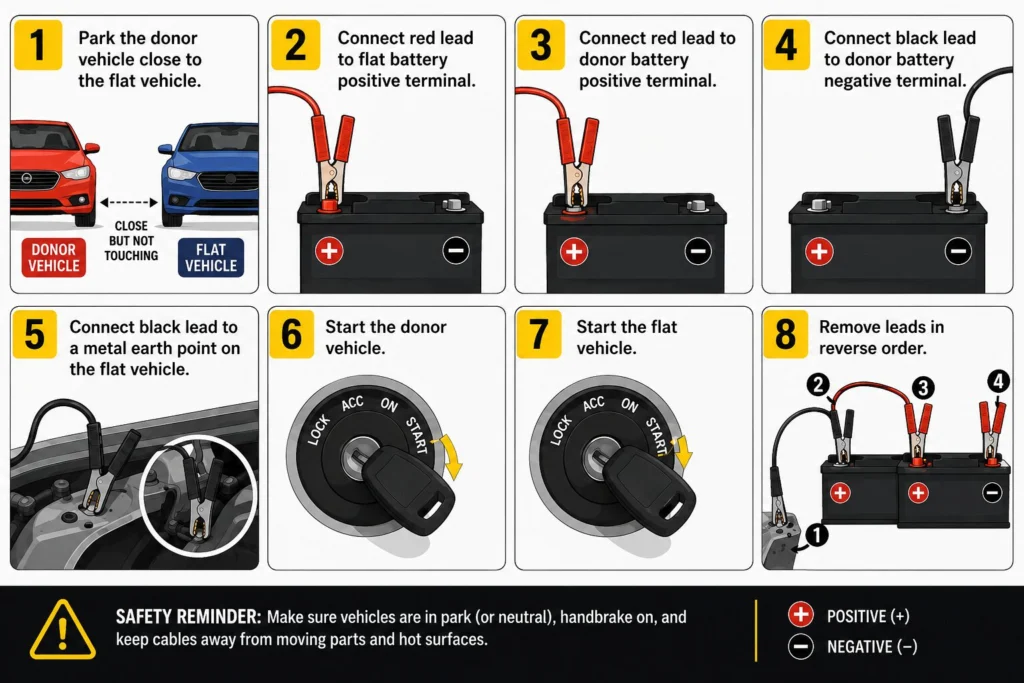
Follow these steps carefully and connect the leads in the correct order.
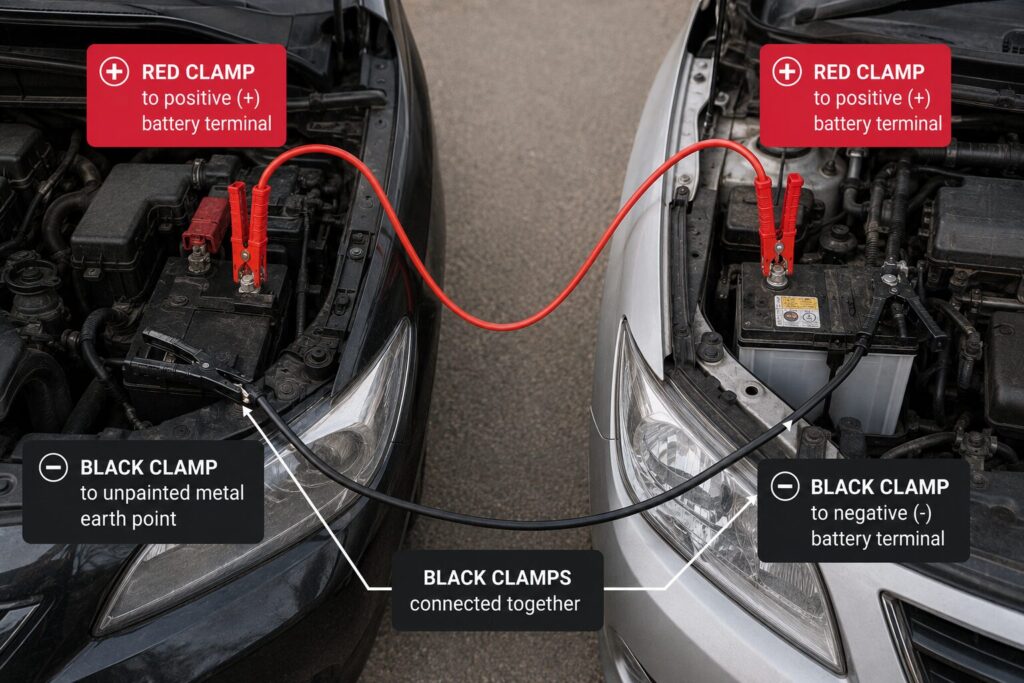
The red lead is for the positive terminals.
The black lead is for the negative terminal and earth point.
Step 1: Position Both Vehicles Safely
Park the working vehicle close enough to the flat vehicle so the jump leads can reach both batteries.
Make sure the vehicles are not touching each other.
Switch both engines off and apply both handbrakes.
Step 2: Connect The Red Lead To The Flat Battery
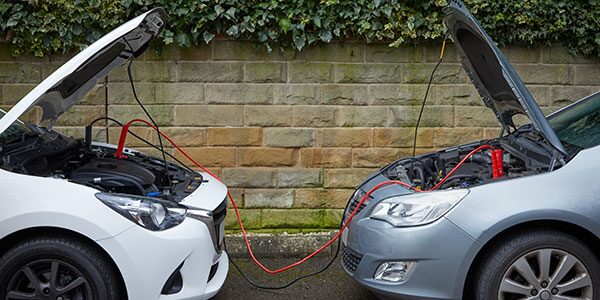
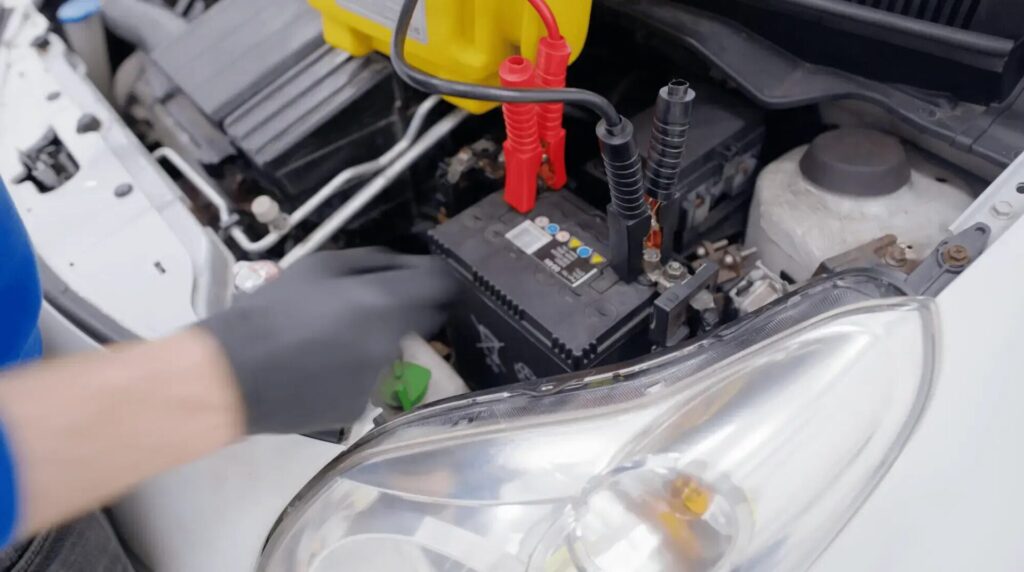
Attach one end of the red jump lead to the positive terminal on the flat battery.
The positive terminal is usually marked with a plus symbol.
Make sure the clamp is secure and not touching any other metal part.
Step 3: Connect The Other Red Clamp To The Working Battery
Attach the other end of the red jump lead to the positive terminal on the working battery.
Again, check that the clamp is secure.
Step 4: Connect The Black Lead To The Working Battery
Attach one end of the black jump lead to the negative terminal on the working battery.
The negative terminal is usually marked with a minus symbol.
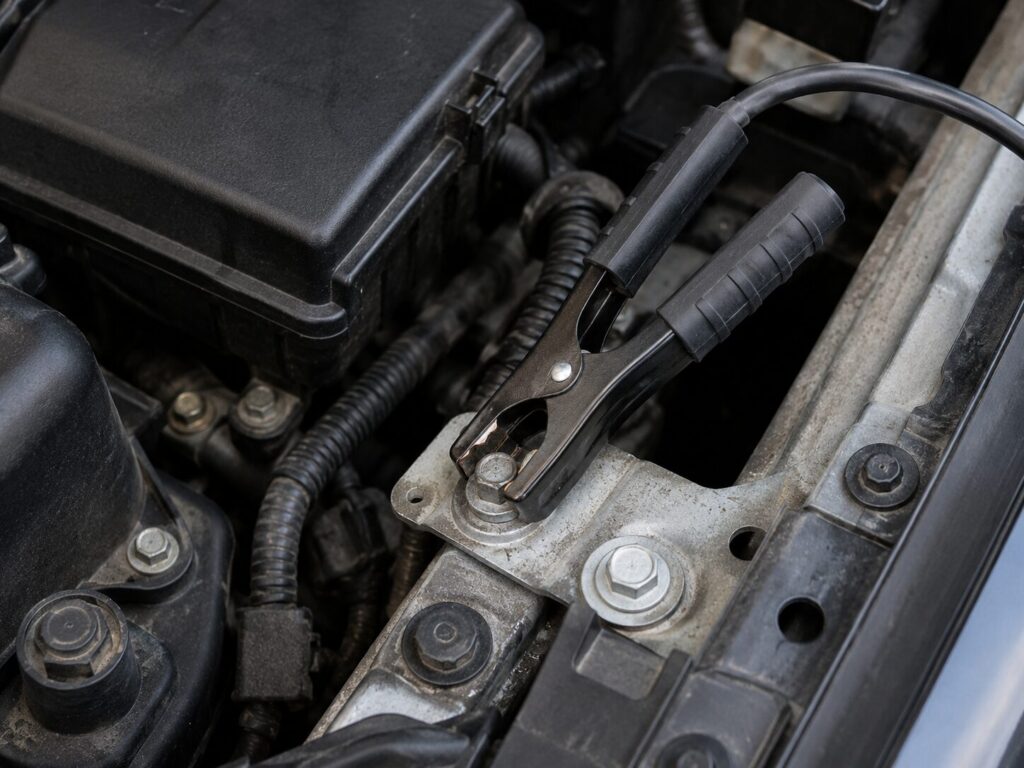
Step 5: Connect The Final Black Clamp To An Earth Point
Attach the final black clamp to a clean, unpainted metal point on the engine block or chassis of the vehicle with the flat battery.
Do not connect this final clamp directly to the negative terminal of the flat battery unless the vehicle handbook specifically tells you to.
Using an earth point away from the battery helps reduce the risk of sparks near the battery.
Correct Jump Lead Connection Order
| Order | Connection |
|---|---|
| 1 | Red lead to positive terminal on flat battery |
| 2 | Red lead to positive terminal on working battery |
| 3 | Black lead to negative terminal on working battery |
| 4 | Black lead to clean metal earth point on the flat vehicle |
Starting The Car
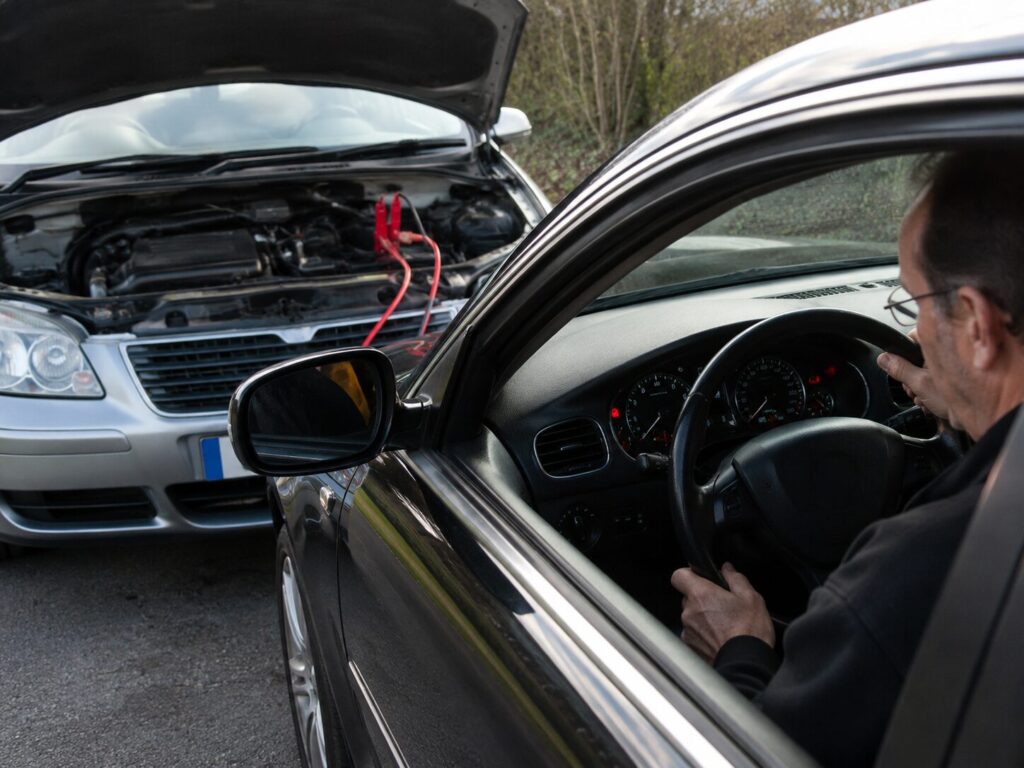
Once the jump leads are connected, start the engine of the working vehicle.
Let it run for a few minutes to send charge through to the flat battery.
After a few minutes, try starting the vehicle with the flat battery.
If it starts, leave both vehicles running for a short time.
If it does not start straight away, wait a couple more minutes and try again.
Do not keep cranking the engine repeatedly, as this can put strain on the starter motor.
How To Remove Jump Leads Safely
Once the flat vehicle is running, remove the jump leads in the reverse order.
Take care not to let the clamps touch each other while they are still connected.
| Order | Removal Step |
|---|---|
| 1 | Remove the black clamp from the earth point on the recovered vehicle |
| 2 | Remove the black clamp from the negative terminal on the working vehicle |
| 3 | Remove the red clamp from the positive terminal on the working vehicle |
| 4 | Remove the red clamp from the positive terminal on the recovered vehicle |
Once the leads are removed, keep the recovered vehicle running.
Do not switch it off immediately.
What Should You Do After Jump Starting A Car?
After the car has been jump started, the battery needs time to recharge.
Drive the vehicle for at least 20 to 30 minutes if possible.
Avoid stopping the engine straight away, because the battery may not have enough charge to start the car again.
If the car starts fine afterwards, the battery may simply have been drained by lights, cold weather, or short journeys.
If it goes flat again the next day, the battery may be worn out or there may be an alternator or charging fault.
| What Happens Next | Likely Cause |
|---|---|
| Car starts and runs normally | Battery was temporarily drained |
| Battery goes flat again soon | Battery may need replacing |
| Car starts but warning lights stay on | Charging system may need checking |
| Car will not start even with jump leads | Battery, starter motor, alternator, or electrical fault possible |
How To Jump Start A Car With A Portable Jump Starter Pack
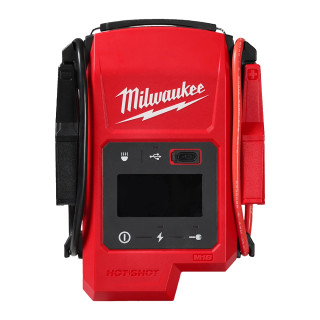
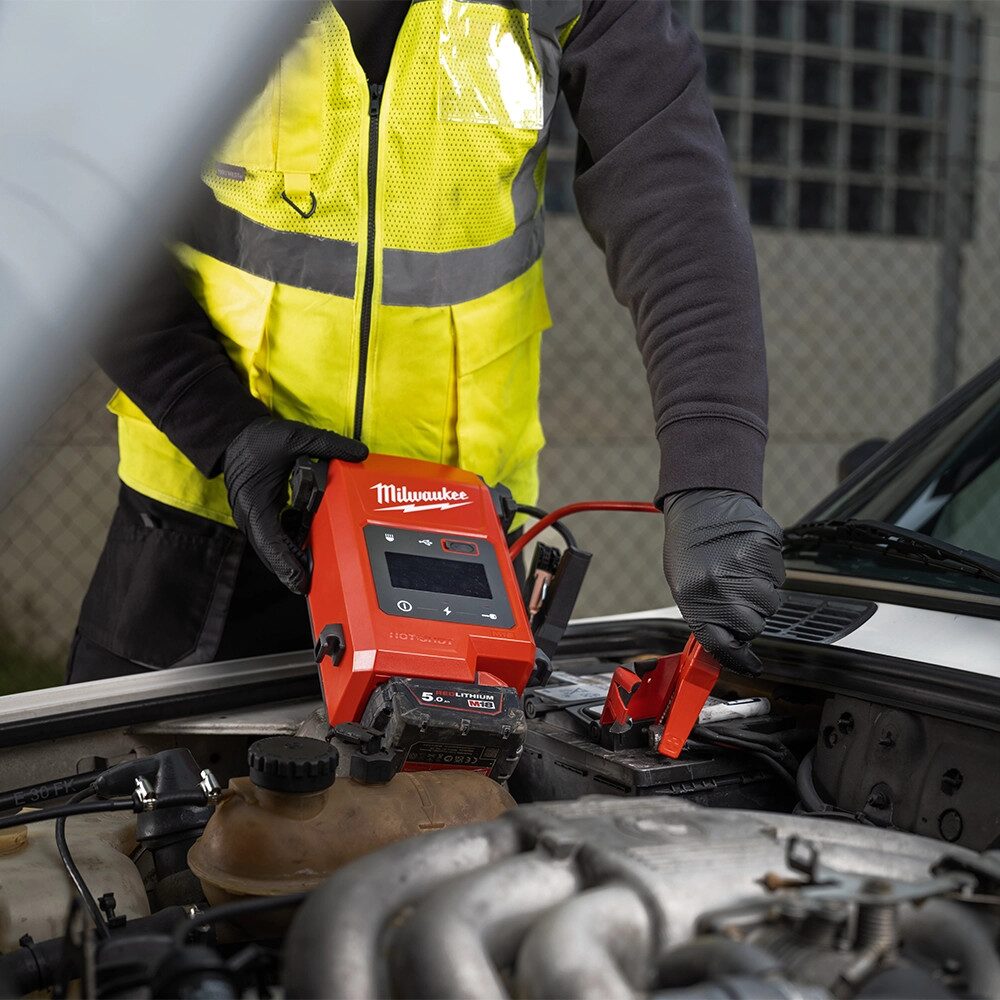
A portable jump starter pack is useful because you do not need another vehicle.
This makes it a good option to keep in a van, work vehicle, or car, especially during winter.
Before using one, make sure the jump starter pack is charged and suitable for your vehicle.
Always follow the instructions supplied with the jump starter.
Step 1: Switch The Vehicle Off
Turn the ignition off and switch off all electrical accessories.
Step 2: Connect The Red Clamp
Connect the red clamp from the jump starter pack to the positive terminal on the battery.
Step 3: Connect The Black Clamp
Connect the black clamp to a suitable earth point or the negative terminal, depending on the jump starter instructions and vehicle handbook.
Step 4: Turn On The Jump Starter Pack
Switch on the jump starter pack and wait for the ready indicator if it has one.
Step 5: Start The Vehicle
Try to start the vehicle.
If it starts, leave the engine running.
Step 6: Disconnect The Pack
Switch off the jump starter pack and remove the clamps in the correct order.
Remove the black clamp first, then the red clamp.
Jump Leads Or Jump Starter Pack: Which Is Better?
| Option | Best For | Main Benefit |
|---|---|---|
| Jump leads | When another vehicle is available | Simple, affordable, and easy to store |
| Portable jump starter pack | When you are on your own | Does not need another vehicle |
| Battery charger | Charging a battery at home or in a workshop | Gives the battery a fuller recharge |
| Battery maintainer | Vehicles parked for long periods | Helps stop the battery going flat |
Jump leads are a good basic item to keep in a vehicle.
A jump starter pack is more convenient if you often work alone, drive early mornings, or keep tools and accessories running from your vehicle.
A battery charger is better if the vehicle is parked at home or in a workshop and the battery needs a proper charge.
Can You Jump Start A Diesel Car?
Yes, most diesel cars and vans can be jump started in the same way as petrol vehicles, as long as the battery system is compatible.
Diesel engines can need more power to start, especially in cold weather, so use good quality jump leads or a jump starter pack with enough starting power for the vehicle.
If you are jump starting a large van, pickup, or commercial vehicle, check the battery rating and the jump starter specification first.
Can You Jump Start A Hybrid Or Electric Vehicle?
Hybrid and electric vehicles can be more complicated.
Some hybrids have a 12V battery that can be jump started, but the process may be different from a normal petrol or diesel vehicle.
Electric vehicles should not be treated like standard combustion engine vehicles when it comes to jump starting.
Always check the vehicle handbook before attempting to jump start a hybrid or electric vehicle.
If you are unsure, call a breakdown service or professional mechanic.
Common Jump Starting Mistakes To Avoid
Connecting The Leads In The Wrong Order
Always connect the red positive lead first, then the black lead.
The final black clamp should usually go to a clean metal earth point on the flat vehicle.
Letting The Clamps Touch
Do not let the metal clamps touch each other while connected to a battery.
This can cause sparks, damage, or injury.
Using Damaged Jump Leads
Damaged, thin, or poor quality jump leads can overheat or fail to transfer enough power.
Use suitable leads for the vehicle you are trying to start.
Trying To Jump Start A Damaged Battery
Never jump start a leaking, cracked, swollen, or frozen battery.
Get professional help instead.
Switching The Car Off Too Soon
If you switch the vehicle off straight after jump starting it, the battery may still be too flat to restart.
Let it run and drive it for at least 20 to 30 minutes where possible.
Why Did My Car Battery Go Flat?
A flat battery does not always mean the battery is faulty.
Common causes include:
Leaving headlights or interior lights on
Leaving a dash cam, radio, or charger running
Lots of short journeys
Cold weather
A vehicle sitting unused for a long time
Old battery no longer holding charge
Faulty alternator
Electrical drain from a fault or accessory
If the battery keeps going flat, it is worth getting the battery and charging system tested.
How To Prevent A Flat Car Battery
There are a few simple ways to reduce the chance of a flat battery.
Drive the vehicle regularly, especially in cold weather.
Avoid using lights, heaters, and accessories for long periods with the engine off.
Keep the battery terminals clean and secure.
Use a battery charger or maintainer if the vehicle is parked for long periods.
Replace the battery when it becomes weak or unreliable.
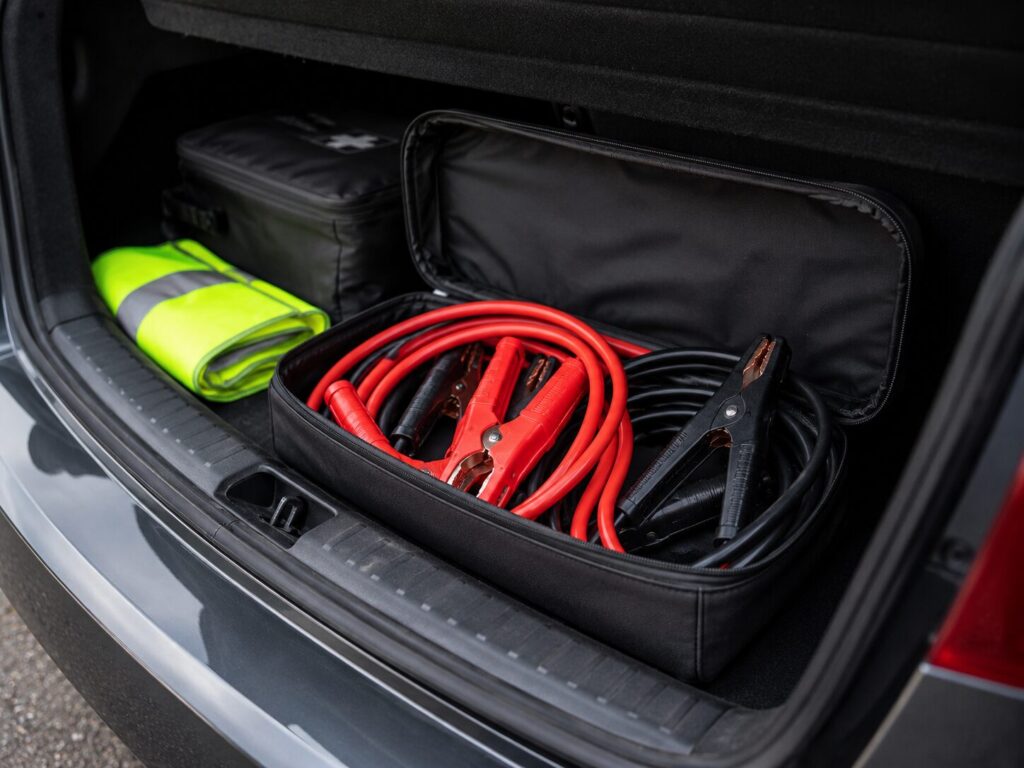
Keep jump leads or a jump starter pack in the vehicle for emergencies.
FRequently asked questions
How long should I leave a car running after a jump start?
You should keep the car running and ideally drive it for at least 20 to 30 minutes after a jump start. This gives the alternator time to put some charge back into the battery.
Can jump starting damage a car?
Jump starting can damage a car if the leads are connected incorrectly, the battery is damaged, or the wrong equipment is used. When done properly with suitable jump leads or a suitable jump starter pack, it is a common way to start a vehicle with a flat battery.
Why will my car not start even with jump leads?
If the car will not start with jump leads, the battery may be completely dead, the jump leads may not be making a good connection, or there may be a fault with the starter motor, alternator, immobiliser, or another part of the electrical system.
Can I jump start a car in the rain?
It may be possible to jump start a car in wet weather, but extra care is needed. Keep the connections secure, avoid standing in deep water, and do not use damaged leads. If conditions are unsafe, call for help.
Do I need to replace my battery after a jump start?
Not always. If the battery was only drained by leaving lights on, it may be fine after a proper recharge. If it keeps going flat, struggles to start the car, or is several years old, it may need replacing.
Can I use any car to jump start another car?
You should only use a suitable vehicle with a compatible battery system. Most petrol and diesel cars use 12V systems, but always check the vehicle handbook if you are unsure. Avoid using a hybrid or electric vehicle as the donor vehicle unless the manufacturer says it is safe.
Final Verdict
Knowing how to jump start a car is a useful skill for any driver.
Whether you drive a car, van, pickup, or work vehicle, a flat battery can leave you stuck at home, on site, or at the side of the road.
The key is to stay calm, check the battery and leads first, and connect everything in the correct order.
Use red for positive, connect the final black clamp to a safe earth point, start the donor vehicle first, and remove the leads in reverse order.
Once the car is running again, do not switch it off straight away.
Give the battery time to recharge, and if the problem keeps coming back, get the battery and charging system checked.
A good set of jump leads, a reliable jump starter pack, or a battery charger can save a lot of hassle when your battery lets you down.