


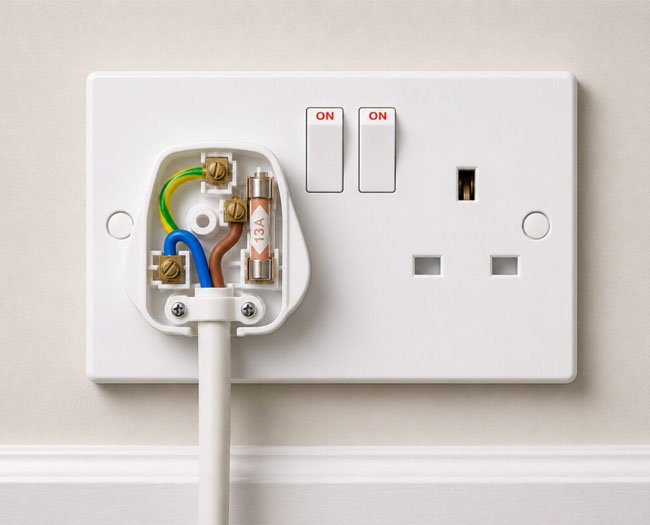
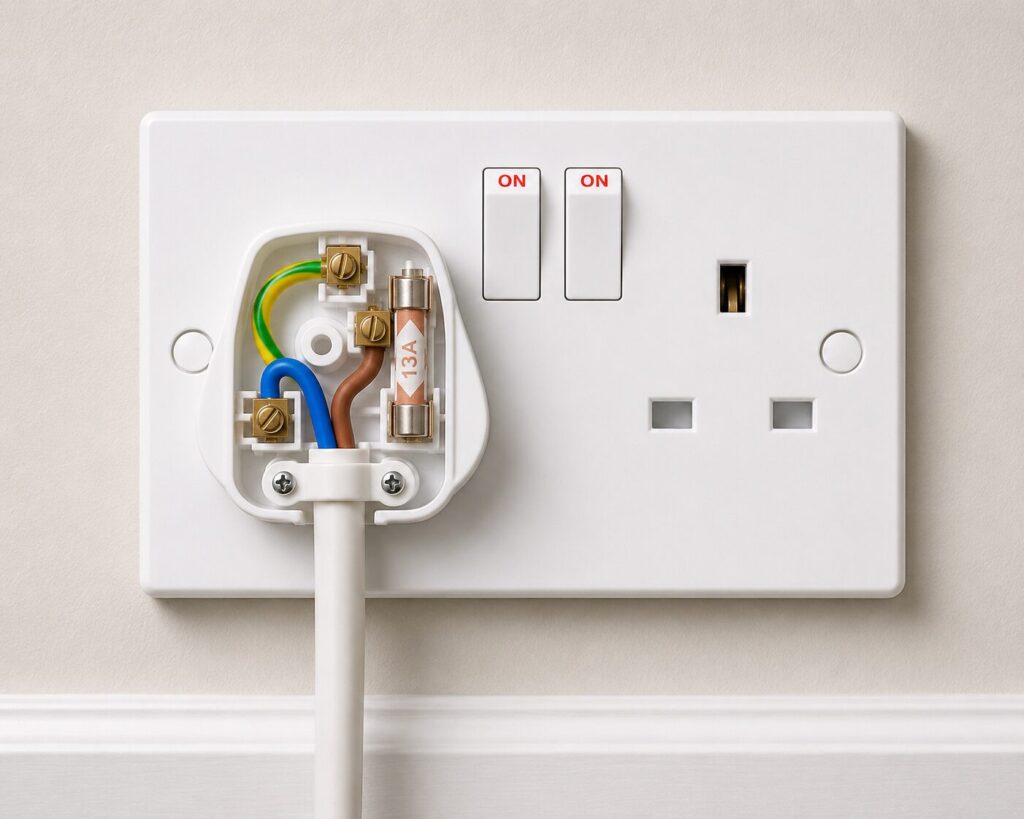
Understanding UK wiring colours is important whether you are replacing a plug, checking an old light fitting, working around existing cables or trying to understand what an electrician has found during a job.
Modern UK electrical wiring follows a standard colour system.
In a standard single phase circuit, brown is live, blue is neutral and green and yellow is earth.
Older UK wiring used different colours, which is why red, black and even plain green wires may still be found in older homes, workshops and commercial buildings.
This guide explains the current UK wiring colours, the old UK wiring colours, when the colour system changed, what each wire does and why you should never rely on colour alone when working with electrics.
Electrical work should always be carried out by a competent person.
If you are unsure, dealing with fixed wiring, or working on anything beyond basic identification, speak to a qualified electrician.
Important Safety Notice
Electrical wiring colours can help identify conductors, but colours alone should never be relied upon. Always isolate the supply and test before touching any wiring. If you are unsure, contact a qualified electrician.
UK Wiring Colours at a Glance
| Wire Function | Current UK Colour | Old UK Colour |
|---|---|---|
| Live | Brown | Red |
| Neutral | Blue | Black |
| Earth | Green and yellow | Green and yellow, plain green or other older colours |
For most modern domestic wiring, this is the main colour code to remember.
Brown is live.
Blue is neutral.
Green and yellow is earth.
Older wiring can still be perfectly common, especially in properties that have not been fully rewired since the colour changes came in.
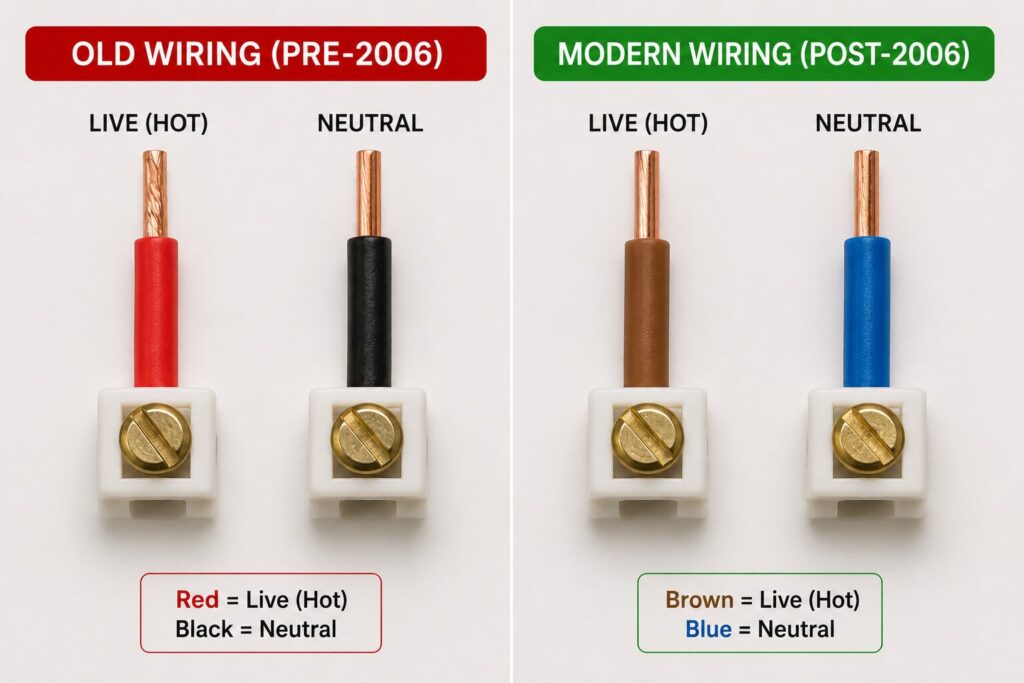
This is why a red wire is usually an old live wire, while a black wire is usually an old neutral wire in older single phase circuits.
When Did UK Wiring Colours Change?
UK wiring colours changed as part of a move to harmonise wiring standards with Europe.
The modern colour system is generally associated with the changeover period that ended in 2006.
Since then, new single phase UK mains wiring has used brown for live, blue for neutral and green and yellow for earth.
Before this, the UK commonly used red for live and black for neutral.
That older system was widely used between 1976 and 2006, which means plenty of homes and buildings still contain it today.
This does not automatically mean the wiring is unsafe.
It does mean anyone inspecting, maintaining or altering the circuit needs to understand that different colour systems may be present.
Current UK Wiring Colours
Modern UK single phase wiring uses three main conductor colours.
| Function | Colour |
|---|---|
| Live | Brown |
| Neutral | Blue |
| Earth | Green and yellow |
These colours are used to identify the role of each conductor in the circuit.
What Does the Brown Wire Mean?
The brown wire is the live wire in modern UK wiring.
The live wire carries electrical current from the power supply to the appliance, fitting or accessory being powered.
This is the conductor that should be treated with extreme caution because it can present a serious electric shock risk.
In older UK wiring, the live wire was usually red.
So, if you open an older fitting and see a red wire, it may be the old live conductor.
Never assume this without testing.
What Does the Blue Wire Mean?
The blue wire is the neutral wire in modern UK wiring.
The neutral wire completes the circuit by carrying current back towards the power source.
Although neutral is often misunderstood as being safe, it can still present a shock risk and should be treated with care.
In older UK wiring, the neutral wire was usually black.
This is where confusion can happen, because black is used as a live conductor in modern three phase wiring.
That is one of the biggest reasons colour alone should never be used as proof of what a wire does.
What Does the Green and Yellow Wire Mean?
The green and yellow wire is the earth wire.
The earth wire is a safety conductor.
Its job is to provide a safe path for electrical current if a fault occurs, helping protective devices disconnect the supply and reduce the risk of electric shock.
In modern wiring, earth is green and yellow.
In some older installations, earth may be plain green or may follow another older colour system.
The earth conductor should never be used as a live or neutral conductor.
Shop Related Categories



Old UK Wiring Colours
Older UK wiring colours are still found in many properties.
| Wire Function | Current Colour | 1976 to 2006 Colour | 1955 to 1976 Colour |
|---|---|---|---|
| Live | Brown | Red | Red |
| Neutral | Blue | Black | Black |
| Earth | Green and yellow | Green and yellow | Green, Green and yellow or Black |
The most common old UK wiring colours you are likely to see are red and black.
Red usually means live.
Black usually means neutral.
Green and yellow or plain green usually means earth.
However, the age of the installation, any previous alterations and the type of circuit can all affect what you are looking at.
A circuit should always be tested properly before any work is carried out.
Can Old and New Wiring Colours Be Mixed?
Yes, old and new wiring colours can be found in the same property.
This often happens after:
| Situation | Why Mixed Colours May Appear |
|---|---|
| Extension work | New wiring may be added to an older installation |
| Partial rewires | Only some circuits may be replaced |
| Consumer unit upgrades | Existing cables may be retained |
| Repairs or alterations | New cable may be joined to old cable |
| Renovation work | Different areas may have been wired at different times |
Mixed wiring colours can be confusing, especially where old red and black wiring meets modern brown and blue wiring.
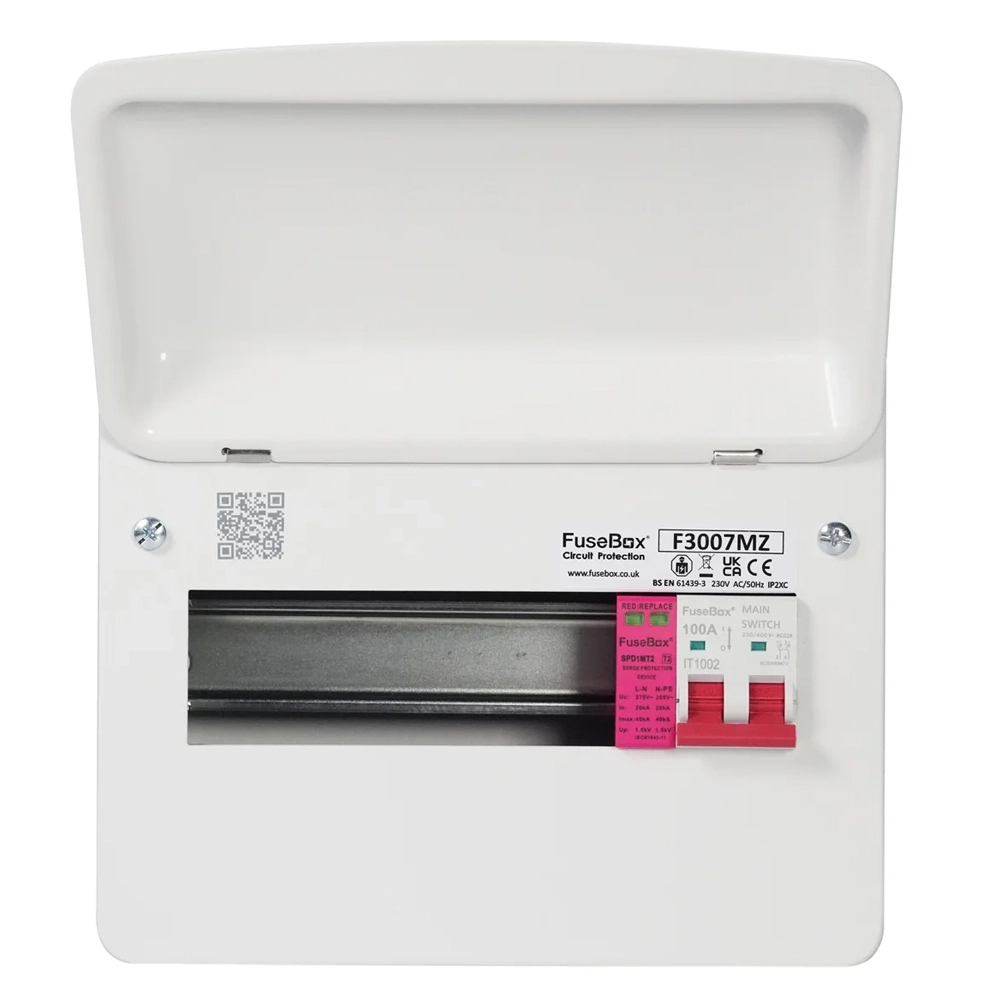
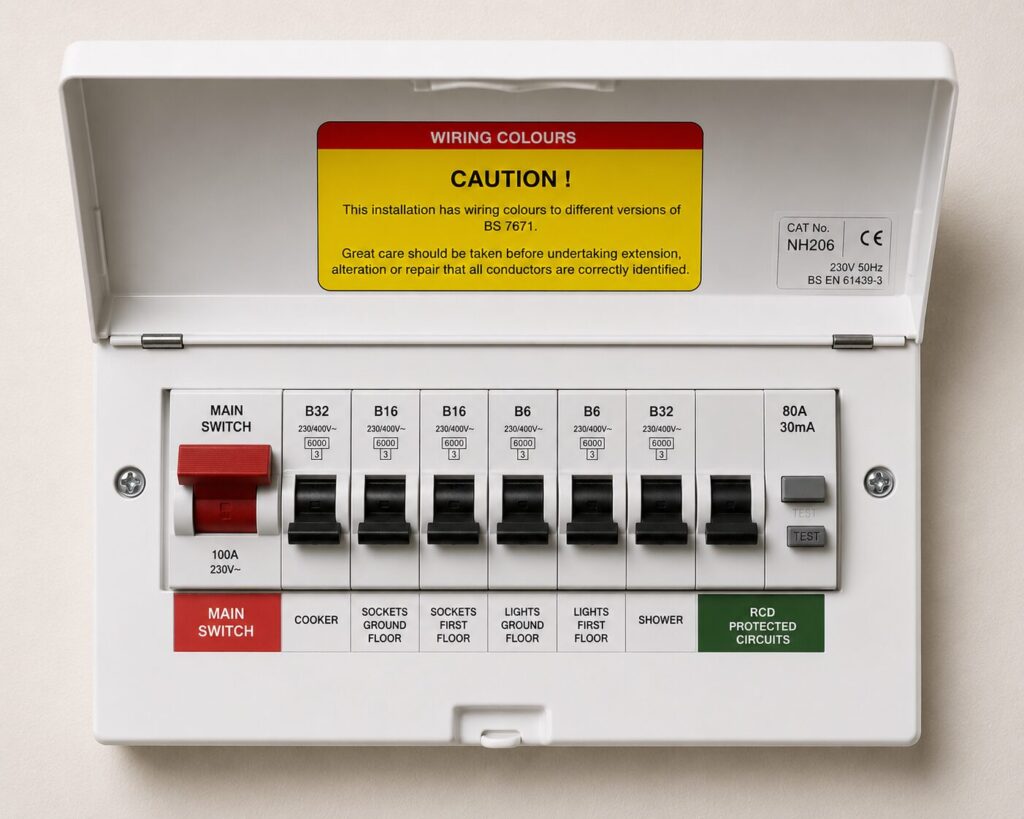
Where old and new wiring colours are present, electricians normally add a warning label at the consumer unit or distribution board to show that two versions of wiring colours exist in the installation.
UK Three Phase Wiring Colours
Three phase wiring is commonly used where a higher power load is needed, such as commercial buildings, workshops, industrial units and some large equipment installations.
Modern UK three phase wiring colours are:
| Function | Current Colour |
|---|---|
| Live Line 1 | Brown |
| Live Line 2 | Black |
| Live Line 3 | Grey |
| Neutral | Blue |
| Earth | Green and Yellow |
This is where black can cause confusion.
In older single phase wiring, black was commonly neutral.
In modern three phase wiring, black is a live conductor.
This is why anyone working with electrical wiring must understand the circuit type and test properly before making any assumptions.
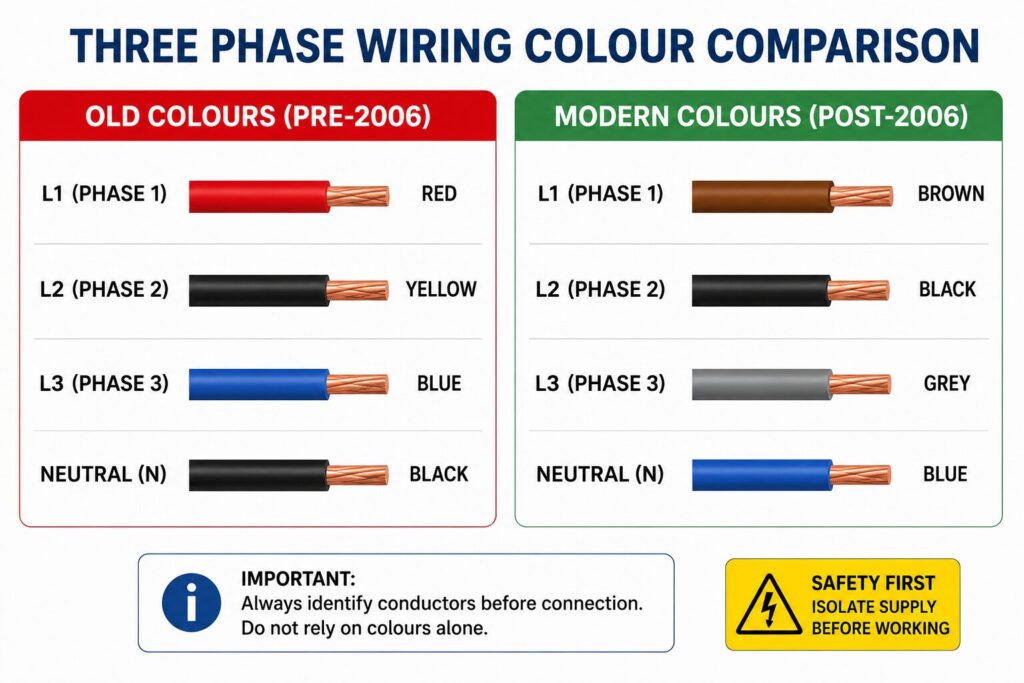
Old Three Phase Wiring Colours
Older three phase wiring used a different colour system.
| Function | Current Colour | Old Colour |
|---|---|---|
| Live Line 1 | Brown | Red |
| Live Line 2 | Black | Yellow |
| Live Line 3 | Grey | Blue |
| Neutral | Blue | Black |
| Earth | Green and Yellow | Green and Yellow |
This creates another possible point of confusion.
Blue is neutral in modern systems, but blue was previously used as a live line in older three phase wiring.
If you are dealing with three phase wiring, do not guess.
It should be checked by a qualified electrician using the correct testing equipment.
Is Black Wire Live or Neutral?
A black wire can be either live or neutral depending on the age and type of circuit.
In older single phase UK wiring, black was normally neutral.
In modern three phase wiring, black is live line 2.
In altered or incorrectly wired circuits, colour may not always match the conductor function.
This is one of the most important points in the whole guide.
Black does not always mean neutral.
Always test before touching or altering any electrical wiring.
Is Red Wire Live or Neutral?
In older UK single phase wiring, red is normally live.
Red was used as the live conductor before the current brown live wire system was introduced.
If you find red and black cable in an older property, red is usually live and black is usually neutral.
Again, this should be treated as a guide only.
Testing is essential.
What Colour Wire Goes to L and N?
In modern UK wiring:
| Terminal Marking | Wire Colour |
|---|---|
| L | Brown |
| N | Blue |
| Earth | Green and Yellow |
In older UK wiring:
| Terminal Marking | Wire Colour |
|---|---|
| L | Red |
| N | Black |
| Earth | Green and Yellow or Plain Green |
The L terminal is for live.
The N terminal is for neutral.
The earth terminal is usually marked with the earth symbol.
If the colours do not match what you expect, stop and get the circuit checked.
How to Identify Wiring Safely
Before inspecting any electrical circuit, safety comes first.
Do not work on live circuits unless you are qualified and authorised to do so.
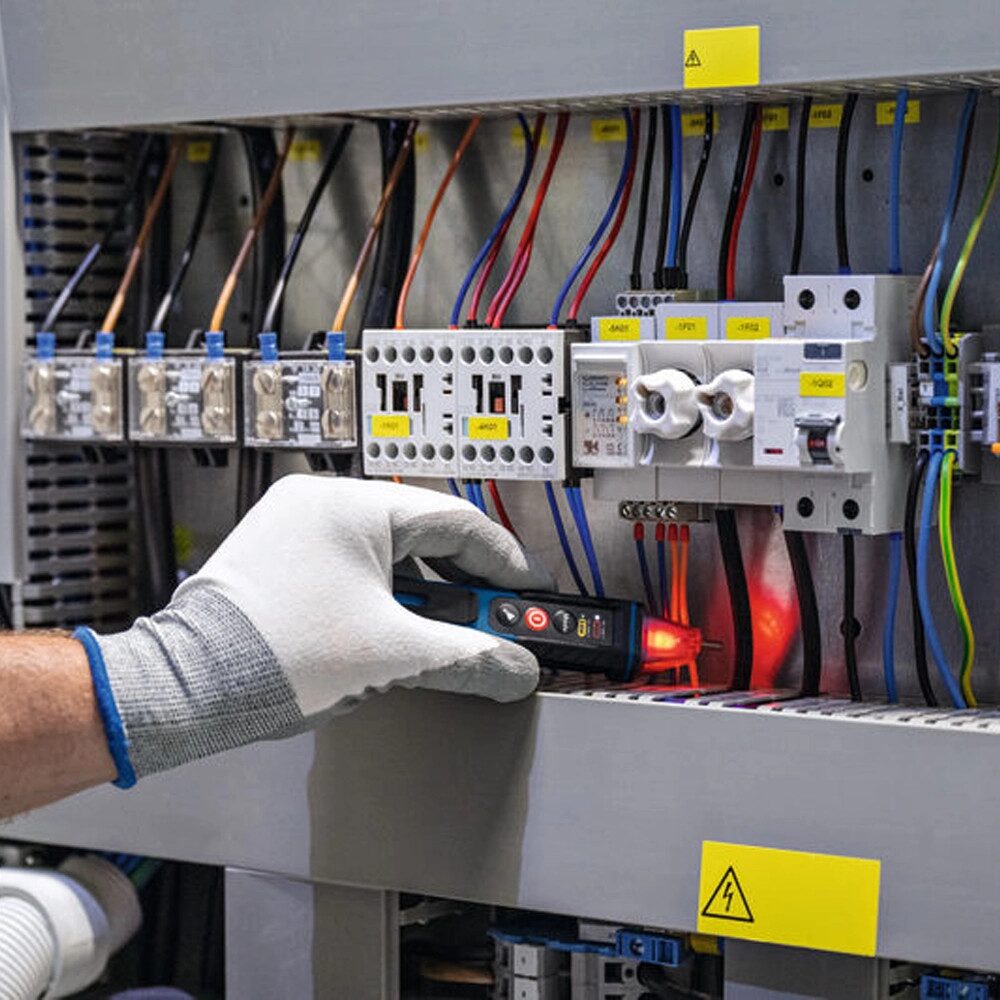
For most users, the safe approach is to isolate the power and confirm the circuit is dead before any cover is removed or any conductor is touched.
Basic safety steps include:
| Step | What to Do |
|---|---|
| 1 | Turn off the power supply |
| 2 | Use the correct protective equipment |
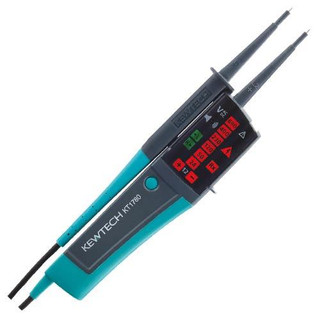
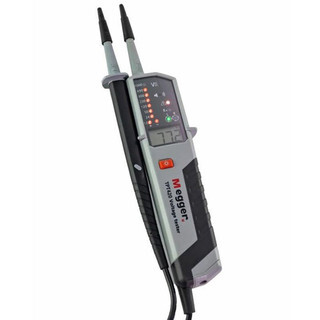
| 3 | Use an approved voltage tester |
| 4 | Confirm the circuit is dead before touching anything |
| 5 | Avoid relying on wire colour alone |
| 6 | Call a qualified electrician if unsure |
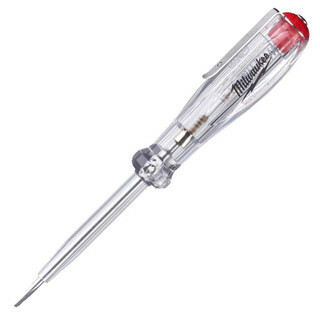
A voltage tester, insulated screwdrivers, wire strippers and VDE rated hand tools are useful for electrical work, but tools alone do not make the job safe.
The person using them still needs to know what they are doing.
Common Wiring Problems to Watch For
Electrical issues are not always obvious from the outside.
Some problems only become clear when a fitting, socket or consumer unit is inspected.
Incorrect Wiring Connections
Incorrect wiring can be extremely dangerous.
If live, neutral or earth conductors are connected incorrectly, there may be a risk of electric shock, overheating, appliance damage or fire.
This is why electrical work should be checked carefully and tested properly after installation.
Loose Connections
Loose wiring can cause intermittent faults, buzzing, crackling, flickering lights or overheating.
Overheating is especially dangerous because it can damage accessories, melt insulation and increase the risk of fire.
Loose connections should be inspected and corrected by someone competent.
Damaged or Outdated Wiring
Older wiring may have brittle insulation, poor connections, previous DIY alterations or signs of heat damage.
Old colours alone do not mean a full rewire is required, but outdated or damaged wiring should be inspected by a qualified electrician.
They can advise whether repair, partial replacement or a full rewire is needed.
Do Old Wiring Colours Mean a House Needs Rewiring?
Not always.
A property can have old red and black wiring and still be serviceable if the installation is safe, tested and in good condition.
The colour of the insulation tells you the age or type of wiring system, but it does not automatically tell you the condition of the installation.
A rewire may be recommended if there are signs of:
| Warning Sign | Why It Matters |
|---|---|
| Brittle or damaged insulation | The cable may no longer be safe |
| Frequent tripping | There may be a fault or overloaded circuit |
| Burning smells or heat marks | This can indicate overheating |
| Old fuse boards | The system may lack modern protection |
| Poor DIY alterations | Circuits may have been changed incorrectly |
| No reliable earthing | Shock protection may be inadequate |
If in doubt, book an electrical inspection.
Tools That Help With Electrical Work
For electrical jobs, the right tools make work cleaner, safer and easier.
Useful electrical tools and accessories include:
| Tool | Typical Use |
|---|---|
| Voltage tester | Checking whether a circuit is live |
| VDE screwdrivers | Working around electrical accessories |
| Wire strippers | Removing insulation cleanly |
| Cable cutters | Cutting cable without crushing it |
| Insulated pliers | Gripping, bending and cutting conductors |
| Cable clips and fixings | Securing cable neatly |
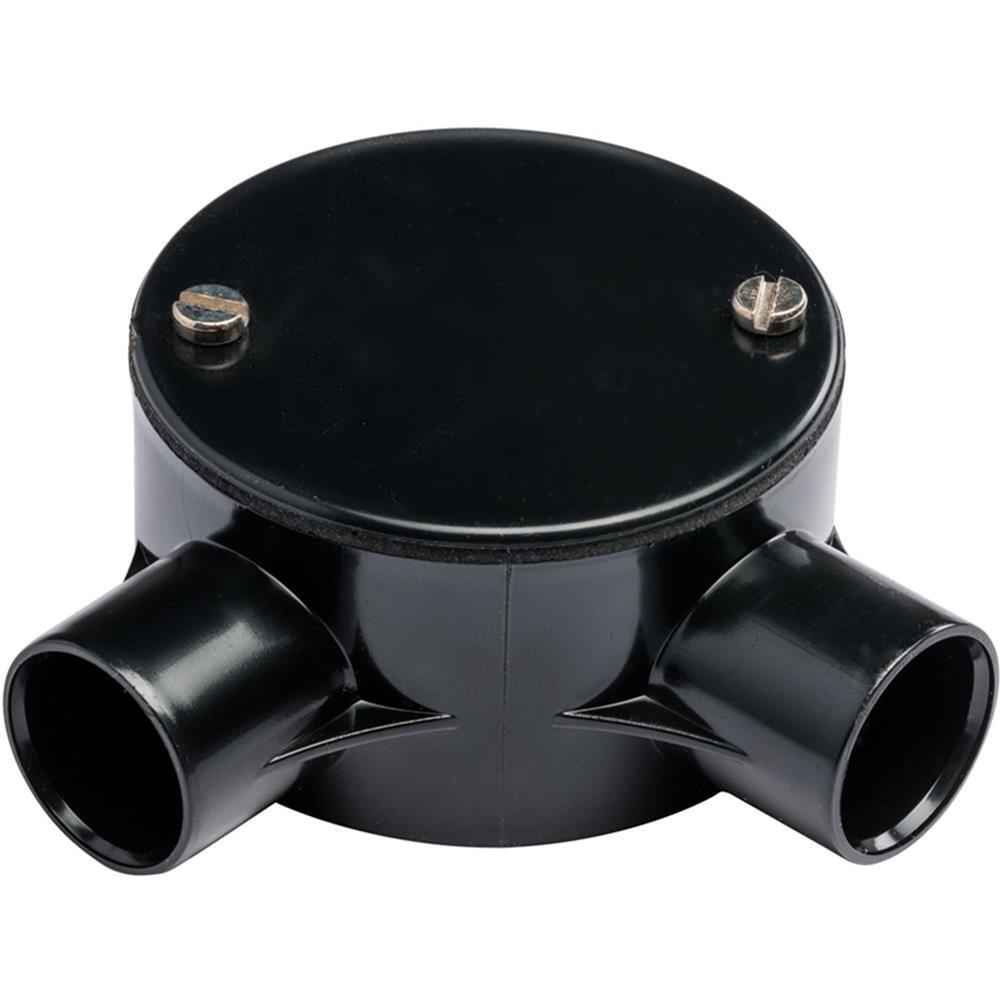
| Junction boxes | Creating safe cable connections where suitable |

UK Wiring Colours frequentley asked questions
What are the 3 UK wiring colours?
The three modern UK single phase wiring colours are brown, blue and green and yellow. Brown is live, blue is neutral and green and yellow is earth.
What colour is live wire in the UK?
In modern UK wiring, the live wire is brown. In older UK wiring, the live wire was usually red.
What colour is neutral wire in the UK?
In modern UK wiring, the neutral wire is blue. In older UK wiring, the neutral wire was usually black.
What colour is the earth wire in the UK?
The modern UK earth wire is green and yellow. In some older installations, earth may be plain green or another older colour.
Is black live or neutral in UK wiring?
Black can be neutral or live depending on the circuit. In older single phase wiring, black was usually neutral. In modern three phase wiring, black is a live conductor.
Is red live or neutral in UK wiring?
In older UK wiring, red is usually live. Modern UK wiring uses brown for live instead.
Can old and new wiring colours be mixed?
Yes, old and new wiring colours can exist in the same installation. This is common after extensions, partial rewires, repairs or consumer unit upgrades.
Do I need to replace old red and black wiring?
Not automatically. Old wiring colours do not always mean the wiring is unsafe, but the installation should be inspected if it is damaged, unreliable, very old or has not been tested for a long time.
Can I identify a wire by colour alone?
No. Wire colour is a useful guide, but it should never be the only method used to identify a conductor. Always isolate the power and test the circuit properly.
Final Thoughts
UK wiring colours are simple once you know the difference between the current system and the old system.
Modern single phase wiring uses brown for live, blue for neutral and green and yellow for earth.
Older wiring usually uses red for live and black for neutral.
Three phase wiring adds extra live colours, including black and grey in modern installations.
The most important thing to remember is that wiring colour is only a guide.
Old wiring, mixed installations, previous alterations and three phase circuits can all create confusion.
If you are unsure what a wire does, do not guess.
Test it properly or call a qualified electrician.