


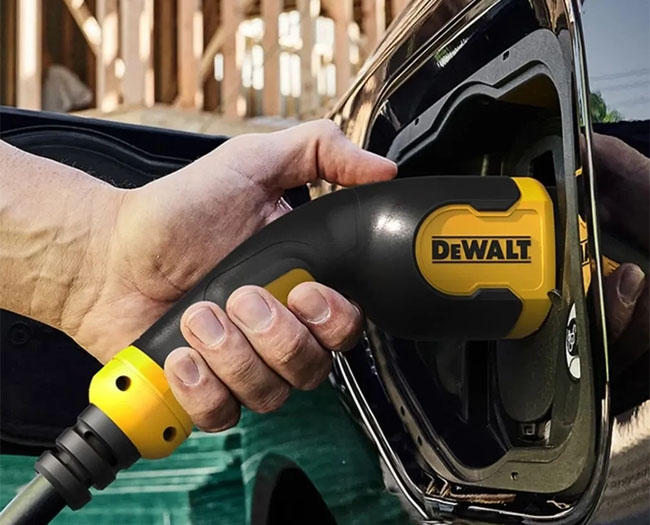
Electric vehicles are becoming a much more normal sight on UK roads, but EV charging still causes plenty of confusion.
Do you need a proper wall mounted EV charger?
Is a portable EV charger enough?
What is the difference between 7.4kW and 22kW?
Do you need a Type 2 charging cable?
And most importantly, which EV charger actually suits the way you drive?
Choosing the right EV charger is not just about picking the fastest option.
It depends on where you park, how often you charge, what power supply you have, what your vehicle can accept and whether you need a fixed home setup, a workplace charging point or a portable backup option.
In this guide, we’ll break down the main types of EV charging, explain the difference between home, workplace and portable chargers, and help you choose the right setup from the Dewalt EV charging range at ITS.
What Is EV Charging?
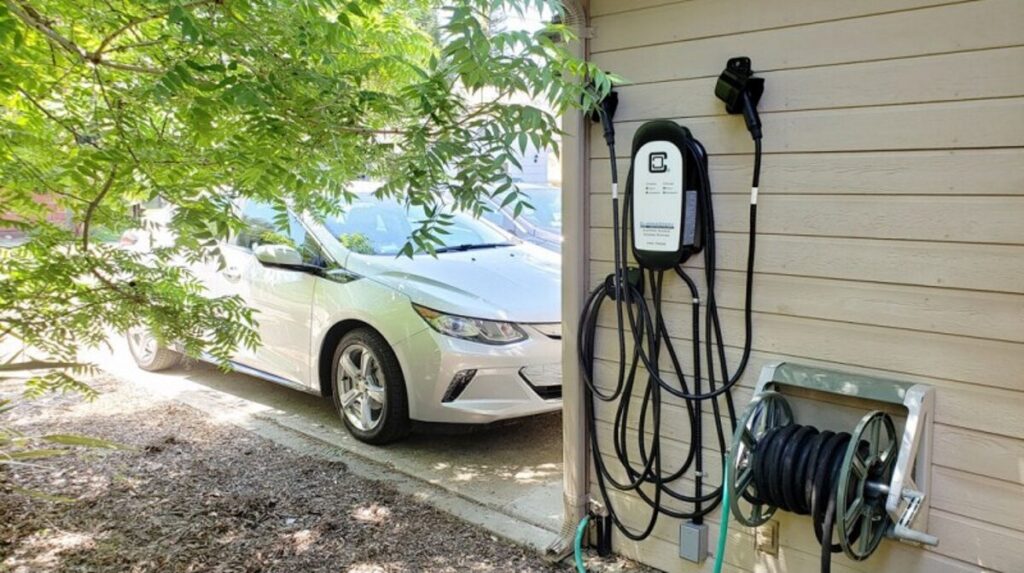
EV charging is the process of supplying electrical power to the battery in an electric vehicle or plug in hybrid vehicle.
Instead of filling a tank with petrol or diesel, you connect the vehicle to a power source using an EV charger or EV charging cable.
The charging speed depends on a few key things.
The power output of the charger matters.
The battery size of the vehicle matters.
The maximum charging rate your vehicle can accept also matters.
That last point is important because a more powerful charger does not automatically mean your car will charge at that full speed.
For example, a 22kW AC charger will only deliver the full benefit if the vehicle and the electrical supply can both support it.
For most UK drivers, EV charging falls into three main situations.
Home charging is the everyday option for people with a driveway, garage or private parking space.
Workplace charging is ideal for businesses, commercial premises, staff parking, trade counters, workshops and fleet vehicles.
Portable charging gives you a useful backup option when you need flexibility away from a fixed charge point.
Home, Workplace and Portable EV Charging Explained
Before you choose a charger, it helps to think about where the vehicle will spend the most time parked.
Most electric vehicles are not charged in the same way petrol cars are refuelled.
Rather than waiting until the battery is nearly empty, many EV owners top up regularly while the car is already parked.
That could be overnight at home, during the day at work, or occasionally from a portable charger when travelling or parked somewhere without a fixed charging unit.
| Charging Type | Best For | Main Benefit | Main Limitation |
|---|---|---|---|
| Home EV charging | Everyday charging at a house, garage or driveway | Convenient overnight charging | Requires suitable parking and installation |
| Workplace EV charging | Staff, fleet vehicles, workshops and commercial sites | Keeps vehicles topped up during working hours | Site power supply and access control need planning |
| Portable EV charging | Backup charging, travel, occasional use and flexible setups | Easy to store, carry and use when needed | Usually slower than a fixed wall charger |
What EV Charger Do I Need at Home?
For most UK homes, a 7.4kW single phase EV charger is the most practical choice.
That is because many UK homes use a standard single phase electrical supply.
A 7.4kW home EV charger gives you much faster charging than a standard 3 pin plug, while still being suitable for typical domestic charging setups when installed correctly by a qualified electrician.
This makes it ideal for overnight charging.
For many drivers, the car is parked for long enough each night that a 7.4kW charger is more than enough to keep the battery topped up for daily commuting, school runs, trade work, local driving and regular journeys.
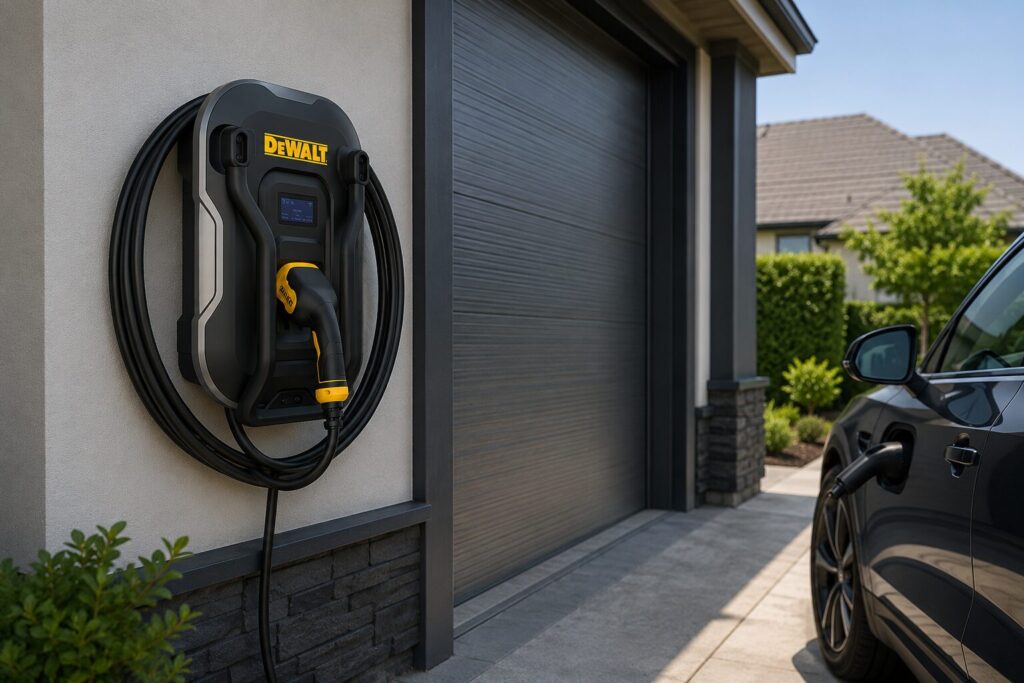
The Dewalt DEV200D32W7 Smart 7.4kW Single Phase Electric Vehicle Charging Station is the natural home charging option in the Dewalt range.
It is a wall mounted EV charging station designed for a 230V single phase supply, with up to 7.4kW charging capacity.
It includes adjustable 16A to 32A current settings, RFID access, Wi-Fi and Bluetooth connectivity, app based control, smart scheduling, charging cost monitoring and IP65 protection for outdoor installation.
It is also supplied with a 5m Type 2 charging cable, which suits the majority of modern electric vehicles and plug in hybrids in the UK and Europe.
Best Home EV Charger Choice
Choose a 7.4kW single phase EV charger if you want a fixed home charging setup for regular overnight charging.
This is the best all round option for most homeowners because it balances speed, practicality and compatibility with standard domestic electrical supplies.
How Much Does It Cost To Charge An EV At Home?
The cost of charging an EV at home depends on your electricity tariff, the size of your vehicle’s battery and how much charge you need to put back in.
A full charge will cost more for a larger battery, but many drivers only top up what they have used that day rather than charging from empty every time.
The table below gives a simple guide to how home charging costs can vary, helping you compare battery sizes, charging needs and estimated running costs more easily.
| Battery | Approx Cost @ 30p/kWh |
|---|---|
| 40kWh | £12 |
| 60kWh | £18 |
| 80kWh | £24 |
Can My House Have An EV Charger?
Most houses with off street parking can have an EV charger installed, especially if there is a driveway, garage or private parking space close to the property.
A qualified installer will check your electrical supply, consumer unit, cable route and the best place to fit the charger before installation.
For most UK homes, a 7.4kW single phase charger is the most practical option, while 22kW charging usually requires a three phase supply.
If you rent, live in a flat or use allocated parking, you may need permission before having a charger fitted.
If you do not have off street parking, installation can be more complicated, as charging cables should not be run loose across public pavements.
What EV Charger Do I Need for a Workplace?
Workplace EV charging is slightly different to home charging because the charger may need to serve more than one user.
That could mean employees charging during the working day, tradesmen topping up vans, visitors using a customer charging point or a small business managing multiple vehicles.
For this reason, workplace EV chargers should be chosen with access, durability, charging speed and user control in mind.
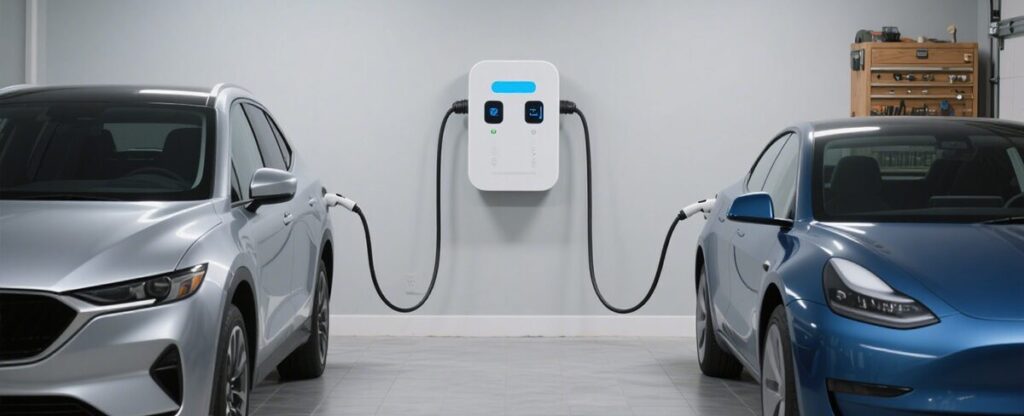
A 7.4kW charger can still be a good option for workplaces, especially where vehicles are parked for several hours at a time.
This could suit offices, workshops, small commercial units, trade premises and staff car parks.
However, some workplaces may benefit from 22kW three phase EV charging if the site has a suitable three phase supply and the vehicles can accept higher AC charging speeds.
A 22kW charger can be a better fit for businesses where vehicle uptime is more important.
That includes fleet users, busy commercial premises, high mileage drivers, company vehicles or locations where several EVs need to be topped up during the day.
The Dewalt DEV200D32W22 Smart 22kW Three Phase Electric Vehicle Charging Station is the higher output option in the Dewalt range.
It operates on a 400V three phase supply and delivers up to 22kW charging output.
It also includes adjustable 16A to 32A current settings, RFID access, app connectivity, Wi-Fi and Bluetooth, smart scheduling, cost monitoring, charging notifications, IP65 outdoor protection and a supplied 5m Type 2 cable.
Best Workplace EV Charger Choice
Choose a 7.4kW charger for everyday workplace charging where vehicles are parked for several hours.
Choose a 22kW three phase EV charger if the site has three phase power, the vehicles support higher AC charging and faster turnaround is important.
7.4kW vs 22kW EV Chargers: What’s the Difference?
The difference between 7.4kW and 22kW EV chargers comes down to power output and electrical supply.
A 7.4kW charger is usually single phase.
This is the most common home charging option and is normally the best fit for standard UK domestic properties.
A 22kW charger is three phase.
This means it needs a suitable three phase electrical supply, which is more common in commercial buildings, workshops, industrial units and some larger properties.
The other thing to remember is that your vehicle must be able to accept 22kW AC charging for you to get the full benefit.
Some vehicles will still charge at a lower rate even when connected to a 22kW charger.
That does not mean the charger is faulty.
It simply means the vehicle’s onboard charger is limiting the AC charging speed.
| Feature | 7.4kW Single Phase EV Charger | 22kW Three Phase EV Charger |
|---|---|---|
| Best For | Most UK homes and regular overnight charging | Workplaces, fleets and suitable three phase sites |
| Power Supply | 230V single phase | 400V three phase |
| Typical Use | Home charging and long stay parking | Faster AC charging where supported |
| Installation Type | Fixed wall mounted charger | Fixed wall mounted charger |
| Main Benefit | Practical everyday charging | Higher output for faster charging |
| Dewalt Option | Dewalt DEV200D32W7 Smart 7.4kW Charger | Dewalt DEV200D32W22 Smart 22kW Charger |
Do I Need a Smart EV Charger?
In most cases, yes, a smart EV charger is the better choice.
Smart EV chargers give you more control over when and how your vehicle charges.
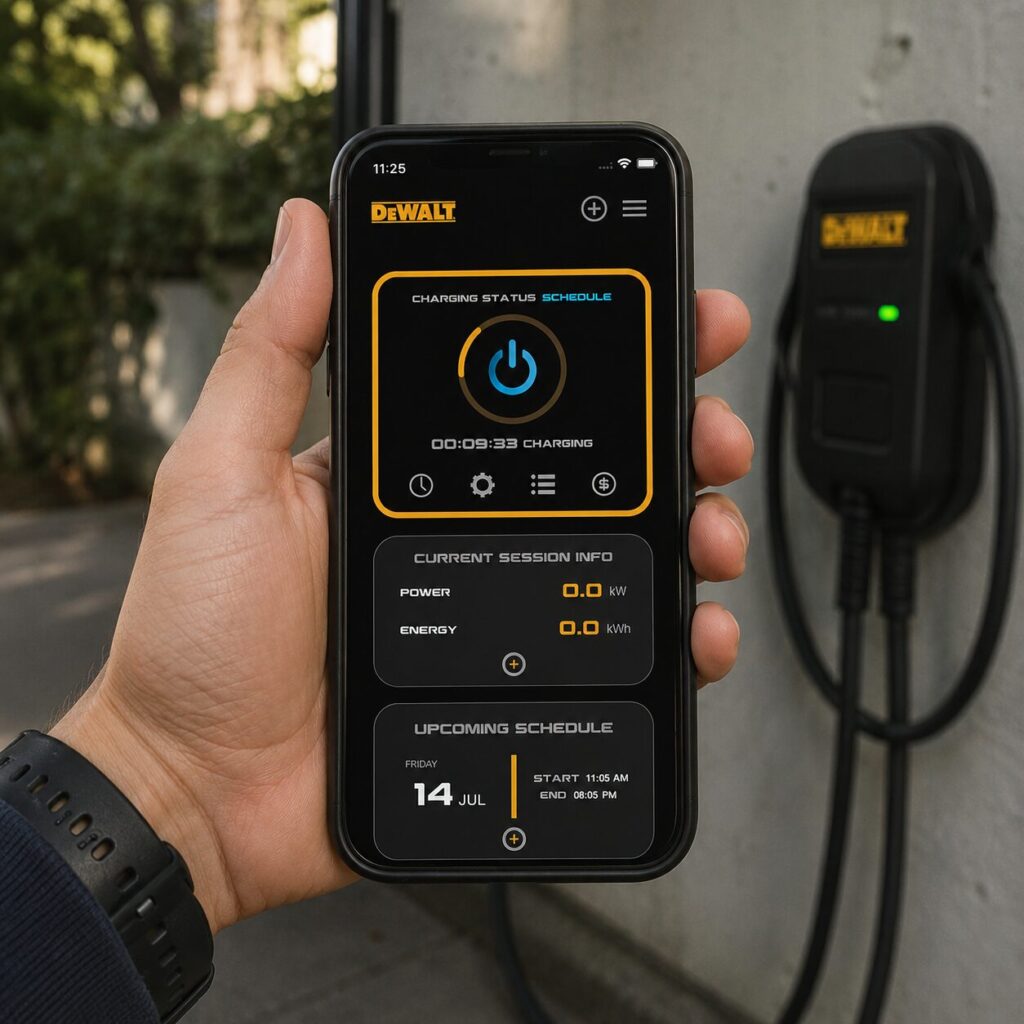
This can include scheduling, remote start and stop, charging status updates, energy usage information and cost monitoring.
For home users, smart charging can help you schedule charging overnight or at more convenient times.
For workplace users, it can help monitor usage and manage access.
Modern UK EV charging regulations are also designed around smart charging functionality.
The idea is to help users charge at better times, reduce pressure on the electricity grid and support more efficient use of energy.
The Dewalt smart EV chargers include Wi-Fi and Bluetooth connectivity, app based control, charging schedules, cost monitoring, charging notifications and RFID access. Download the Dewalt EV charging app below 👇


That makes them useful for both private and shared charging setups.
RFID access is especially useful when the charger is not only being used by one person.
For example, it can help control access at workplaces, shared driveways, apartment parking areas, commercial units and fleet parking areas.
Fixed EV Charger vs Portable EV Charger
A fixed EV charger is the best option if you charge regularly in the same place.
That usually means a wall mounted charger at home, at work or at a dedicated parking space.
A fixed charger gives you a cleaner setup, faster everyday charging and better long term convenience.
A portable EV charger is different.
It is designed for flexibility.
It is useful if you need a backup charger, travel between locations, keep a charger in the vehicle, charge occasionally from a suitable UK socket or want something you can store and carry.
A portable charger should not usually be seen as a full replacement for a proper wall mounted EV charger if you charge your vehicle every day.
It is better thought of as a practical backup or occasional charging solution.
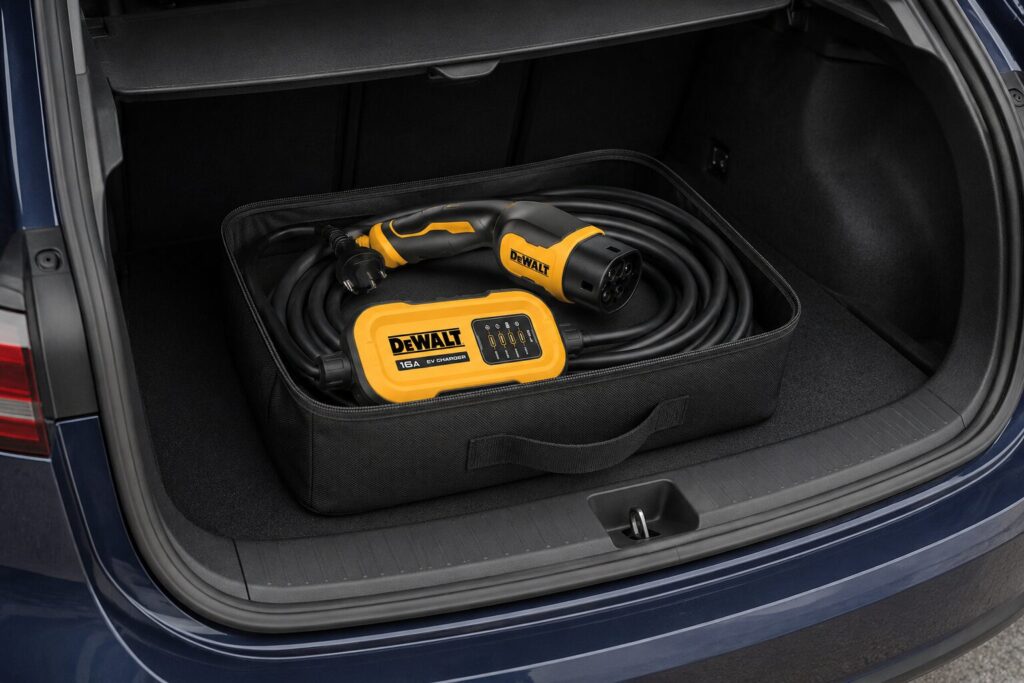
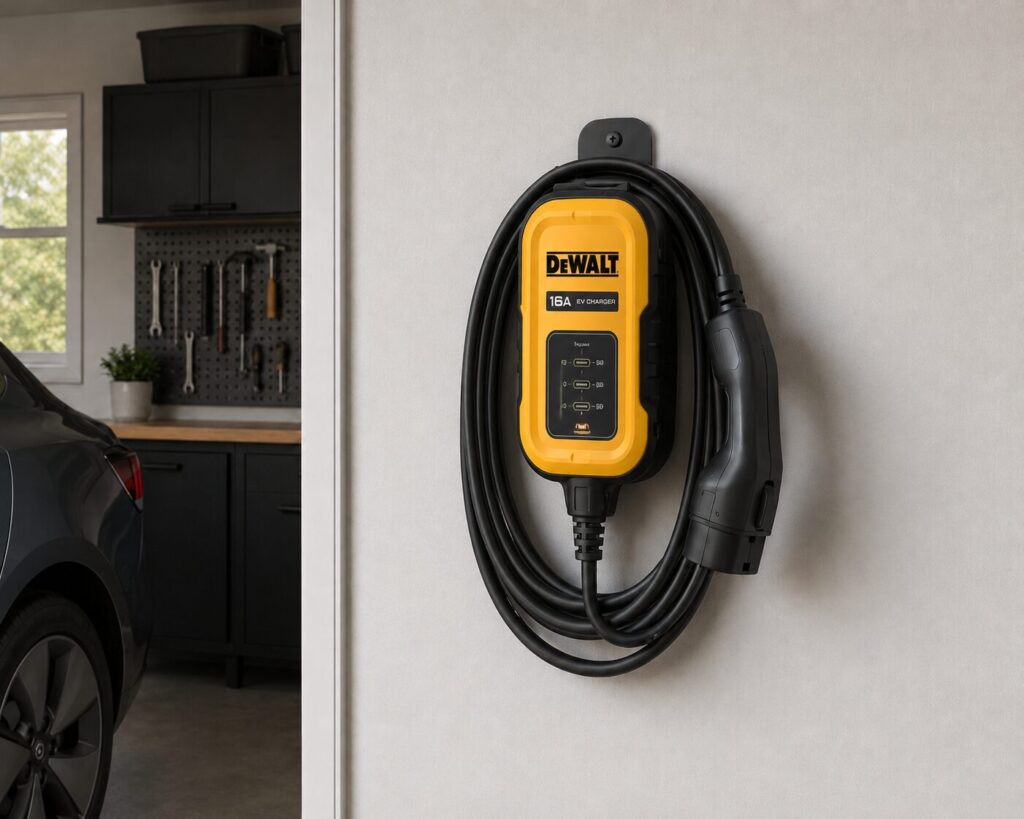
The Dewalt DEV16P Portable EV Charger is designed for home, work or on the move charging.
It uses a standard UK plug, connects to Type 2 vehicles and provides up to 2.3kW charging from a 230V single phase supply.
It includes a 7m cable, LED charging status indicator, heavy duty TPE reinforced housing, IP65 protection when connected and in use, and a storage bag for transport.
Best Portable EV Charger Choice
Choose a portable EV charger if you want a backup option, occasional charging flexibility or something you can keep in the car for use away from a fixed wall charger.
Choose a fixed wall charger if you charge regularly at home or work and want faster charging with better control.
Can I Charge an EV from a Normal 3 Pin Plug?
Yes, you can charge some electric vehicles from a normal UK 3 pin plug using a compatible portable EV charger.
However, it is much slower than using a dedicated wall mounted EV charger.
A 3 pin style portable setup is usually best for occasional charging, emergency top ups or situations where you do not have access to a fixed charge point.
It should not be treated as the main charging method for most drivers if a properly installed home charger is possible.
You should also avoid using extension leads for EV charging.
EV charging places a sustained load on the electrical supply for long periods, so the setup needs to be safe, suitable and used exactly as intended.
If in doubt, speak to a qualified electrician before relying on a domestic socket for EV charging.
What Is a Type 2 EV Charging Cable?
A Type 2 EV charging cable is the most common AC charging cable used by modern electric vehicles in the UK and Europe.
You will usually need a Type 2 cable when using an untethered home charger, workplace charging point or public AC charging station.
A tethered charger has a cable permanently attached.
An untethered charger has a socket, so you use your own charging cable.
Even if you have a tethered charger at home, a separate Type 2 cable can still be useful for public or workplace charging.
When choosing a Type 2 EV cable, check the charging capacity, phase compatibility, current rating, cable length and weather protection.
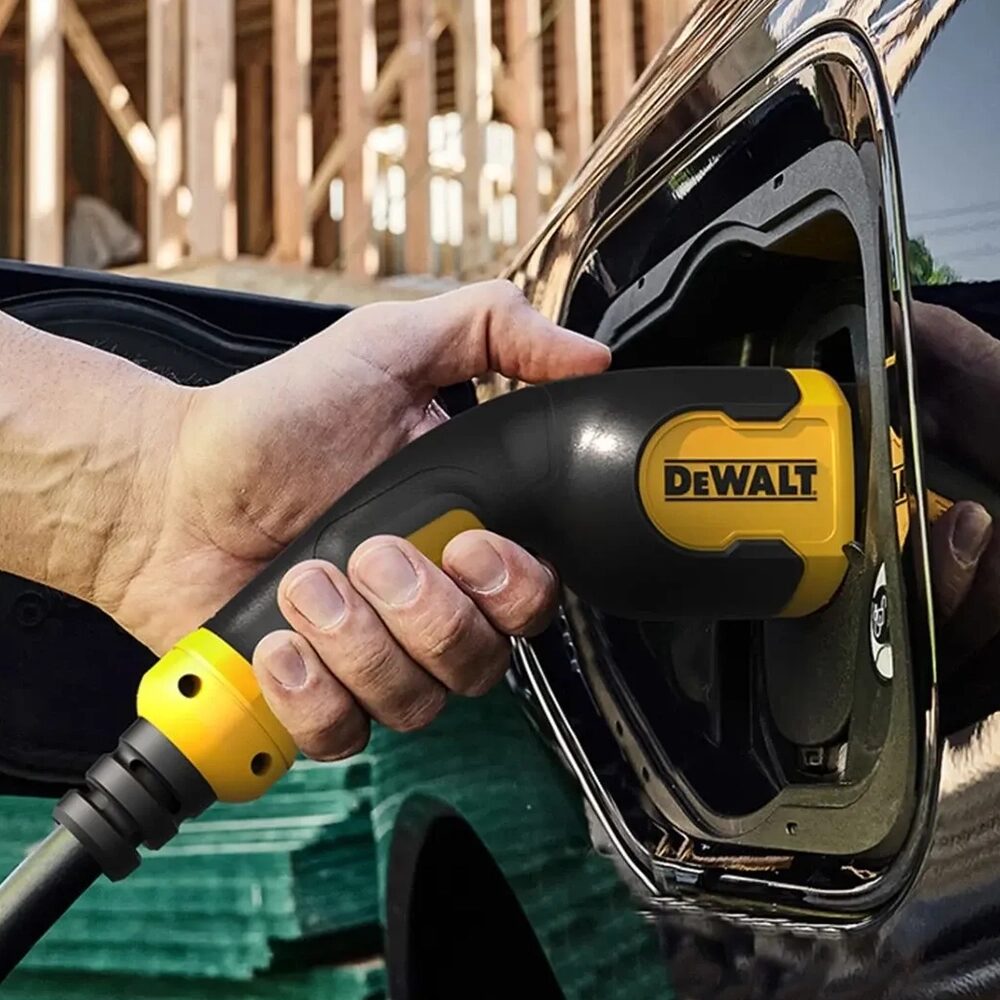
The Dewalt DEV32C1P Type 2 7.4kW EV Charging Cable is the everyday single phase option.
It supports up to 7.4kW charging, has a 32A rated current, 5m cable length, TPU cable construction, anti-slip grip handles, IP65 protection when connected and in use, and a storage bag.
The Dewalt DEV32C3P Type 2 22kW EV Charging Cable is the higher output three phase option.
It supports up to 22kW charging, has a 32A rated current, 5m cable length, TPU cable construction, anti-slip grip handles, IP65 protection when connected and in use, and a storage bag.
| Cable | Best For | Power Supply | Maximum Capacity |
|---|---|---|---|
| Dewalt DEV32C1P Type 2 EV Charging Cable | Standard single phase home, workplace and public AC charging | Single phase | 7.4kW |
| Dewalt DEV32C3P Type 2 EV Charging Cable | Three phase charging where supported | Three phase | 22kW |
Tethered vs Untethered EV Chargers
A tethered EV charger has a charging cable attached to the unit.
This is convenient because the cable is always ready to use.
You just park, plug in and start charging.
The downside is that the cable is always visible, and you need to make sure it suits your vehicle connection.
An untethered charger has a socket instead of a fixed cable.
This gives you a neater wall unit and lets you use your own cable.
It can be useful if different vehicles need different cable types or if you prefer to keep the cable stored separately.
The right option depends on how you use the charger.
For simple home charging, many drivers like tethered because it is quick and easy.
For shared spaces, workplaces and public style setups, untethered can be neater and more flexible.
Where Should You Install an EV Charger?
EV charger placement matters more than many people realise.
It is not just about putting the charger near a power supply.
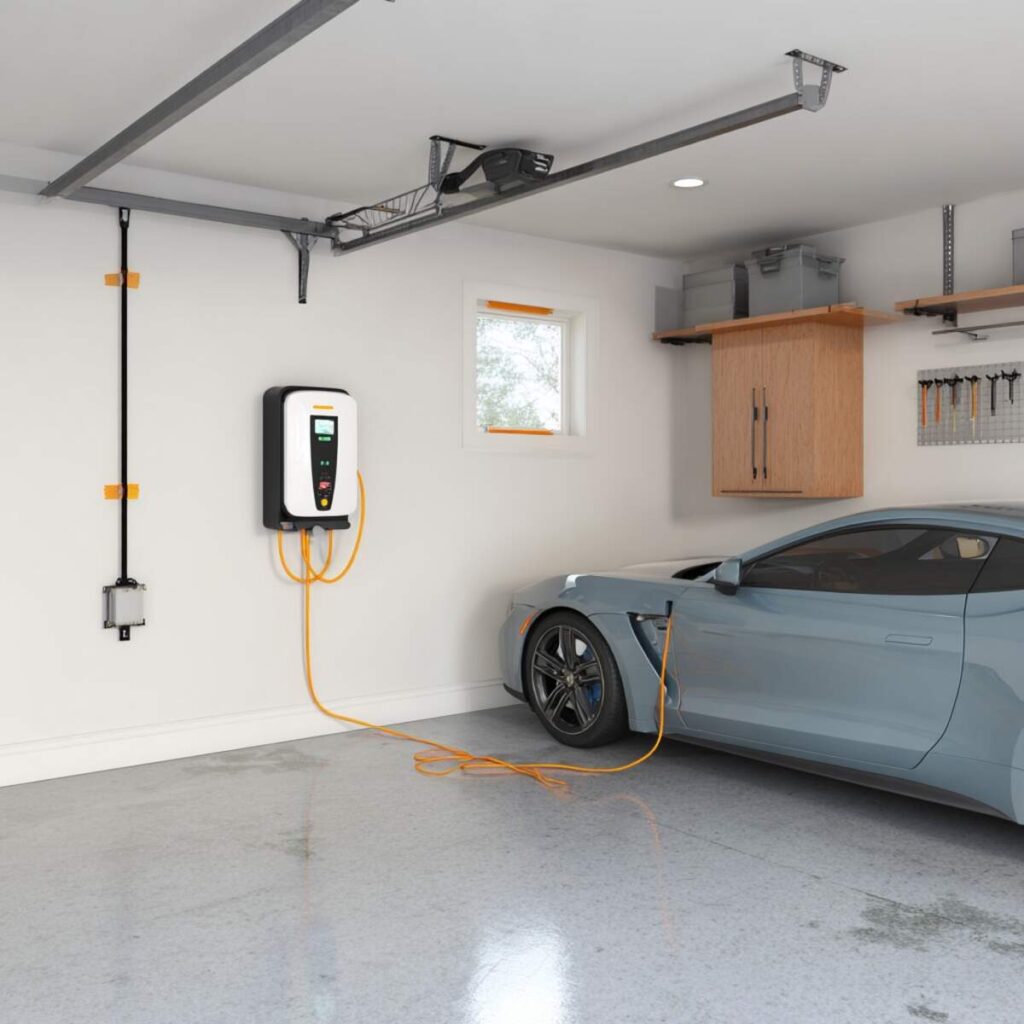
You need to think about where the vehicle parks, which side the charging port is on, how far the cable needs to reach and whether the cable could create a trip hazard.
A good charger position should allow the cable to reach the vehicle without being stretched.
It should also avoid crossing walkways where possible.
For outdoor use, the charger needs to be suitable for the environment and installed correctly.
The Dewalt wall mounted EV chargers include IP65 protection, making them suitable for outdoor installation when fitted properly.
For shared or exposed areas, durability also matters.
The Dewalt DEV32W7C Heavy Duty 32A Single Phase EV Charger is a strong option where you want a tougher wall mounted unit.
It offers 7.4kW single phase charging, adjustable 16A to 32A current settings, RFID authorisation, LCD display, Wi-Fi and Bluetooth connectivity, IP65 protection, a rugged protective cage and cable management.
That makes it especially useful for garages, workshops, commercial spaces, exposed parking areas and users who want a more robust charger setup.
EV Charger Placement Checklist
- Can the cable reach the charging port without strain?
- Will the cable cross a path or doorway?
- Is the charger protected from knocks or vehicle impact?
- Can the cable be stored neatly?
- Is the unit suitable for outdoor use?
- Will more than one person need access?
- Would RFID access control be useful?
- Is there enough space around the charger for comfortable use?
How Long Does It Take to Charge an Electric Car?
Charging time depends on the battery size, the charger output and the maximum AC charging rate of the vehicle.
As a simple rule, higher kW output means faster charging, but only if the vehicle can accept that power.
A portable charger running from a UK plug will be much slower than a 7.4kW wall charger.
A 7.4kW wall charger will usually be enough for regular overnight charging.
A 22kW three phase charger can be much faster, but only where the site and vehicle are compatible.
| Battery Size | 2.3kW Portable | 7.4kW Home Charger | 22kW Charger |
|---|---|---|---|
| 40kWh | ~17hrs | ~6hrs | ~2hrs |
| 60kWh | ~26hrs | ~8hrs | ~3hrs |
| 80kWh | ~35hrs | ~11hrs | ~4hrs |
| Charger Type | Typical Power | Best Use |
|---|---|---|
| Portable UK plug charger | Around 2.3kW | Backup charging and occasional use |
| Home wall charger | Around 7.4kW | Everyday overnight charging |
| Three phase workplace charger | Up to 22kW | Faster AC charging where supported |
| Public rapid charger | 50kW and above | Journey top ups and faster public charging |
Which Dewalt EV Charger Should You Buy?
The Dewalt EV charging range covers fixed home chargers, workplace charging options, portable charging and Type 2 charging cables.
The easiest way to choose is to match the product to where and how you charge.
| Product | Best For | Why Choose It |
|---|---|---|
| Dewalt DEV200D32W7 Smart 7.4kW Single Phase Electric Vehicle Charging Station | Most home users | Smart 7.4kW charging, app control, RFID access, IP65 protection and supplied 5m Type 2 cable |
| Dewalt DEV32W7C Heavy Duty 32A Single Phase EV Charger | Tougher home, garage, workshop or commercial installs | 7.4kW charging with rugged cage, LCD display, cable management and RFID authorisation |
| Dewalt DEV200D32W22 Smart 22kW Three Phase Electric Vehicle Charging Station | Workplaces, fleets and suitable three phase sites | 22kW output, app control, RFID access, IP65 protection and supplied 5m Type 2 cable |
| Dewalt DEV16P Portable EV Charger | Backup charging and flexible charging | Portable 2.3kW charging with Type 2 connector, 7m cable, LED status indicator and storage bag |
| Dewalt DEV32C1P Type 2 7.4kW EV Charging Cable | Everyday single phase charging | 32A Type 2 cable with 5m reach, TPU construction, IP65 protection and storage bag |
| Dewalt DEV32C3P Type 2 22kW EV Charging Cable | Higher output three phase AC charging | 32A Type 2 cable with up to 22kW support, 5m reach, TPU construction and IP65 protection |
| Dewalt DEVEV200DW Wall Bracket for Portable EV Chargers | Charger storage and cable organisation | Keeps a portable EV charger secure, tidy and ready to use |
Best EV Charger for Home Use
For most home users, the best choice is a 7.4kW single phase smart EV charger.
The Dewalt DEV200D32W7 is the best fit if you want a smart wall mounted charger with app control, RFID access and a supplied Type 2 cable.
It is powerful enough for regular overnight charging, suitable for a standard single phase supply and built for outdoor installation.
If you want something tougher for a garage, workshop or exposed area, the Dewalt DEV32W7C Heavy Duty 32A Single Phase EV Charger is the better choice.
It gives you the same 7.4kW single phase charging level but adds a rugged protective cage, LCD display and integrated cable management.
Best EV Charger for Workplaces
For workplaces, the best EV charger depends on the site supply and how quickly vehicles need to turn around.
A 7.4kW charger is suitable for staff parking and vehicles that are parked for a working day.
A 22kW three phase charger is better for commercial sites with suitable power and vehicles that can accept faster AC charging.
The Dewalt DEV200D32W22 is the strongest choice for workplace charging where three phase power is available.
Its 22kW output, RFID access, app control and smart monitoring make it a practical option for shared charging, fleet users and business premises.
Best Portable EV Charger
The Dewalt DEV16P Portable EV Charger is the best choice if you need a flexible charging option that can be stored in the vehicle or used as a backup.
It is useful for occasional charging, travel, second locations or situations where a fixed wall charger is not available.
With a standard UK plug, Type 2 connector, 7m cable, LED status indicator, reinforced housing, storage bag and IP65 protection when connected and in use, it gives EV owners a practical charging option on the move.
For a cleaner setup at home or in a garage, pair it with the Dewalt DEVEV200DW Wall Bracket for Portable EV Chargers.
This keeps the charger organised, secure and easy to access instead of leaving the cable loose on the floor.
EV Charging Safety Tips
EV charging is simple when everything is installed and used correctly, but it still needs to be treated properly.
Always use a charger or cable that is suitable for your vehicle.
Always follow the product instructions.
Do not use damaged cables or connectors.
Do not stretch the cable across walkways if it creates a trip hazard.
Do not use an extension lead for EV charging.
Make sure fixed chargers are installed by a qualified professional.
Check that outdoor equipment is correctly rated for outdoor use.
Keep cables stored neatly when not in use.
For workplaces, make sure access is controlled and users know how to operate the charger safely.
Frequently asked questions
What temperature is too hot to work outside in the UK?
There is no legal maximum working temperature for outdoor work in the UK. However, employers still have a duty to ensure working conditions remain safe and to manage risks associated with extreme heat.
How much water should tradesmen drink during a heatwave?
Water requirements vary depending on workload and temperature, but workers should drink regularly throughout the day rather than waiting until they feel thirsty.
| Temperature | Recommended Intake |
|---|---|
| 20°C | 3-4 litres |
| 25°C | 4-5 litres |
| 30°C+ | 5-7 litres |
What temperature is too hot for construction workers?
There is no specific maximum temperature at which construction work must stop in the UK. However, employers have a legal duty to assess risks and ensure working conditions remain safe. When temperatures rise above 25°C, workers should take additional precautions such as drinking more water, taking regular breaks, wearing suitable clothing, and creating shaded rest areas where possible.
Can you wear shorts on a building site?
It depends on the site rules and the type of work being carried out. Many construction sites require workers to wear full length trousers to protect against cuts, abrasions, burns, and other hazards. Always check site specific PPE requirements before wearing shorts on site.
What should you do if someone collapses from heat?
If someone collapses due to heat, move them to a shaded or cool area immediately and call emergency services if they are unconscious, confused, having a seizure, or not responding normally. Remove excess clothing where safe to do so and use cool water, damp towels, or fans to help lower their body temperature. If they are conscious and able to swallow, encourage them to sip cool water. Never leave them alone and continue monitoring their condition until medical help arrives, as heat stroke can quickly become life threatening.
How do you prevent heat exhaustion?
The best way to prevent heat exhaustion is to stay hydrated, take regular breaks in shaded areas, wear lightweight breathable clothing, apply sunscreen, and avoid prolonged periods of direct sun exposure where possible. It’s also important to recognise early warning signs such as dizziness, headaches, excessive sweating, and fatigue before they become more serious.
Is it legal to stop work because of heat?
There is no UK law that sets a maximum outdoor working temperature. However, employers must carry out risk assessments and take reasonable steps to protect workers from heat related risks. If working conditions become unsafe, employers may need to adjust working hours, provide additional breaks, increase access to drinking water, or temporarily stop certain tasks until conditions improve.
What are the first signs of heat stroke?
Early signs of heat stroke can include confusion, difficulty concentrating, a rapid heartbeat, severe headache, dizziness, nausea, and unusually hot skin. Unlike heat exhaustion, a person suffering from heat stroke may stop sweating despite being extremely hot. Heat stroke is a medical emergency and requires immediate medical attention.
What is the difference between heat exhaustion and heat stroke?
Heat exhaustion causes symptoms such as dizziness, headaches, and excessive sweating. Heat stroke is much more serious and can cause confusion, collapse, and loss of consciousness. Heat stroke requires immediate medical attention.
Do cooling towels actually work?
Yes. Cooling towels use evaporative cooling to help reduce skin temperature. They’re particularly effective when used around the neck during periods of high heat.
Final Verdict: What EV Charger Do You Need?
The right EV charger depends on how and where you charge.
For most home users, a 7.4kW single phase smart EV charger is the best choice.
It gives you practical overnight charging, app control, scheduling and a cleaner setup than relying on a standard plug.
For workplaces, commercial premises and fleet users, a 22kW three phase EV charger can make sense if the site and vehicles support it.
It offers faster AC charging and better suitability for shared or high usage charging environments.
For backup charging, travel and occasional use, a portable EV charger is a useful addition to keep in the vehicle or garage.
It will not usually replace a fixed wall charger for everyday charging, but it gives you flexibility when you need it.
A good Type 2 EV charging cable is also worth having if you use untethered home chargers, workplace charge points or public AC chargers.
Whether you need a home EV charger, workplace charging solution, portable EV charger or Type 2 cable, the Dewalt EV charging range at ITS gives you a tough, practical and professional way to keep your electric vehicle powered and ready to go.
Shop EV Charging