



Work boots go through a lot.
Mud, dust, rain, concrete, plaster, oil, scuffs, sweat and long days on site all take their toll. A decent pair of safety boots is built to handle hard work, but that does not mean they should be ignored until they look like they have been dragged out of a skip.
Cleaning your work boots properly helps them last longer, keeps them more comfortable and can even help maintain grip, waterproofing and odour control.
Whether you wear leather safety boots, waterproof work boots, dealer boots, rigger boots or lightweight safety trainers, a bit of simple maintenance can make a big difference.
Why Should You Clean Your Work Boots?
It is easy to think of boot cleaning as just making them look better, but it is about more than appearance.
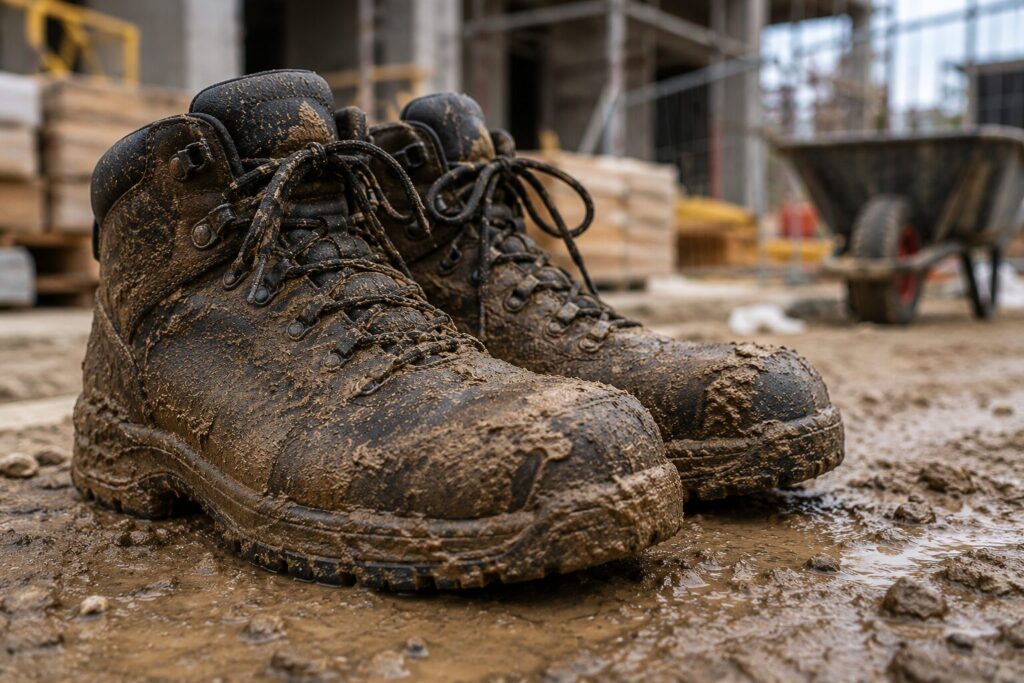
Mud and site dirt can dry into the leather or material, making it stiff, cracked and uncomfortable. Dust and grit can work into seams, stitching and sole units, slowly wearing them down. Wet boots that are left dirty can start to smell, lose shape and become unpleasant to wear.
Clean boots are easier to inspect too. You can spot split seams, worn tread, damaged toe areas and cracked uppers before they become a problem.
For tradesmen who wear safety boots every day, proper cleaning is not just about pride. It is part of looking after your kit.
What Do You Need To Clean Work Boots?
You do not need anything complicated to clean most work boots.
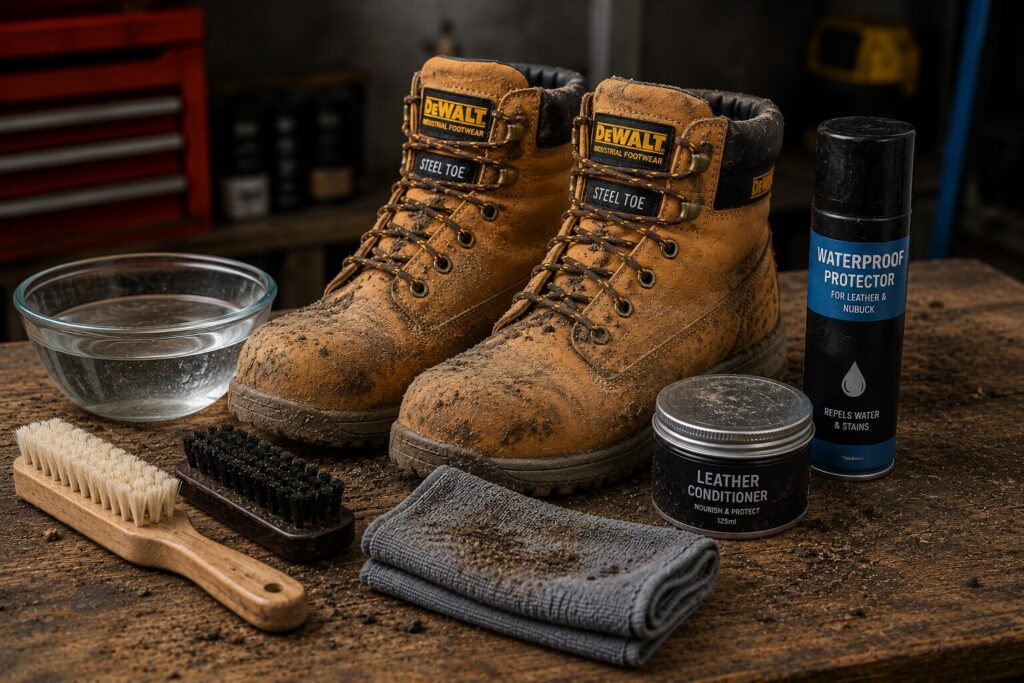
In most cases, a brush, cloth, warm water and the right treatment for the boot material will do the job.
| Item | What It Is Used For |
|---|---|
| Soft brush | Removing dry mud and surface dirt |
| Stiff brush | Cleaning sole treads and heavy dirt |
| Warm water | General cleaning |
| Mild soap | Lifting stains and grime |
| Microfibre cloth | Wiping and drying the upper |
| Newspaper | Helping boots dry naturally |
| Leather conditioner | Restoring leather after cleaning |
| Waterproof spray or wax | Reproofing boots after cleaning |
Avoid harsh chemicals, bleach, strong detergents and anything abrasive on the upper.
They might clean the boot in the short term, but they can damage leather, coatings, stitching and waterproof membranes.
Step 1: Remove The Laces And Insoles
Before you start cleaning, remove the laces if your boots have them.
This gives you better access to the tongue, eyelets and upper.
If the insoles are removable, take them out as well.
This helps the inside of the boot air properly and makes it easier to deal with odours.
Do not soak insoles unless the manufacturer says it is safe.
Most of the time, airing them separately is enough.
Step 2: Knock Off Loose Mud And Dirt
Start with the obvious stuff.
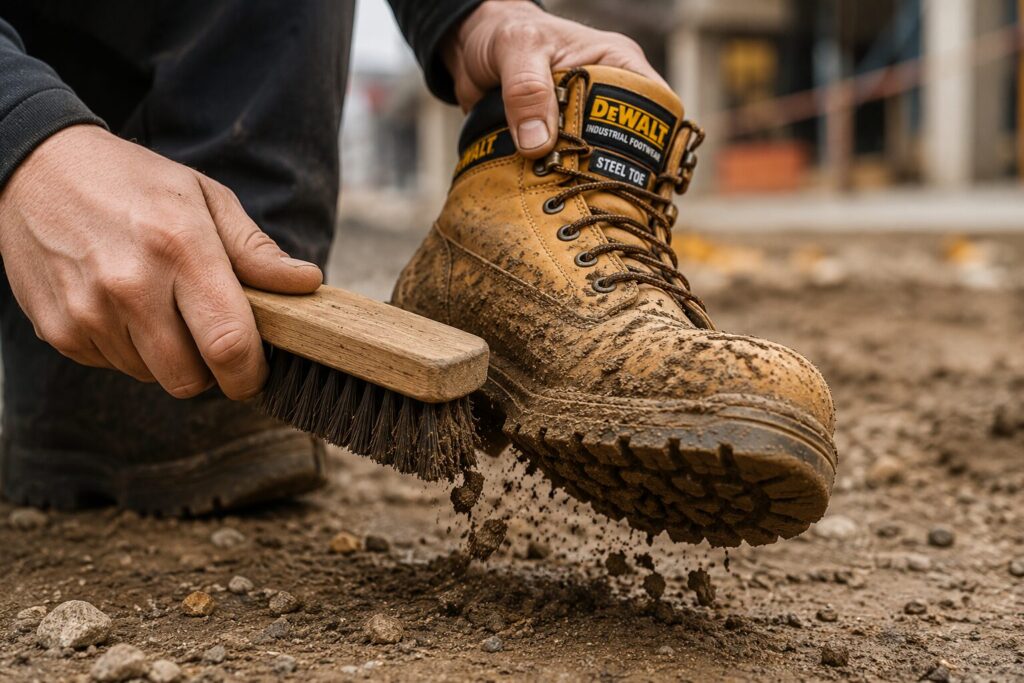
Knock the soles together outside to remove heavy mud.
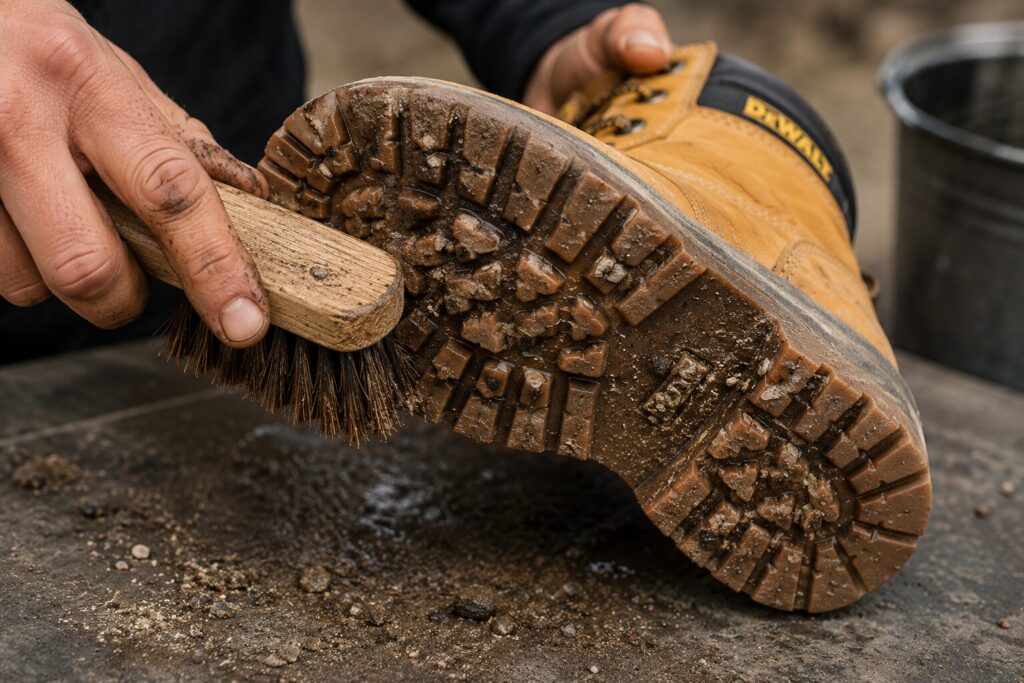
Use a stiff brush to clear the tread, especially if stones, dried soil or site debris are stuck in the sole.
Then use a softer brush on the upper.
This removes loose dirt before you add water, which reduces the risk of rubbing grit into the material.
Step 3: Clean The Upper
The best way to clean the upper depends on what your boots are made from.
How To Clean Leather Work Boots
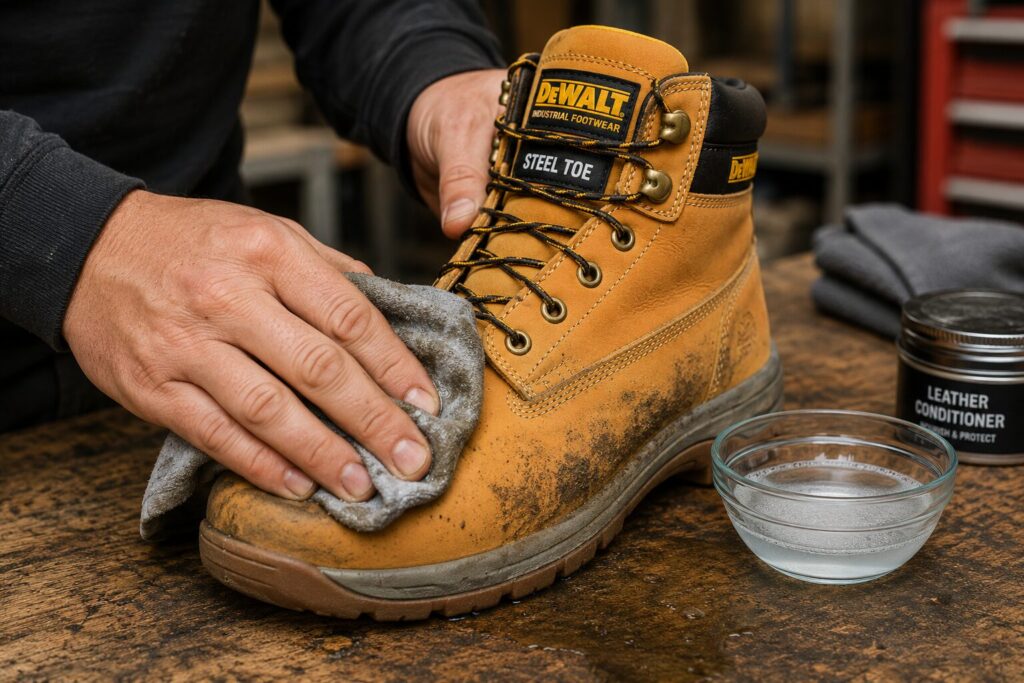
For leather safety boots, use a damp cloth and warm water. If the dirt is stubborn, add a small amount of mild soap.
Wipe the boot gently rather than scrubbing hard. Pay attention to creases, stitching, scuffed areas and the toe.
Once clean, wipe away any soap residue with a fresh damp cloth. Do not soak leather boots, as too much water can dry the leather out and cause cracking later.
Once dry, apply a suitable leather conditioner or boot treatment to keep the leather supple.
How To Clean Nubuck Or Suede Safety Boots
Nubuck and suede need a lighter touch.
Use a proper suede or nubuck brush to lift dirt from the surface. Avoid soaking the material, as too much water can leave marks or flatten the finish.
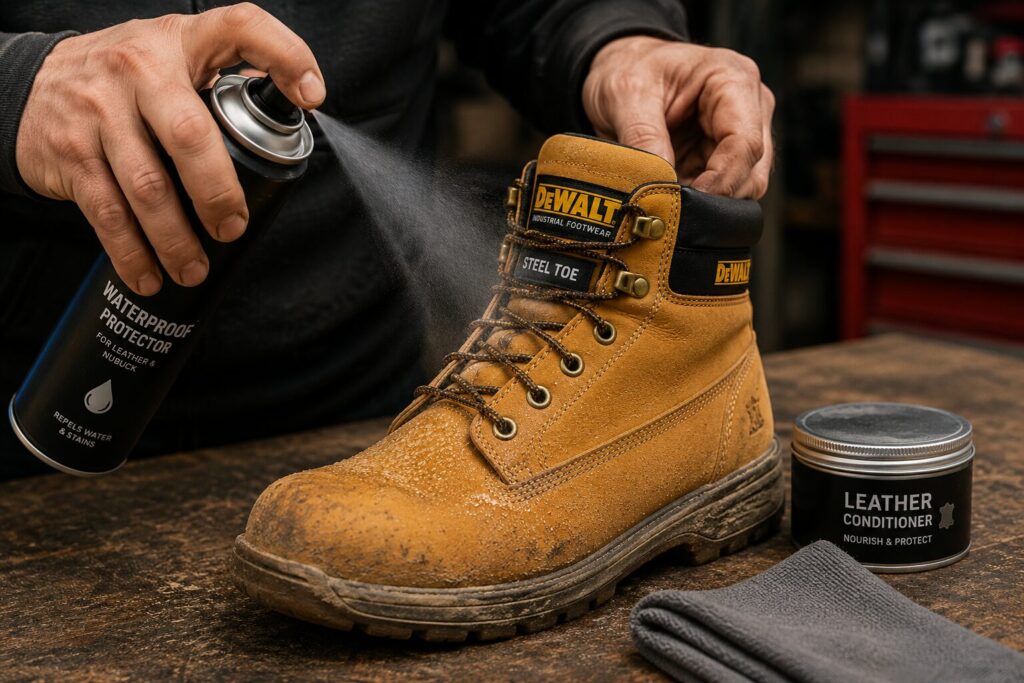
For stubborn marks, use a specialist nubuck cleaner. Once dry, reapply a suitable protective spray to help resist water and stains.
How To Clean Synthetic Work Boots Or Safety Trainers
Synthetic work boots and safety trainers are usually easier to clean.
Use warm water, a cloth and a small amount of mild soap. Wipe the upper clean, then remove any soap residue with a damp cloth.
Avoid putting safety trainers in the washing machine unless the manufacturer specifically says it is safe. Heat, spinning and detergent can damage the structure, adhesives, toe protection and midsole.
Step 4: Clean The Soles Properly
The sole is one of the most important parts of a work boot. It gives you grip, stability and protection underfoot.
Use a stiff brush to remove mud, stones and debris from the tread. If dirt is stuck deep in the grooves, use a blunt tool carefully to loosen it without cutting into the sole.
This is also a good time to check the tread. If the sole is worn smooth, split or uneven, the boots may no longer give you the grip you need on site.
Step 5: Dry Your Work Boots The Right Way
This is where a lot of people ruin good boots.
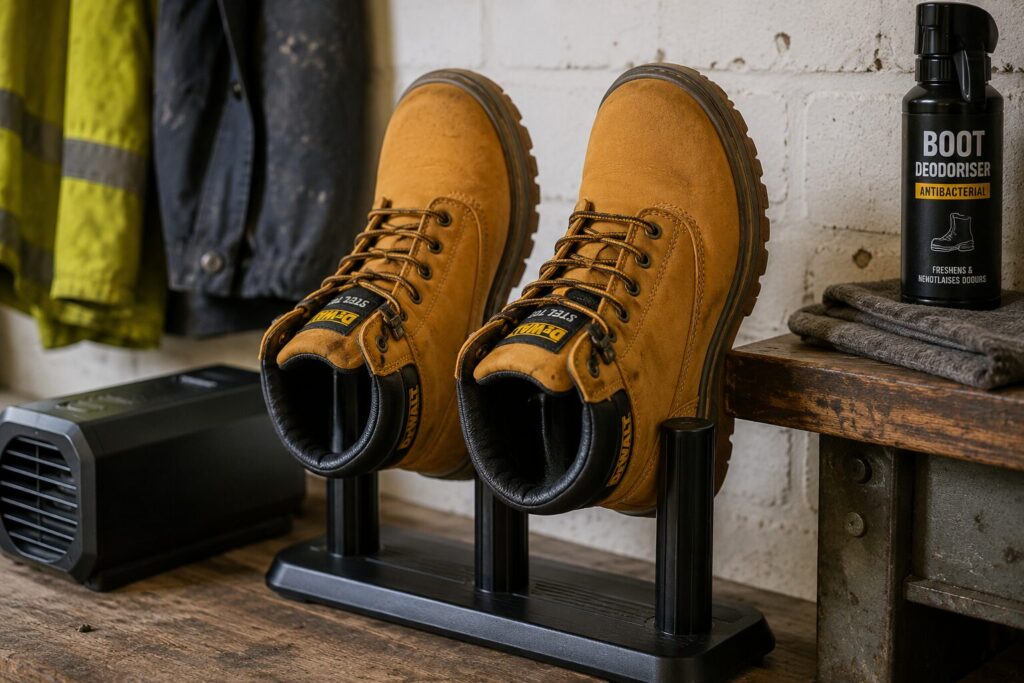
Never dry work boots on a radiator, in a tumble dryer, with a heat gun or directly in front of a heater. Direct heat can crack leather, weaken adhesives, shrink materials and damage waterproof membranes.
The best method is to dry boots naturally at room temperature.
Stuff them loosely with newspaper to help draw out moisture. Replace the newspaper if it becomes wet. Leave the boots somewhere ventilated and allow them to dry slowly.
| Drying Method | Should You Do It? | Why |
|---|---|---|
| Room temperature | Yes | Safest method for most boots |
| Newspaper inside boots | Yes | Helps absorb moisture |
| Radiator | No | Can crack leather and damage glue |
| Tumble dryer | No | Can damage structure and safety features |
| Direct sunlight | Avoid | Can dry and fade materials |
Step 6: Reproof And Protect Your Boots
Cleaning removes dirt, but it can also remove some of the protective treatment from the boot.
Once your boots are clean and fully dry, apply the correct protection for the material.
Leather boots may need a wax, cream or conditioner. Waterproof boots may need a suitable reproofing spray. Nubuck and suede boots should be treated with a specialist protector.
This helps water bead off the surface rather than soaking in. It also helps reduce staining and makes the next clean easier.
How To Stop Work Boots Smelling
Smelly work boots are usually caused by moisture, sweat and bacteria. Cleaning the outside helps, but the inside needs attention too.
Remove the insoles after long or wet days and let them air. Open the boots up as much as possible so air can circulate. Use boot deodoriser, antibacterial spray or a proper boot dryer if needed.
Do not leave damp boots in the van overnight if you can avoid it. That is one of the quickest ways to make them smell worse.
For everyday wear, rotating between two pairs of boots can also help. It gives each pair more time to dry properly between shifts.
Can You Wash Safety Boots In The Washing Machine?
In most cases, no.
A washing machine can be too aggressive for safety boots. It can affect the shape, weaken adhesives, damage leather, mark the upper and potentially affect protective parts of the boot.
Even if the boots come out looking cleaner, they may not perform the same afterwards.
If you are unsure, check the manufacturer’s guidance. As a general rule, hand cleaning is the safer option.
How Often Should You Clean Work Boots?
It depends how dirty they get.
If you work in mud, wet ground, plaster, concrete dust or heavy site conditions, give them a quick brush down after each use and a proper clean once a week.
For lighter use, cleaning them every couple of weeks may be enough.
The key is not letting mud and dirt build up for months. The longer grime sits on the boot, the harder it is to remove and the more damage it can cause.
Common Mistakes That Ruin Work Boots
| Mistake | Why It Is A Problem |
|---|---|
| Leaving mud on boots for weeks | Dirt dries into the material and weakens it |
| Drying boots on a radiator | Heat can crack leather and damage adhesives |
| Using bleach or harsh chemicals | Can damage uppers, stitching and coatings |
| Scrubbing suede or nubuck too hard | Can ruin the surface texture |
| Never reproofing waterproof boots | Reduces water resistance over time |
| Storing boots while damp | Encourages odours and material breakdown |
When Should You Replace Your Work Boots?
Cleaning can extend the life of your boots, but it cannot fix everything.
You should consider replacing your work boots if the tread is badly worn, the sole is split, the upper is cracked, the toe area is damaged or the boot no longer supports your foot properly.
For safety boots, visible damage should not be ignored. If the protective toe cap, midsole or sole unit has been affected, it may be time for a new pair.
Best Way To Keep Work Boots Clean For Longer
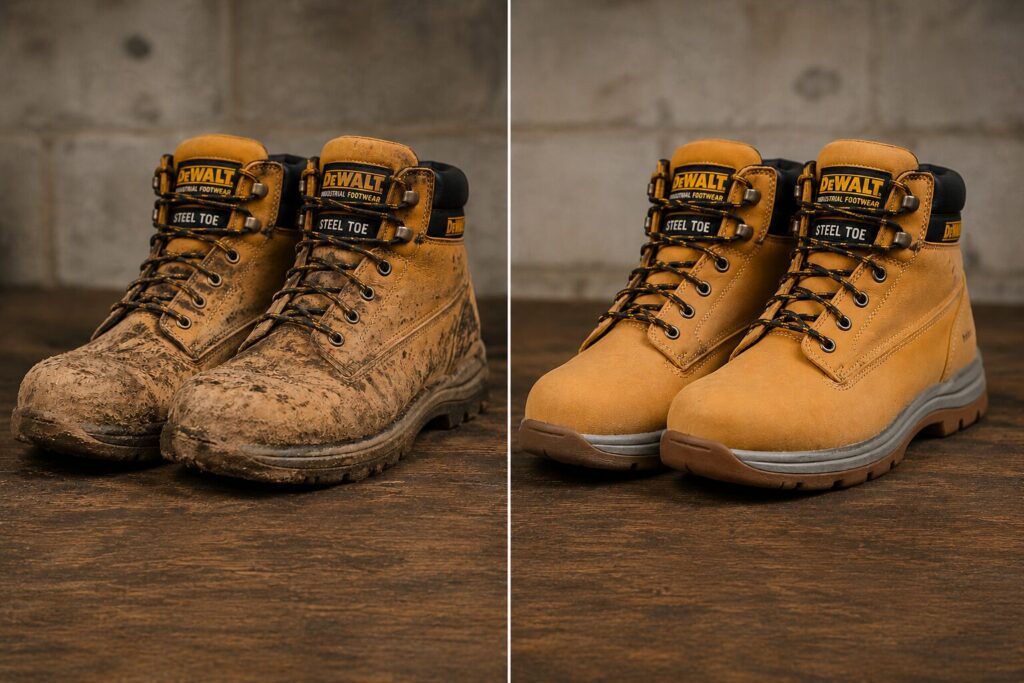
The easiest way to keep boots clean is to stop dirt building up in the first place.
Brush them off regularly. Dry them properly. Reproof them when needed. Store them somewhere ventilated. Do not leave them sitting in wet mud, the back of the van or a damp garage for days at a time.
A few minutes of care after a tough day can save you from replacing your boots earlier than needed.
FAQs
How do you clean muddy work boots?
Let the mud dry slightly, then brush off as much as possible before using water.
If you wipe wet mud straight into the boot, it can spread and stain the upper.
Can you clean leather work boots with washing up liquid?
A tiny amount of mild soap can be used if needed, but avoid strong detergents.
Always wipe away residue and condition the leather once the boots are dry.
How do you dry wet safety boots?
Dry them naturally at room temperature.
Stuff them with newspaper and keep them in a well ventilated area.
Avoid radiators, tumble dryers and direct heat.
How do you stop work boots from smelling?
Remove the insoles, air the boots properly and let them dry between wears.
Boot deodoriser, antibacterial spray or a boot dryer can also help.
Should you waterproof work boots after cleaning?
Yes, if the boots are designed to be waterproof or water resistant.
Cleaning can reduce surface protection, so reproofing helps maintain performance.
Can baby wipes clean work boots?
Baby wipes can work for light marks and quick touch ups, especially on smooth leather.
They are not a full replacement for proper cleaning, drying and reproofing, but they can be useful for small scuffs and surface dirt.
Final Thoughts
Work boots are one of the hardest working bits of kit you own.
They protect your feet, keep you comfortable and take abuse every day on site. Cleaning them properly is a simple way to make them last longer, smell better and perform the way they should.
Brush off dirt regularly, clean the upper carefully, dry them naturally and reproof them when needed. Do that, and your boots will stay in better condition for longer.