Drill bits might seem like a simple accessory, but choosing the wrong one can quickly turn a straightforward job into a frustrating one. Whether you’re drilling into timber, steel, brick, concrete, tile, or plastic, using the correct drill bit is just as important as using the right drill.
The right bit delivers cleaner holes, faster drilling speeds, longer tool life, and better results overall. The wrong bit can overheat, wear out quickly, damage materials, or simply fail to get the job done.
In this guide, we’ll explain the most common types of drill bits, what materials they’re designed for, and how to choose the right drill bit for every task.
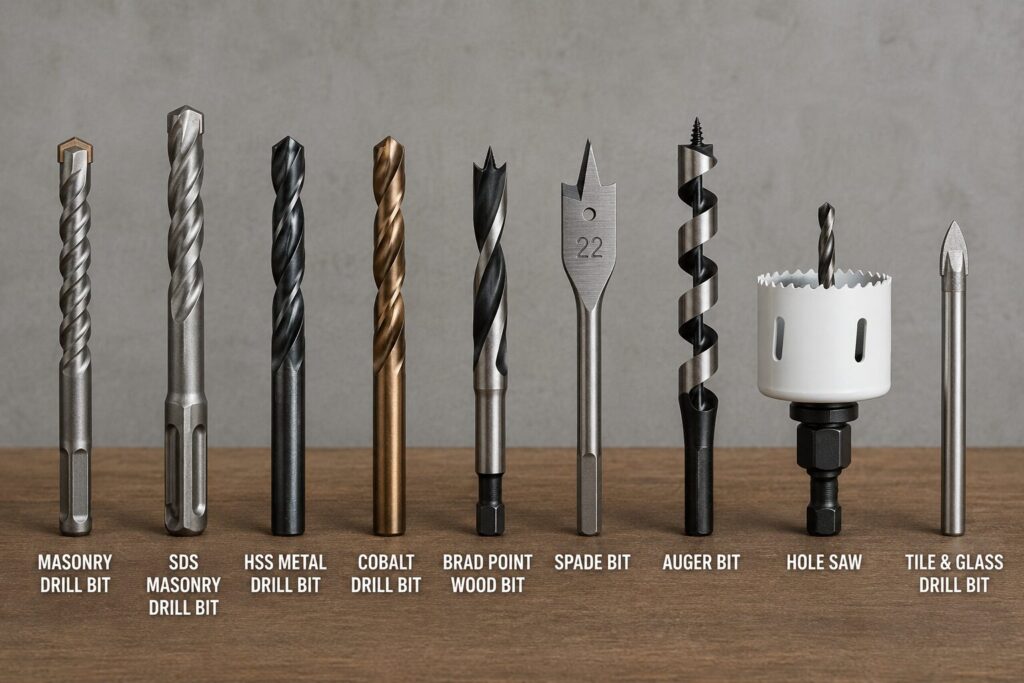
Quick Drill Bit Selection Guide
| Material | Recommended Drill Bit |
|---|---|
| Softwood | Brad Point Bit |
| Hardwood | Brad Point Bit |
| Mild Steel | HSS Metal Bit |
| Stainless Steel | Cobalt Bit |
| Brick | Masonry Bit |
| Concrete | SDS Masonry Bit |
| Tile | Tile & Glass Bit |
| Glass | Glass Bit |
| Plastic | HSS Bit |
| Large Diameter Holes | Spade Bit or Hole Saw |
If you’re unsure which drill bit to use, this table provides a quick reference for the most common materials.
Drill Bit Comparison Table
With so many different drill bit types available, choosing the right one can sometimes feel confusing. While some drill bits are designed for a single material, others can handle multiple applications. The table below provides a quick comparison of the most common drill bit types and the materials they are best suited for.
| Drill Bit Type | Wood | Metal | Brick | Concrete | Tile & Glass | Plastic | Best Use |
|---|---|---|---|---|---|---|---|
| HSS Drill Bit | ✓ | ✓ | ✗ | ✗ | ✗ | ✓ | General purpose drilling in metal, plastic and light woodworking |
| Cobalt Drill Bit | ✗ | ✓✓ | ✗ | ✗ | ✗ | ✗ | Stainless steel, hardened steel and tough alloys |
| Masonry Drill Bit | ✗ | ✗ | ✓✓ | ✓ | ✗ | ✗ | Brick, blockwork and general masonry |
| SDS Drill Bit | ✗ | ✗ | ✓ | ✓✓ | ✗ | ✗ | Heavy duty concrete and structural masonry |
| Brad Point Bit | ✓✓ | ✗ | ✗ | ✗ | ✗ | ✗ | Accurate woodworking and joinery |
| Spade Bit | ✓✓ | ✗ | ✗ | ✗ | ✗ | ✗ | Fast drilling of large holes in timber |
| Auger Bit | ✓✓ | ✗ | ✗ | ✗ | ✗ | ✗ | Deep holes in structural timber |
| Hole Saw | ✓ | ✓ | ✓ | ✗ | ✗ | ✓ | Large diameter holes in various materials |
| Tile & Glass Bit | ✗ | ✗ | ✗ | ✗ | ✓✓ | ✗ | Ceramic tiles, porcelain and glass |
| Multi Construction Bit | ✓ | ✓ | ✓ | ✓ | ✓ | ✓ | Mixed material drilling and renovation work |
| Step Drill Bit | ✗ | ✓✓ | ✗ | ✗ | ✗ | ✓ | Sheet metal, electrical panels and plastics |
| Forstner Bit | ✓✓ | ✗ | ✗ | ✗ | ✗ | ✗ | Flat bottom holes and cabinet making |
Key
✓ Suitable
✓✓ Best Choice
✗ Not Recommended
Trade Tip
If you’re carrying out renovation, installation, or maintenance work where you’ll be drilling through multiple materials throughout the day, a multi construction drill bit can save time by reducing the need to constantly swap bits. They’re particularly popular with electricians, kitchen fitters, plumbers, and general builders who regularly encounter timber, masonry, metal, and plastic on the same job.
What Are Drill Bits Made From?
Not all drill bits are manufactured from the same materials. Different coatings and materials are designed to improve durability, heat resistance, and cutting performance.
High Speed Steel (HSS)
High Speed Steel drill bits are among the most versatile options available. They’re suitable for drilling wood, plastic, aluminium, copper, and mild steel.
Most general-purpose drill bit sets include HSS bits because they perform well across a wide range of materials.
Titanium Coated Drill Bits
Titanium coated bits feature a thin titanium nitride coating that improves wear resistance and reduces friction during drilling.
They typically last longer than standard HSS bits and are ideal for regular site use.
Cobalt Drill Bits
Cobalt bits are specifically designed for drilling harder metals.
Unlike coated bits, cobalt is mixed throughout the steel, allowing the bit to maintain its performance even as it wears.
They’re particularly useful when drilling stainless steel, cast iron, and hardened metals.
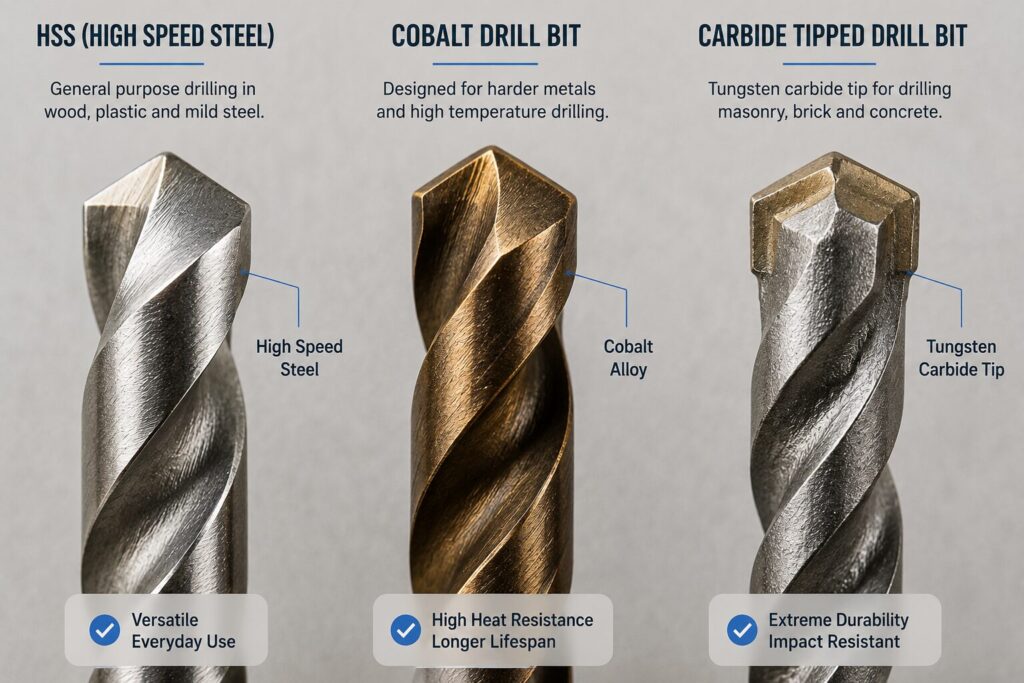
Carbide Tipped Drill Bits
Carbide tipped drill bits are designed for masonry applications.
The extremely hard carbide tip allows the bit to withstand repeated hammer action when drilling into brick, stone, and concrete.
Masonry Drill Bits
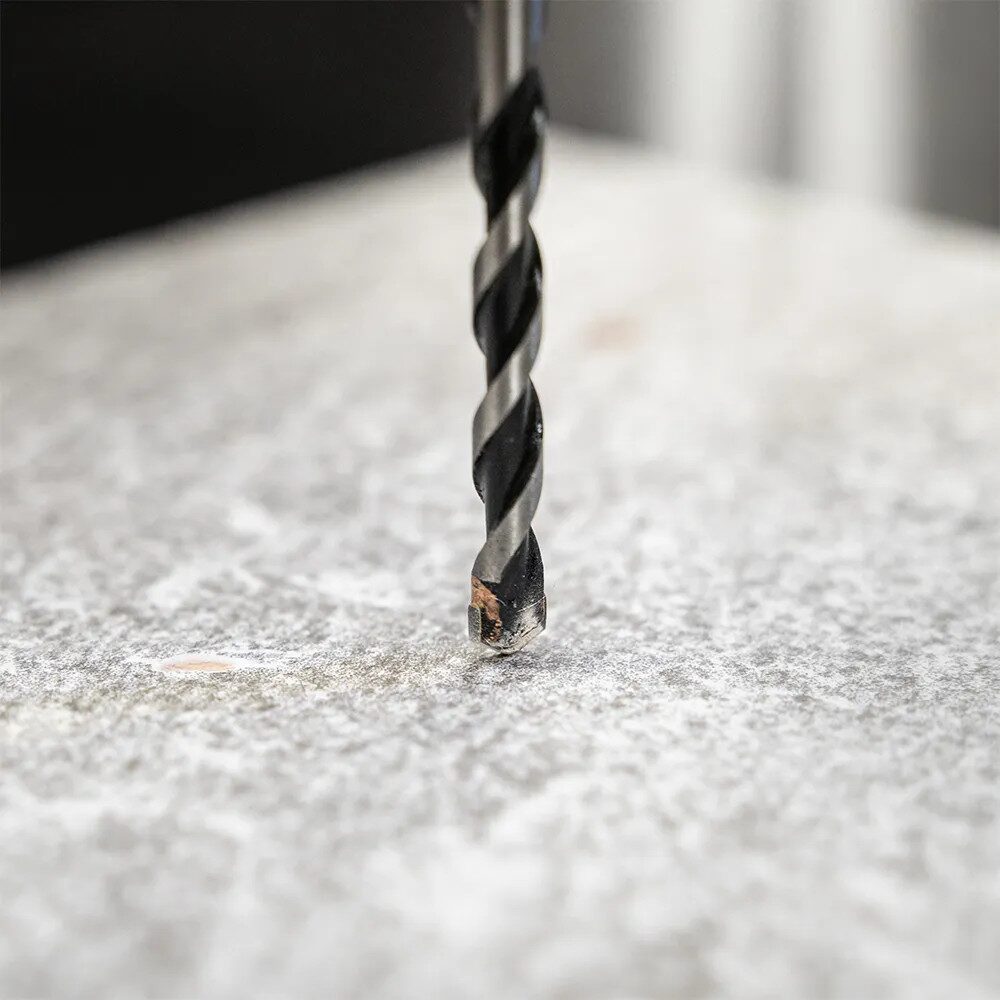
Masonry bits are designed specifically for drilling brick, blockwork, stone, and concrete.
Unlike metal or wood bits, masonry drill bits use a carbide cutting tip that crushes and breaks away material as the drill rotates.
For best results, masonry bits should be used with a combi drill in hammer mode or an SDS drill.
Best For
- Brick
- Concrete
- Stone
- Blockwork
- Mortar
Advantages
- Long-lasting carbide tips
- Fast drilling in masonry materials
- Suitable for hammer drilling
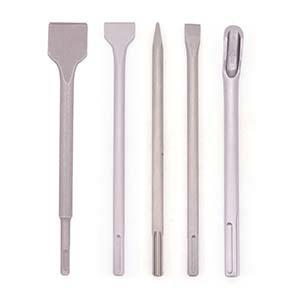
SDS Drill Bits
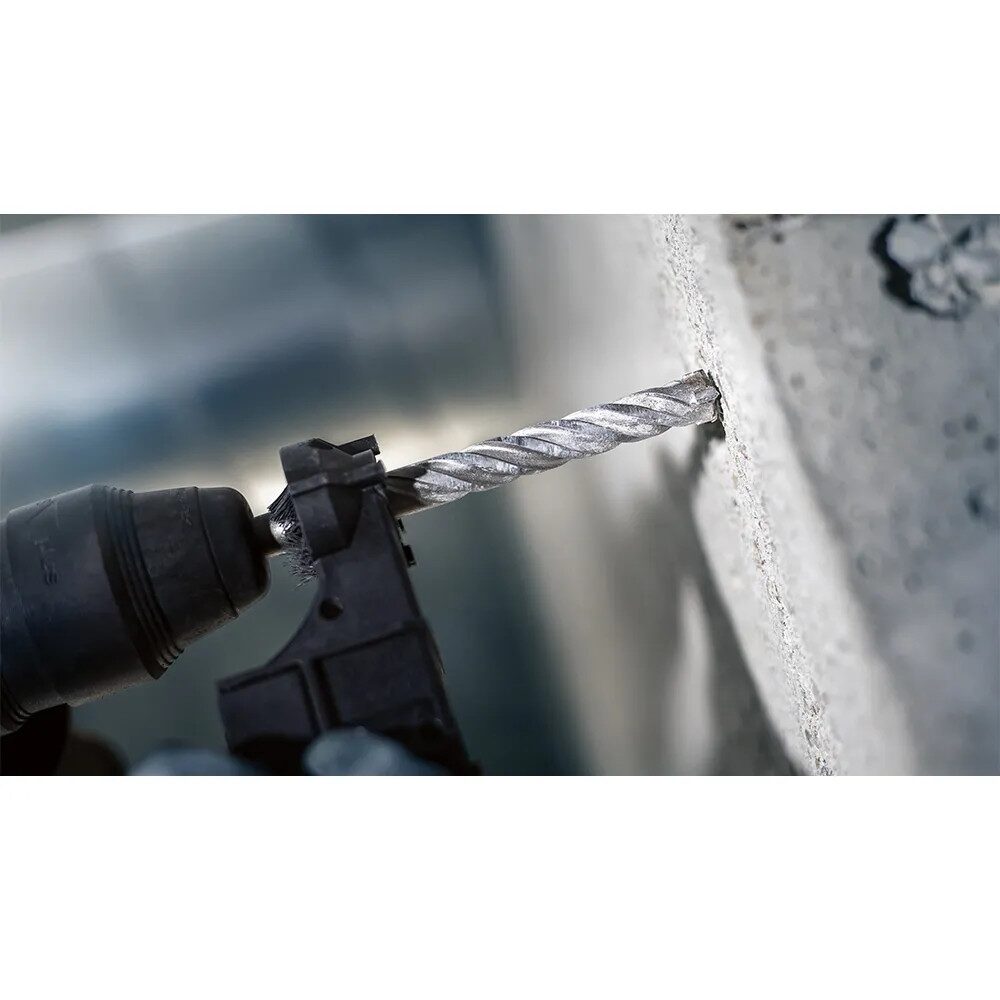
SDS drill bits are designed exclusively for SDS Plus and SDS Max rotary hammer drills.
The SDS shank locks directly into the drill, allowing more powerful hammer action and faster drilling through concrete.
If you’re regularly drilling large holes into concrete, SDS bits are the preferred solution.
Best For
- Reinforced concrete
- Structural concrete
- Heavy-duty masonry work
- Large fixing holes
Advantages
- Faster drilling speeds
- Reduced user fatigue
- Superior performance in concrete
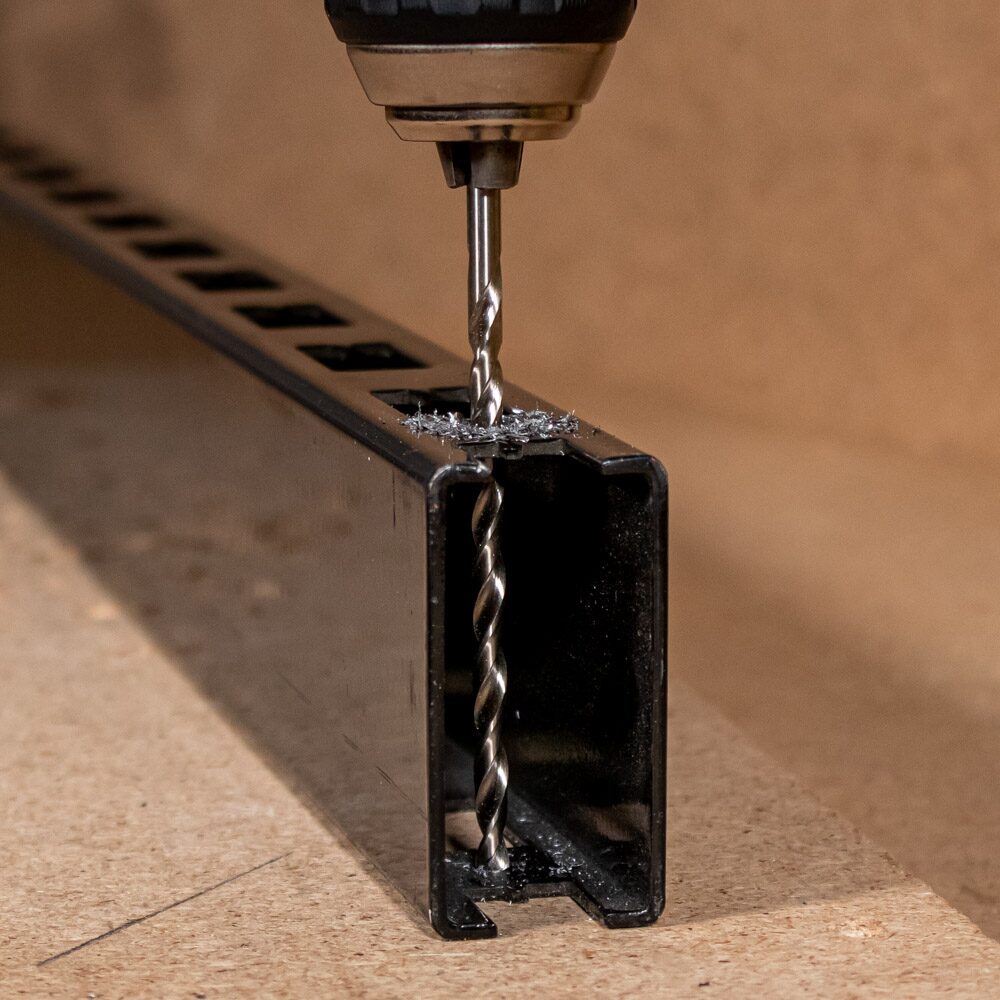
HSS Metal Drill Bits
High Speed Steel bits are the most common type of metal drilling bit.
Their sharp cutting edges allow them to remove material efficiently while producing clean, accurate holes.
These bits are commonly used by electricians, metal fabricators, plumbers, mechanics, and DIY users.
Best For
- Steel
- Aluminium
- Copper
- Brass
- Plastic
Advantages
- Versatile
- Affordable
- Suitable for multiple materials
Cobalt Drill Bits
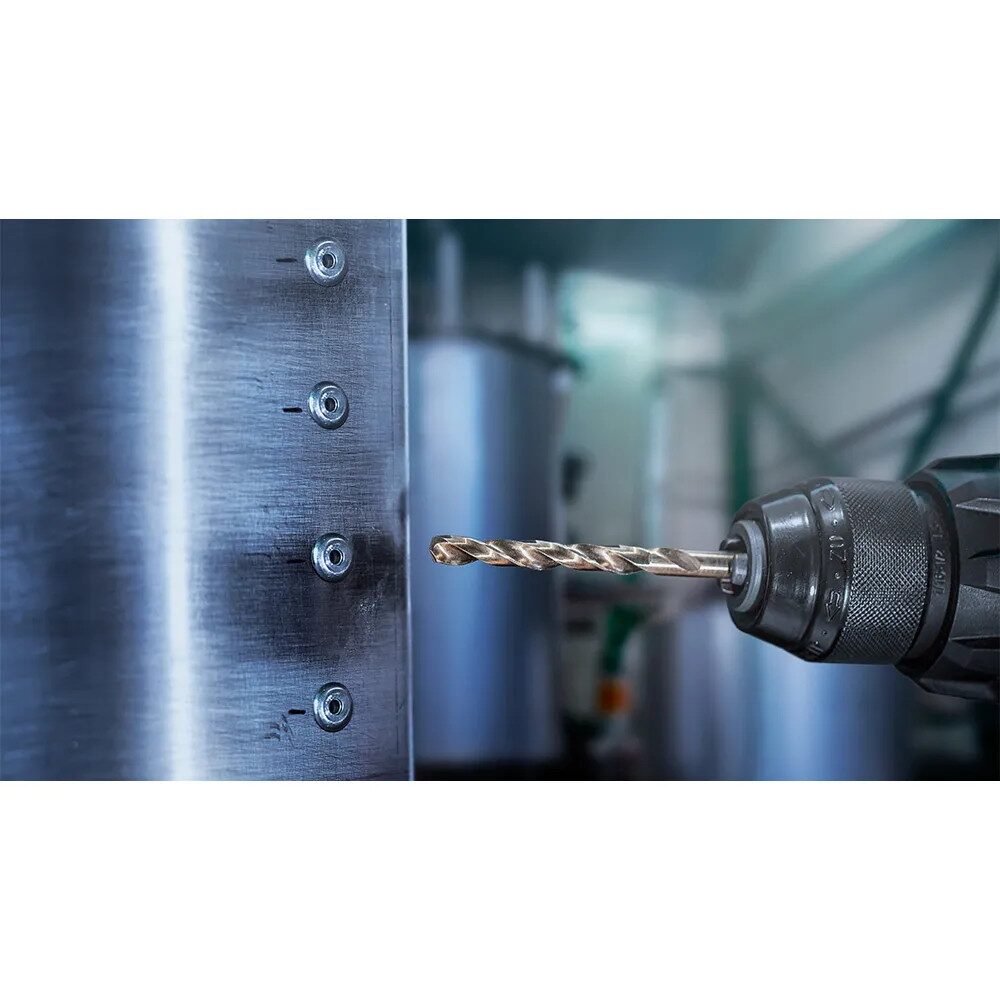
When standard HSS bits struggle, cobalt bits step in.
Designed to handle higher temperatures and harder materials, cobalt bits are the preferred choice for professional metalworking applications.
Best For
- Stainless steel
- Hardened steel
- Cast iron
- Tough alloys
Advantages
- Increased heat resistance
- Longer lifespan
- Faster drilling in hard metals
Shop Related Categories
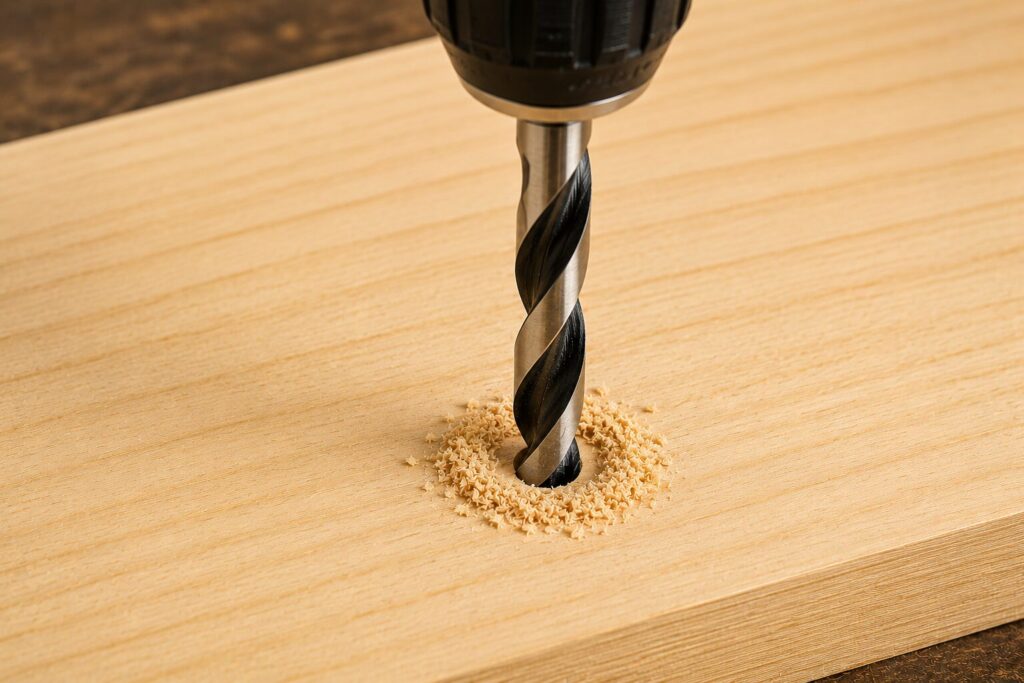
Brad Point Wood Drill Bits
Brad point bits feature a sharp centre point that keeps the bit accurately positioned as drilling begins.
This design helps prevent wandering and produces cleaner holes in timber.
They’re particularly popular with joiners, cabinet makers, and carpenters.
Best For
- Softwood
- Hardwood
- Furniture making
- Joinery work
Advantages
- Excellent accuracy
- Cleaner entry holes
- Reduced splintering
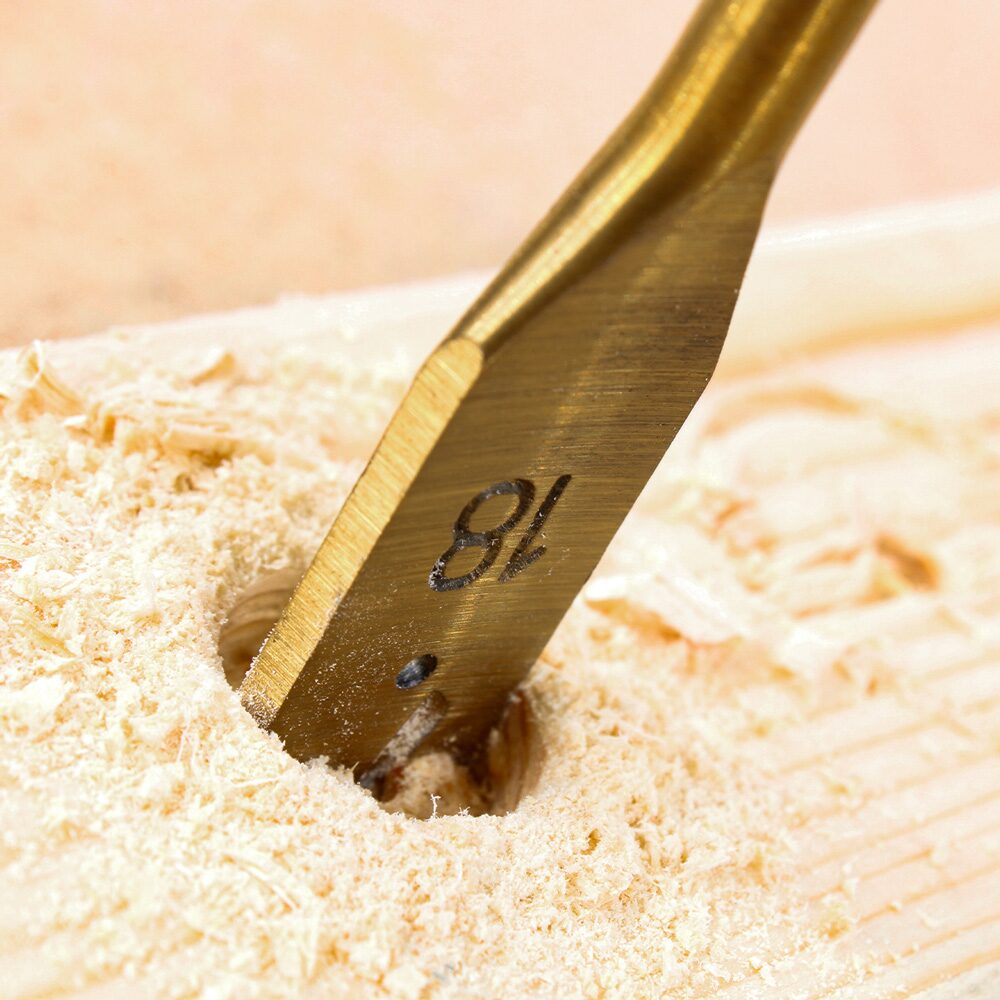
Spade Bits
Spade bits are designed for drilling large holes quickly through timber.
Their flat blade design removes material rapidly, making them ideal for first fix work.
Best For
- Cable runs
- Pipework
- First fix electrical installations
- Timber framing
Advantages
- Fast drilling speeds
- Available in large diameters
- Cost effective
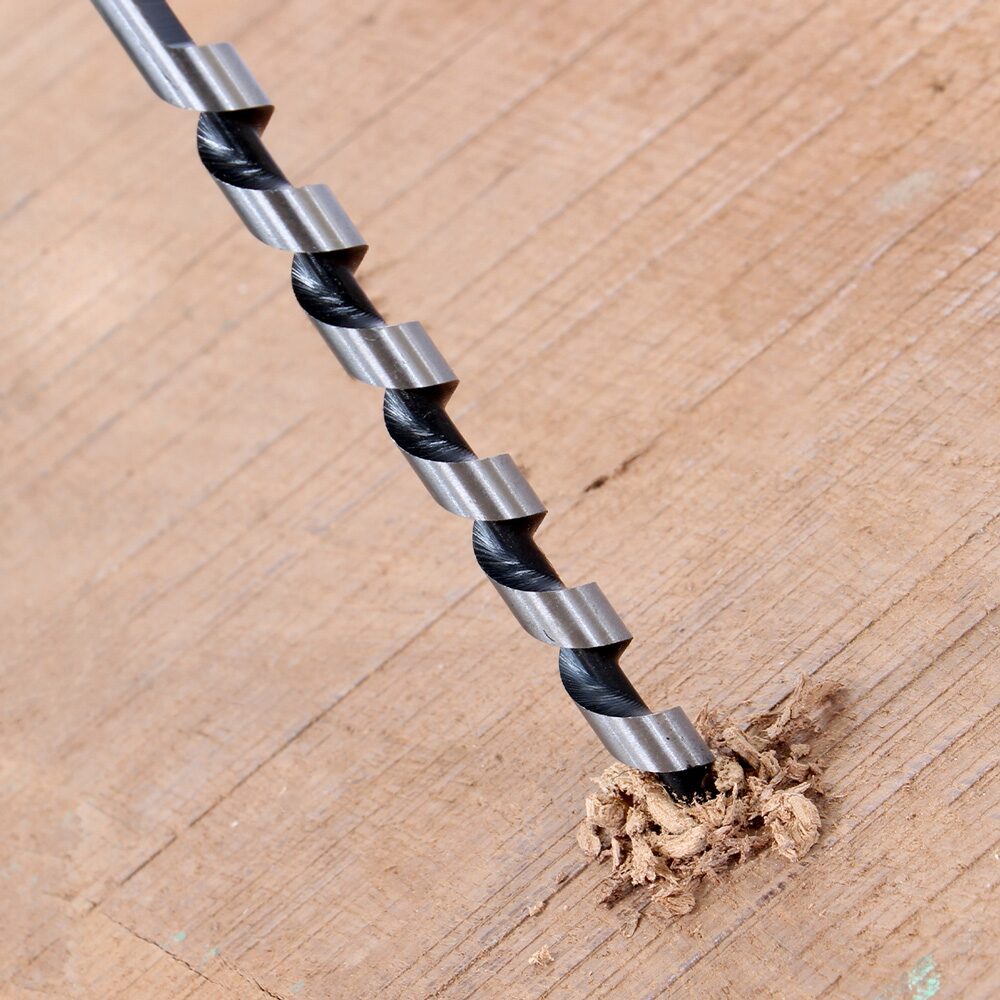
Auger Bits
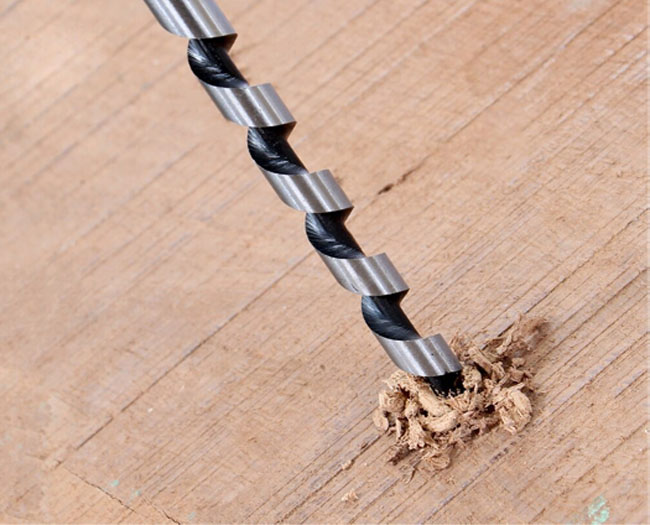
Auger bits feature a threaded centre tip that pulls the bit through timber.
This allows for deeper holes and smoother drilling with less effort.
Best For
- Structural timber
- Roof timbers
- Deep drilling applications
- Timber framing
Advantages
- Deep hole capability
- Smooth drilling action
- Efficient waste removal
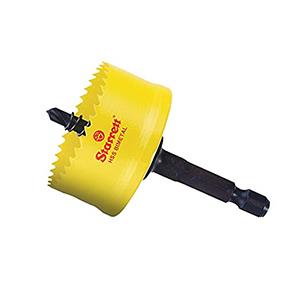
Hole Saws
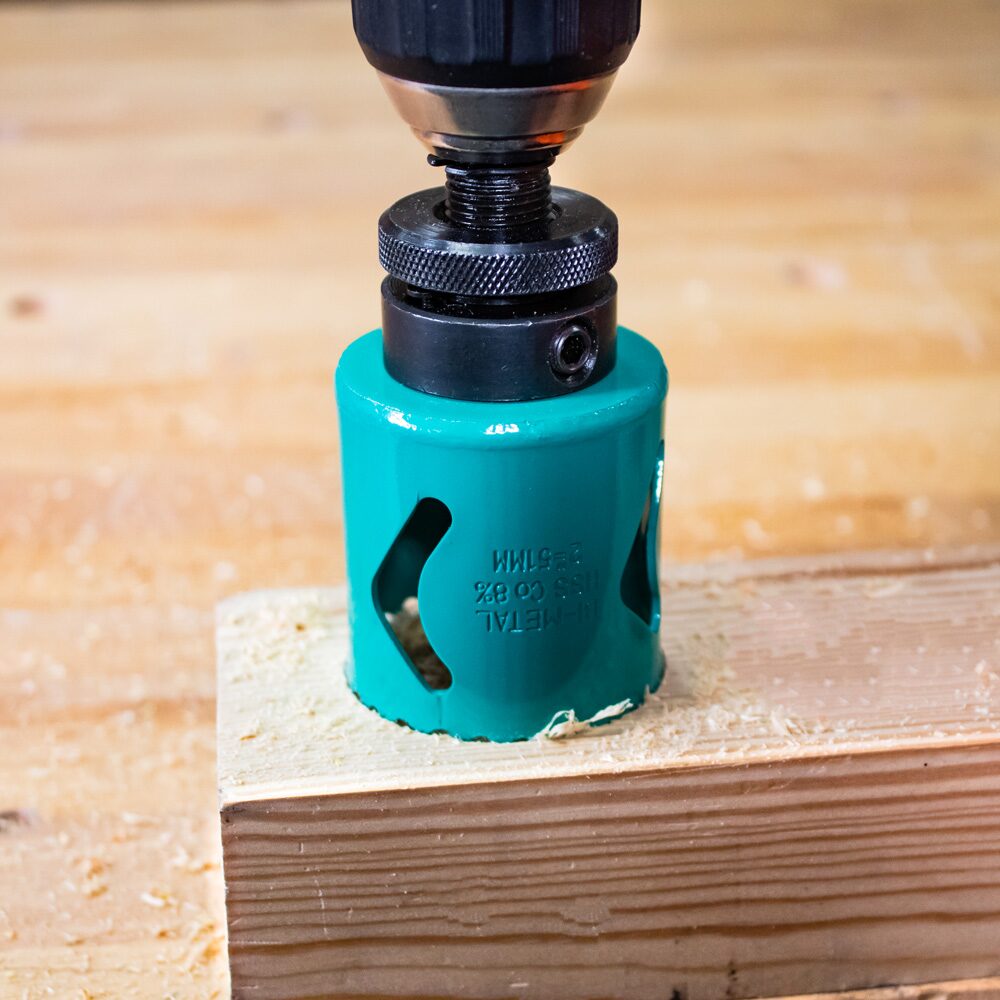
Hole saws are designed to cut large diameter holes while removing only a thin ring of material.
They’re commonly used by electricians, plumbers, kitchen fitters, and builders.
Best For
- Downlight installations
- Pipework
- Ventilation ducts
- Cable access holes
Advantages
- Large hole capability
- Faster than conventional bits
- Less material removal
Tile and Glass Drill Bits
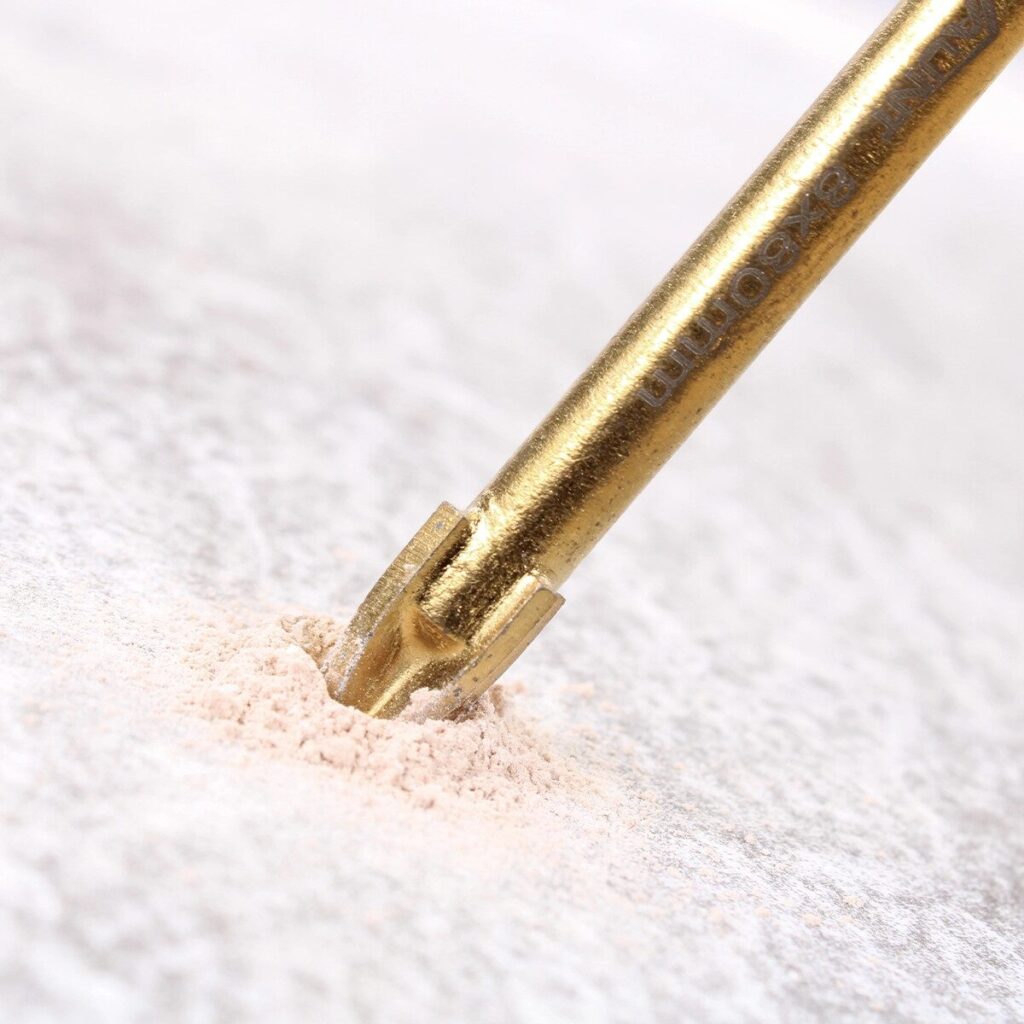
Drilling tiles and glass requires a specialist bit.
Tile and glass bits feature a spear-shaped tip that cuts slowly through delicate surfaces without cracking or chipping.
Always use low speed settings and avoid hammer mode.
Best For
- Ceramic tiles
- Thin Porcelain tiles
- Glass
- Mirrors
Advantages
- Reduces cracking
- Cleaner holes
- Greater drilling control
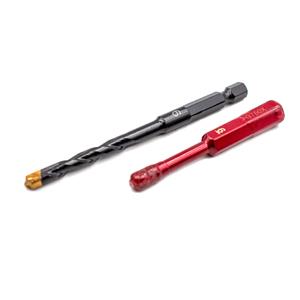
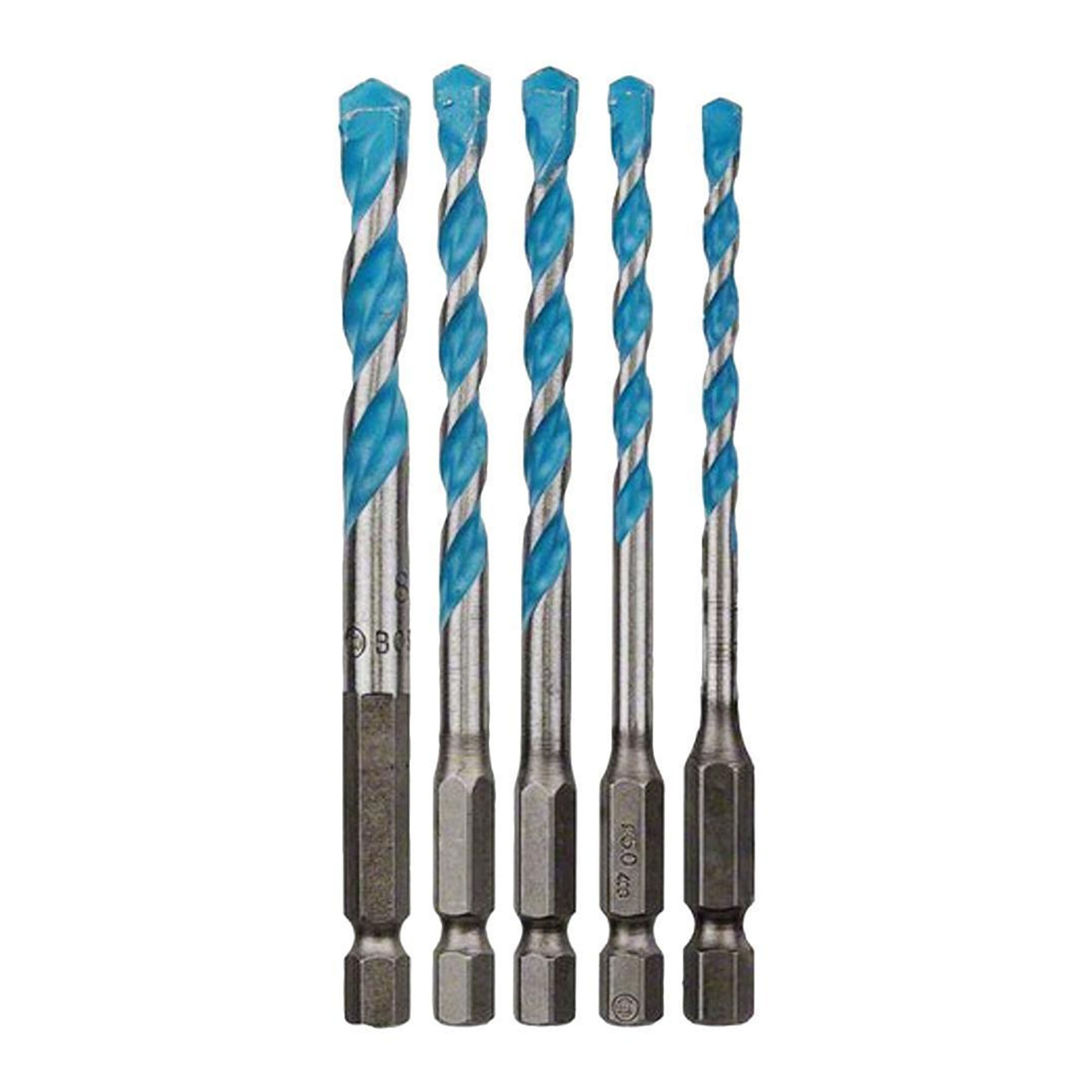
Multi Construction Drill Bits
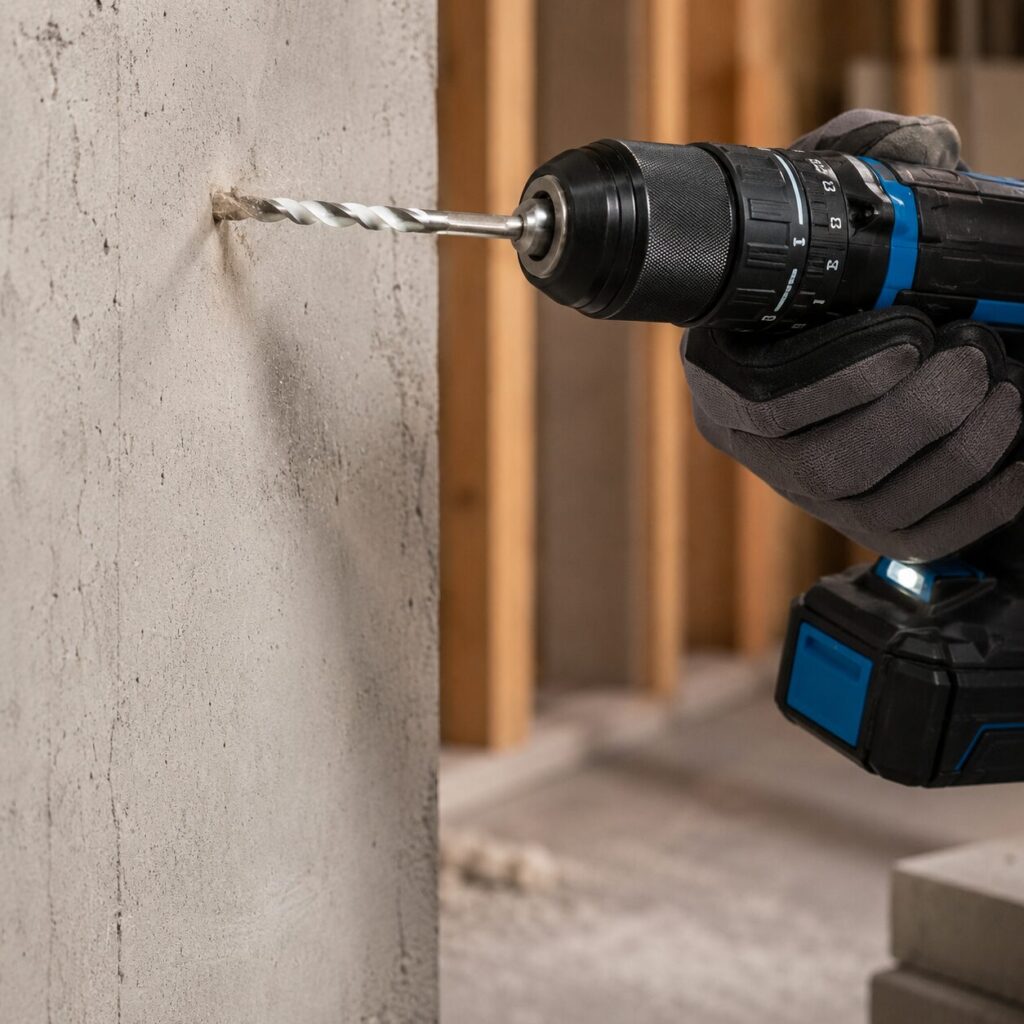
Multi construction drill bits are designed specifically for modern building materials and renovation work.
Their advanced carbide tip design allows them to drill accurately through materials such as concrete, brick, timber, metal, ceramic tiles and plastics, often without the need to change bits between tasks.
Best For
- Concrete
- Brick
- Timber
- Metal
- Ceramic tiles
- Plastics
- Renovation work
Advantages
- Extremely versatile across construction materials
- Durable carbide cutting edges
- Fast and accurate drilling performance
- Suitable for mixed material applications
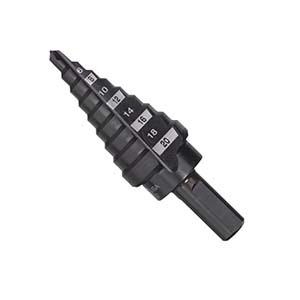
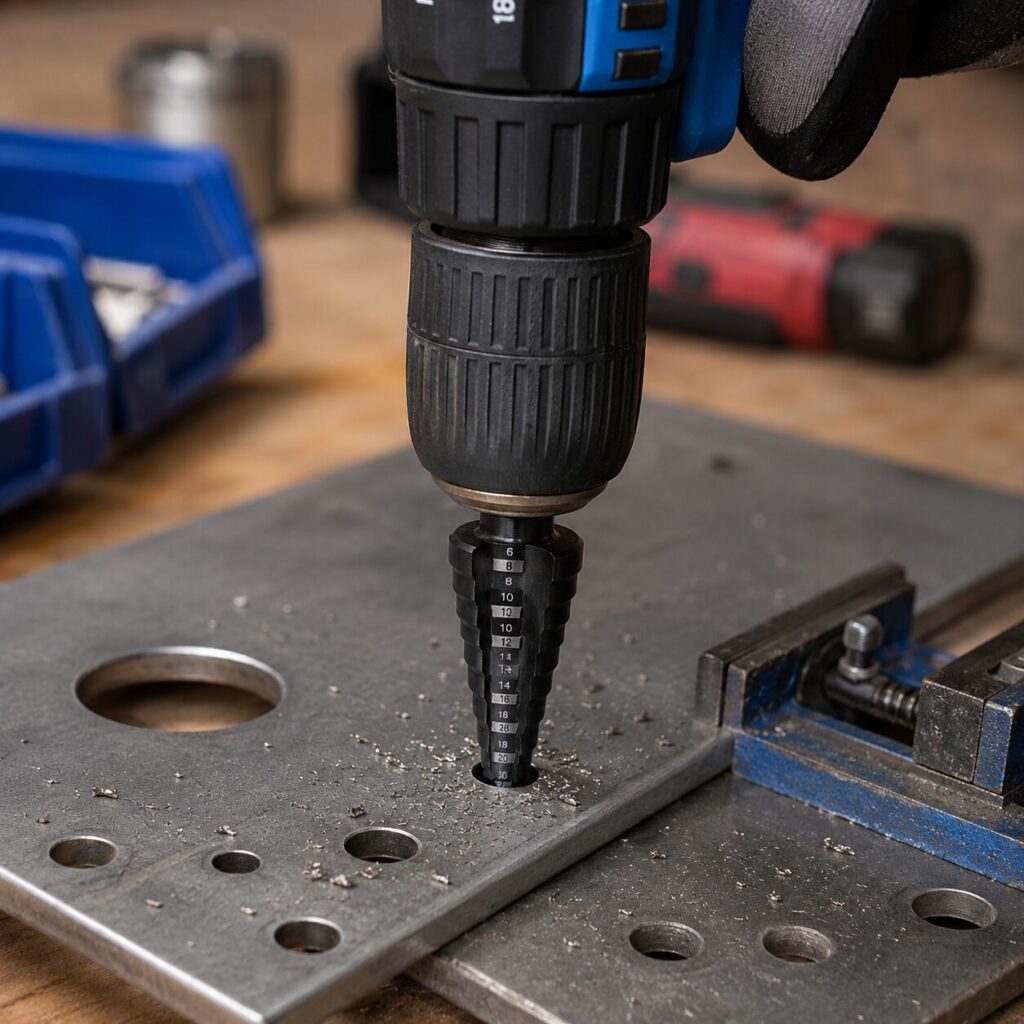
Step Drill Bits
Step drill bits feature a cone shaped design with multiple cutting diameters built into a single bit.
They are primarily used for creating or enlarging holes in sheet materials, allowing multiple hole sizes to be drilled without changing drill bits.
Best For
• Sheet metal
• Aluminium
• Copper
• Plastic
• Electrical panels
• Cable gland installation
Advantages
• Multiple hole sizes from one bit
• Creates smooth, burr free holes
• Excellent for enlarging existing holes
• Reduces the need for multiple drill bits
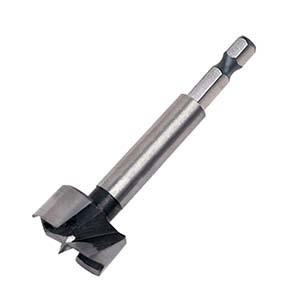
Forstner Bits
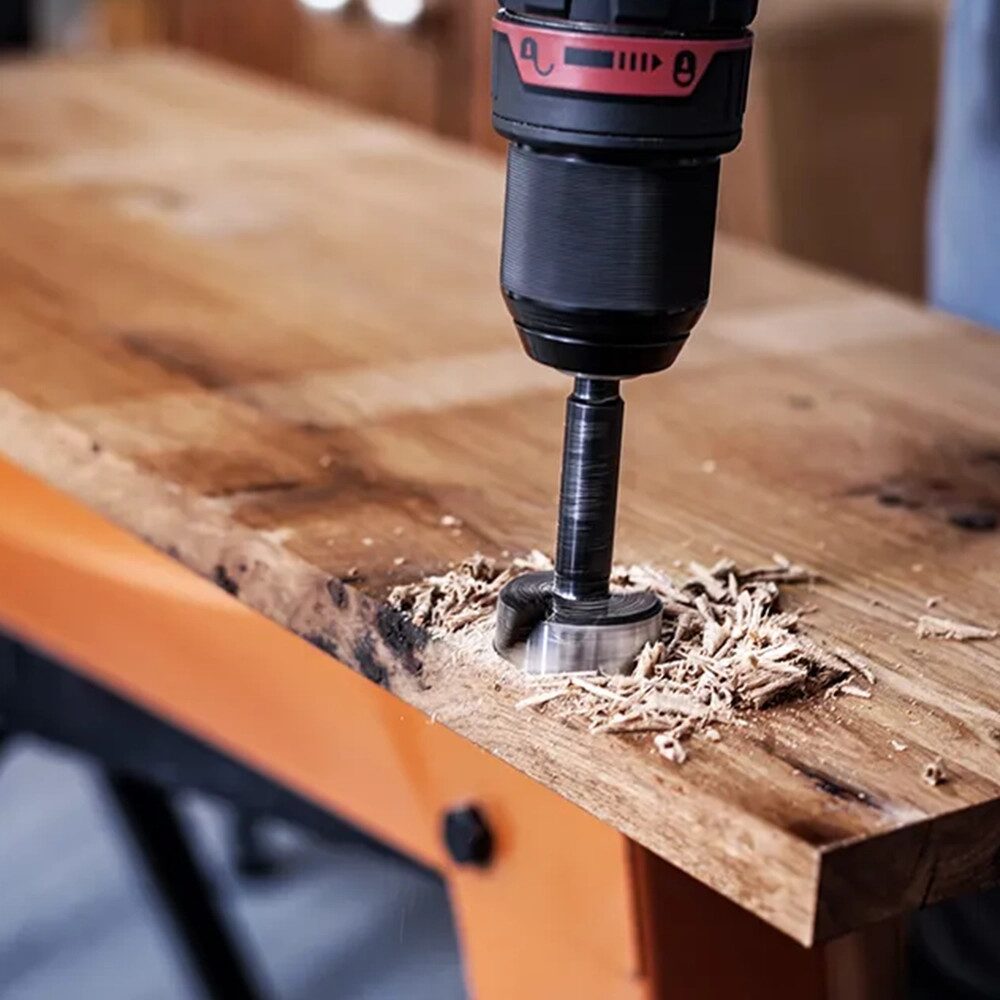
Forstner bits are specialist woodworking bits designed to create clean, flat bottomed holes with exceptional accuracy.
Their unique cutting rim scores the wood before removing material, producing smooth sided holes with minimal tear out, making them ideal for fine woodworking and cabinetry.
Best For
• Cabinet making
• Furniture construction
• Joinery work
• Concealed hinges
• Hardware recesses
• Decorative woodworking
Advantages
• Creates flat bottomed holes
• Produces exceptionally clean edges
• Minimal splintering and tear out
• Ideal for precision woodworking projects
How to Choose the Right Drill Bit
When selecting a drill bit, consider the following factors.
The Material Being Drilled
Different materials require different cutting geometries.
Wood, metal, masonry, and tile all require specialist drill bits to achieve the best results.
Hole Size Required
Larger holes may require specialist solutions such as spade bits, auger bits, or hole saws.
For maximum accuracy, start with a pilot hole where appropriate.
Drill Compatibility
Some drill bits are compatible with standard drill chucks, while others require SDS Plus or SDS Max systems.
Always ensure the bit matches your drill.
Frequency of Use
Occasional DIY users may be perfectly served by standard HSS bits.
Professional tradesmen often benefit from premium cobalt or carbide tipped bits that provide greater durability and longer service life.
What Drill Speed Should You Use?
Choosing the correct drill speed is just as important as selecting the right drill bit. Drilling too quickly can generate excessive heat, shorten drill bit life, and damage the material being drilled. Drilling too slowly can reduce efficiency and make the drill work harder than necessary.
As a general rule, softer materials such as timber and plastic can be drilled at higher speeds, while harder materials such as steel, stainless steel, tiles, and concrete require lower speeds to prevent overheating and excessive wear.
| Material | Recommended Speed | Notes |
|---|---|---|
| Softwood | High | Ideal for brad point bits, spade bits, and hole saws |
| Hardwood | Medium to High | Reduces the risk of scorching and splintering |
| Plastic | Medium | Excessive speed can melt some plastics |
| Aluminium | Medium | Clear swarf regularly for smoother drilling |
| Mild Steel | Low | Helps reduce heat build up and prolongs bit life |
| Stainless Steel | Very Low | Use cobalt drill bits and cutting lubricant where possible |
| Brick | Medium | Use hammer mode with masonry drill bits |
| Concrete | Medium | SDS drills provide the fastest and most efficient results |
| Ceramic Tiles | Low | Drill slowly and avoid hammer mode |
| Glass | Very Low | Apply light pressure and keep the bit cool |
Trade Tip
When drilling metal, slower speeds generally produce better results than faster speeds. If the drill bit becomes discoloured, starts smoking, or feels excessively hot, reduce the speed immediately and allow the bit to cool before continuing.
Signs You’re Drilling Too Fast
If you’re unsure whether you’re using the correct speed, watch for these common warning signs:
- The drill bit becomes excessively hot
- Metal swarf turns blue or discoloured
- Timber begins to burn or smoke
- Plastic melts around the hole
- The drill bit becomes dull quickly
- Tiles chip or crack during drilling
Using the correct speed setting will improve drilling performance, produce cleaner holes, and help your drill bits last significantly longer.
Common Drill Bit Mistakes
Even experienced users occasionally choose the wrong bit.
Some of the most common mistakes include:
Using Wood Bits on Masonry
Wood bits are not designed to withstand hammer drilling and will quickly become damaged.
Using Hammer Mode on Tiles
Hammer action can crack tiles instantly.
Always drill tiles using standard rotary mode.
Drilling Metal Too Fast
Excessive speed generates heat and shortens drill bit life.
Applying Too Much Pressure
Let the drill bit do the work.
Excessive force increases wear and can damage both the bit and material.
How to Make Drill Bits Last Longer
A quality drill bit can last for years if properly maintained.
To maximise lifespan:
- Use the correct speed setting
- Apply cutting lubricant when drilling metal
- Clear debris regularly
- Avoid overheating
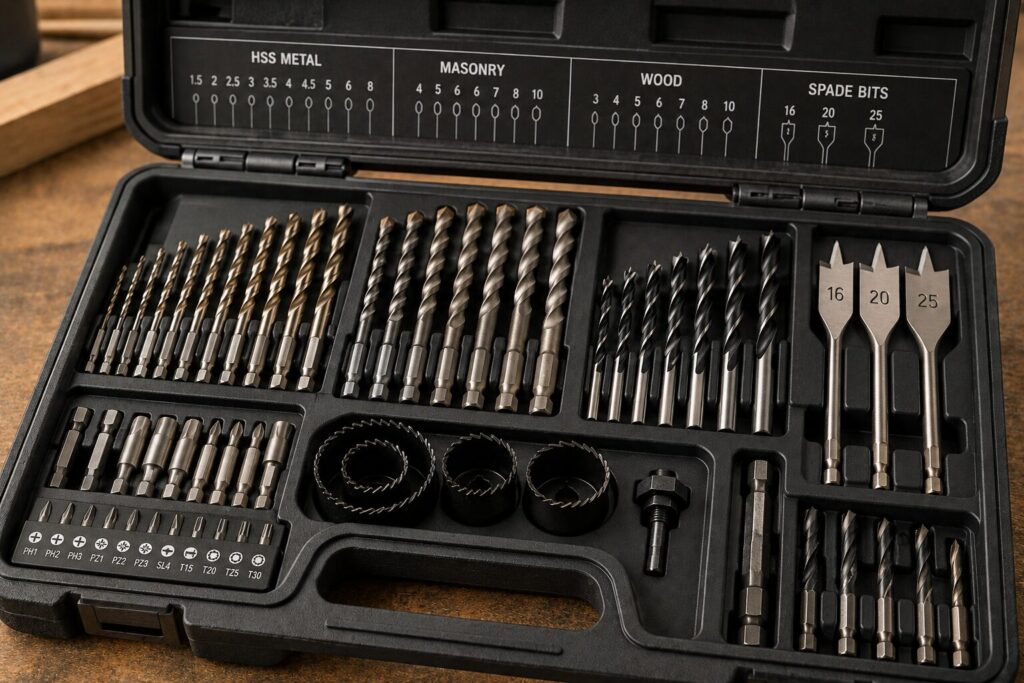
- Store bits properly in a case or organiser
- Replace damaged bits promptly
Frequently Asked Questions
What drill bit is best for brick?
A carbide tipped masonry drill bit is the best option for brickwork.
Can I drill metal with a masonry bit?
No. Masonry bits are designed for impact drilling and will perform poorly in metal.
What’s the difference between SDS and masonry drill bits?
Masonry refers to the cutting tip design, while SDS refers to the shank system used by SDS drills.
Are cobalt drill bits worth buying?
Yes. If you regularly drill stainless steel or hard metals, cobalt bits offer significantly better performance and longevity.
Can Drill Bits Be Sharpened?
Most HSS and cobalt bits can be sharpened multiple times using a drill bit sharpener or bench grinder.
How do I know when a drill bit is worn out?
Signs include slower drilling speeds, excessive heat, poor hole quality, and visible damage to the cutting edges.
Final Verdict
The best drill bit is always the one designed specifically for the material you’re drilling.
Whether you’re working with timber, steel, brick, concrete, tile, or plastic, selecting the correct drill bit will improve drilling performance, increase accuracy, and help your tools last longer.
Investing in quality drill bits and understanding when to use them will save time, improve results, and make every drilling job easier.