A drill is one of the most useful power tools you can own, whether you’re putting up shelves at home, fitting kitchens, installing electrical systems, or tackling major construction projects. The problem is that not all drills are designed for the same jobs.
Walk into any tool retailer and you’ll find combi drills, drill drivers, impact drivers, SDS drills, corded drills, cordless drills, brushless drills and more. Choosing the wrong type can leave you struggling to complete the task efficiently, while choosing the right one can save time, effort, and money.
This guide explains the different types of drills, what they’re designed for, and how to choose the best drill for your needs.
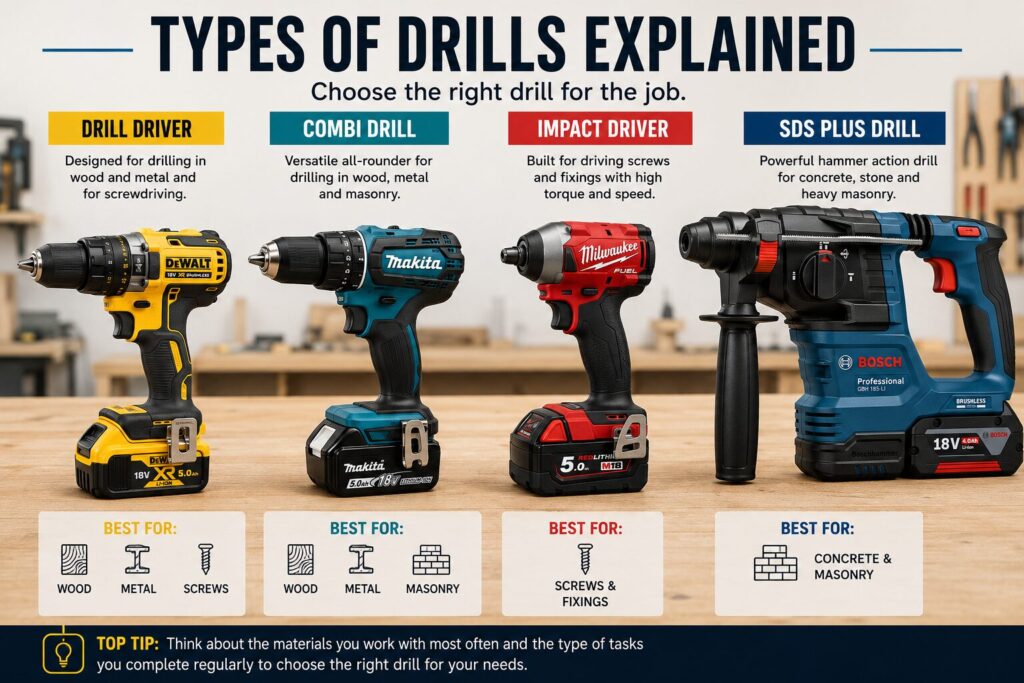
Quick Answer: Which Drill Do I Need?
| Job | Recommended Drill |
|---|---|
| Hanging shelves in timber or plasterboard | Drill Driver or Combi Drill |
| Hanging shelves on a brick wall | Combi Drill |
| Flat pack furniture | Drill Driver |
| General DIY | Combi Drill |
| Drilling into brick | Combi Drill |
| Drilling into concrete | SDS Plus Drill |
| Driving long screws | Impact Driver |
| Metal drilling | Drill Driver or Combi Drill |
| Kitchen fitting | Combi Drill and Impact Driver |
| Professional trade work | Brushless Combi Drill |
| Heavy concrete drilling or demolition | SDS Plus or SDS Max Drill, depending on the task |
If you’re only buying one drill, an 18V cordless combi drill is usually the best all round option.
What Are The Main Types Of Drill?
Different drills are designed for different applications. Understanding the strengths of each type will help you choose the right tool from the start.
Drill Drivers
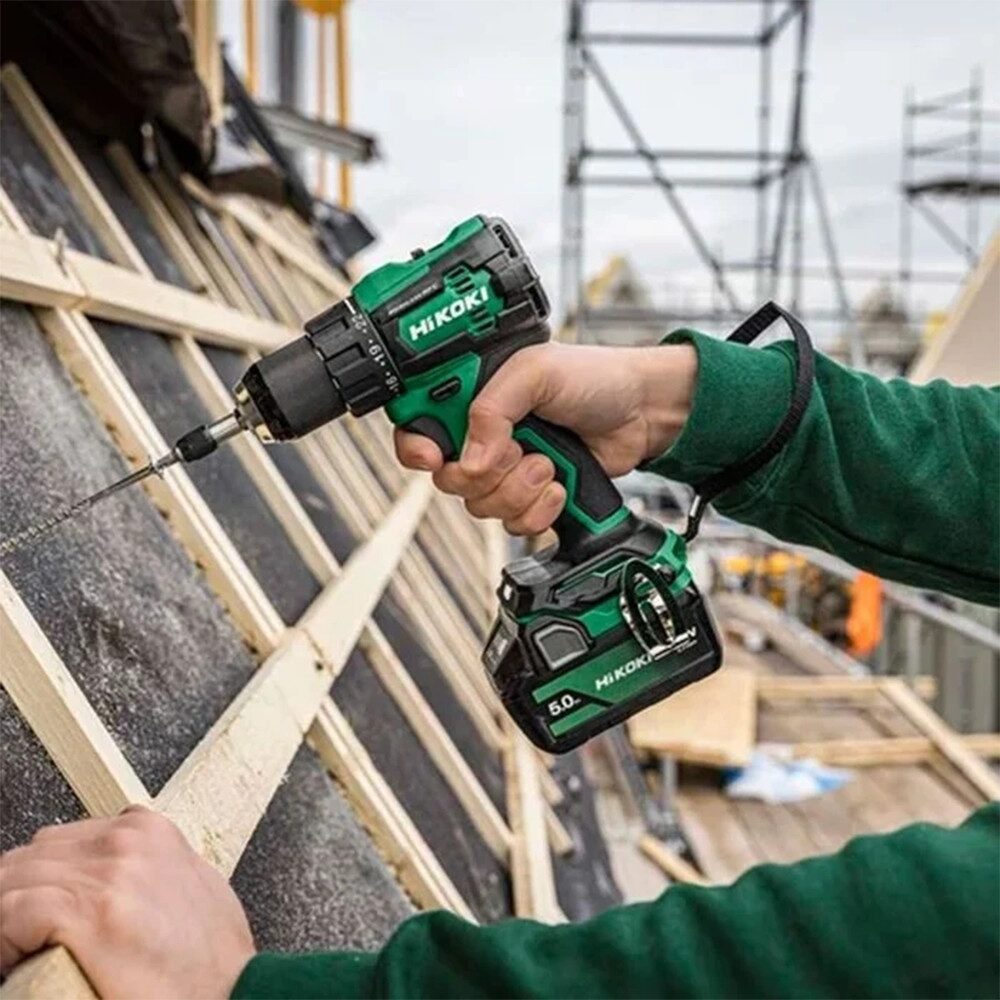
A drill driver is the simplest and most versatile type of drill.
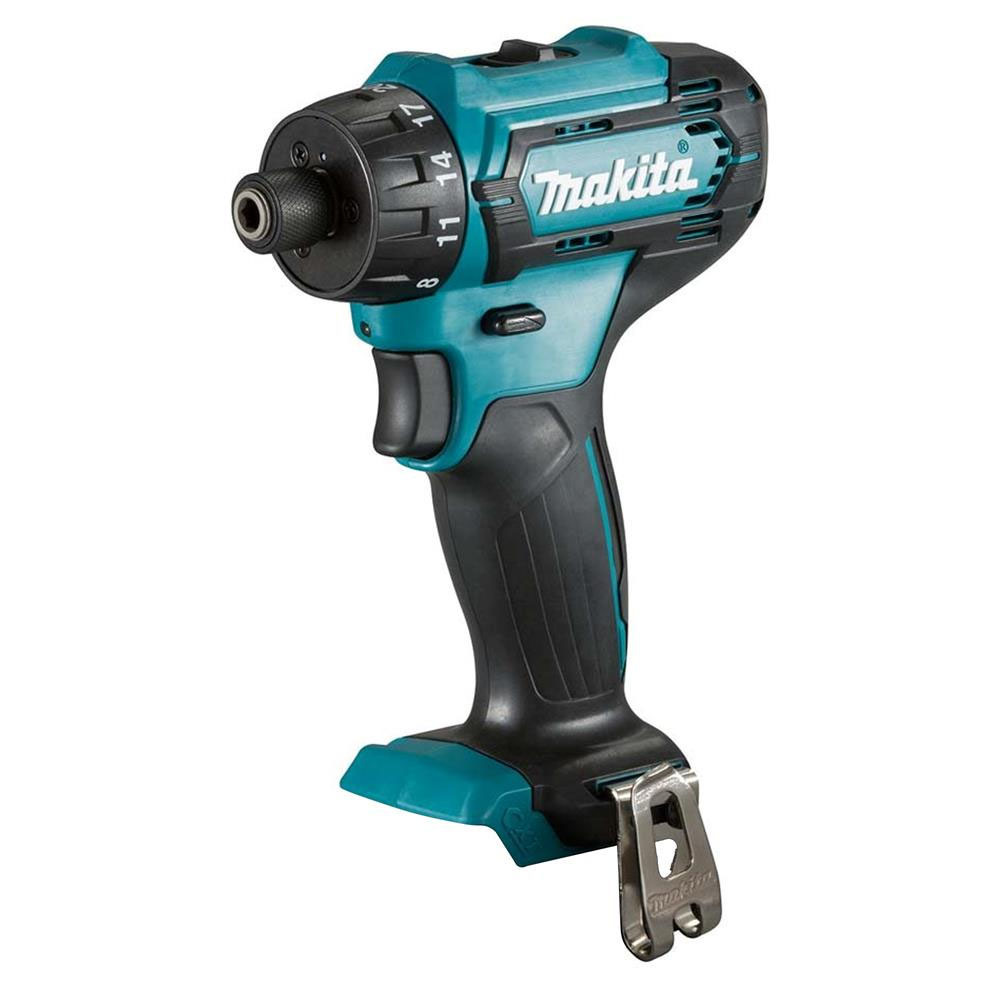
It is designed primarily for drilling holes and driving screws into materials such as timber, plastic and metal. Drill drivers do not include a hammer action, making them ideal for general assembly work, cabinet installation, furniture building and interior projects.
Most drill drivers feature adjustable clutch settings which help prevent overtightening screws and damaging materials.
Best For
- Furniture assembly
- Woodworking
- Pilot holes
- Metal drilling
- General DIY
Advantages
- Lightweight and compact
- Excellent control
- Ideal for screwdriving
- Longer battery runtime
Limitations
- Cannot efficiently drill into masonry
- Less versatile than a combi drill
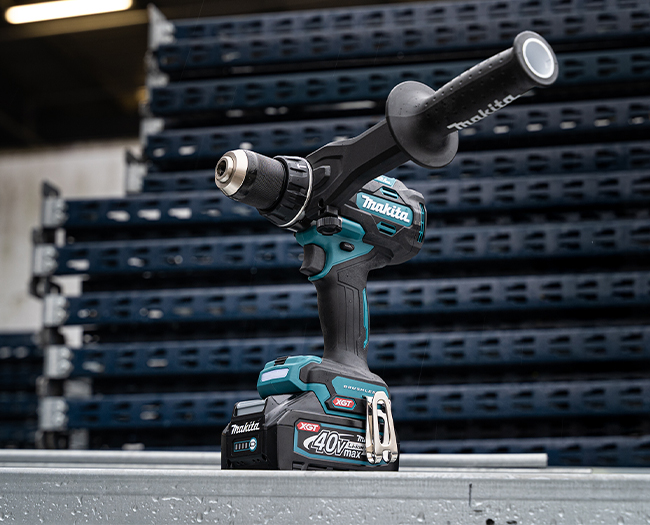
Combi Drills
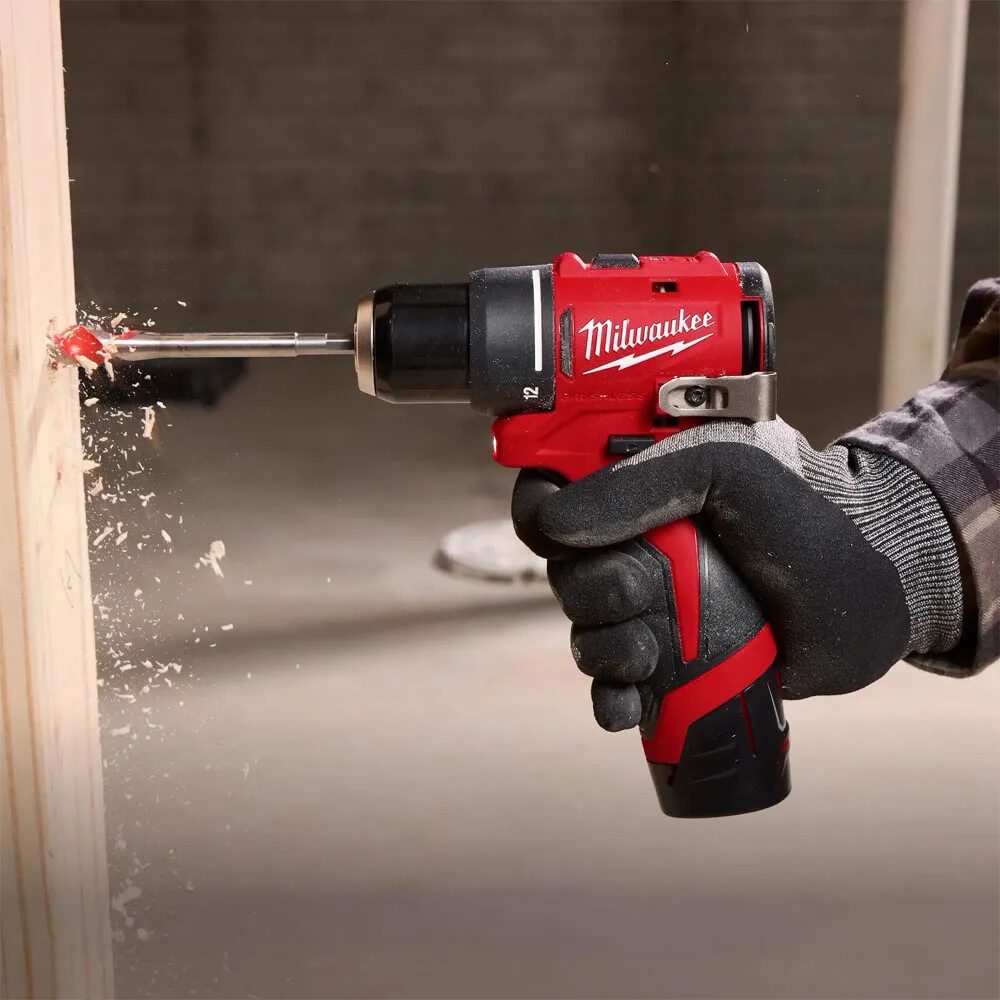
Combi drills are the most popular drill type on the market.
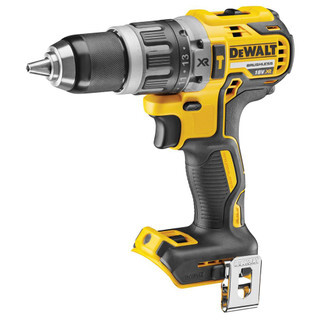
A combi drill combines standard drilling, screwdriving, and hammer drilling functions into one tool. The hammer mechanism rapidly impacts the chuck while rotating, allowing the drill to tackle brickwork and light masonry.
For most homeowners and tradesmen, a combi drill is the ideal all round solution.
Best For
- General DIY
- Brick walls
- Wood drilling
- Metal drilling
- Everyday trade use
Advantages
- Highly versatile
- Three functions in one tool
- Suitable for most drilling applications
- Available in compact and heavy duty models
Limitations
- Not ideal for large concrete drilling jobs
- Less powerful than an SDS drill
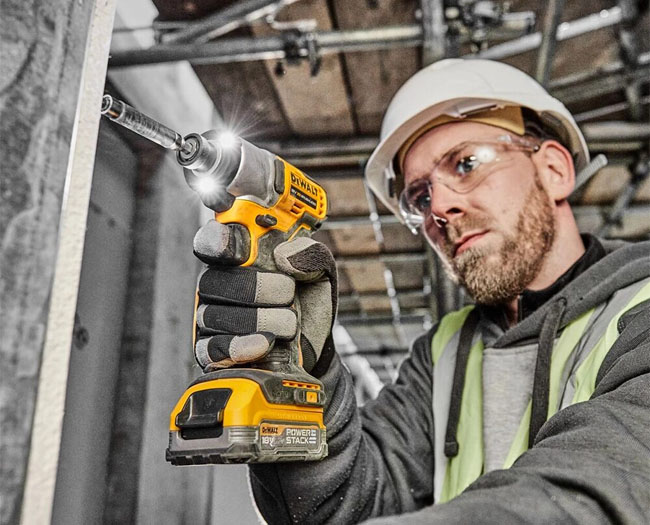
Impact Drivers
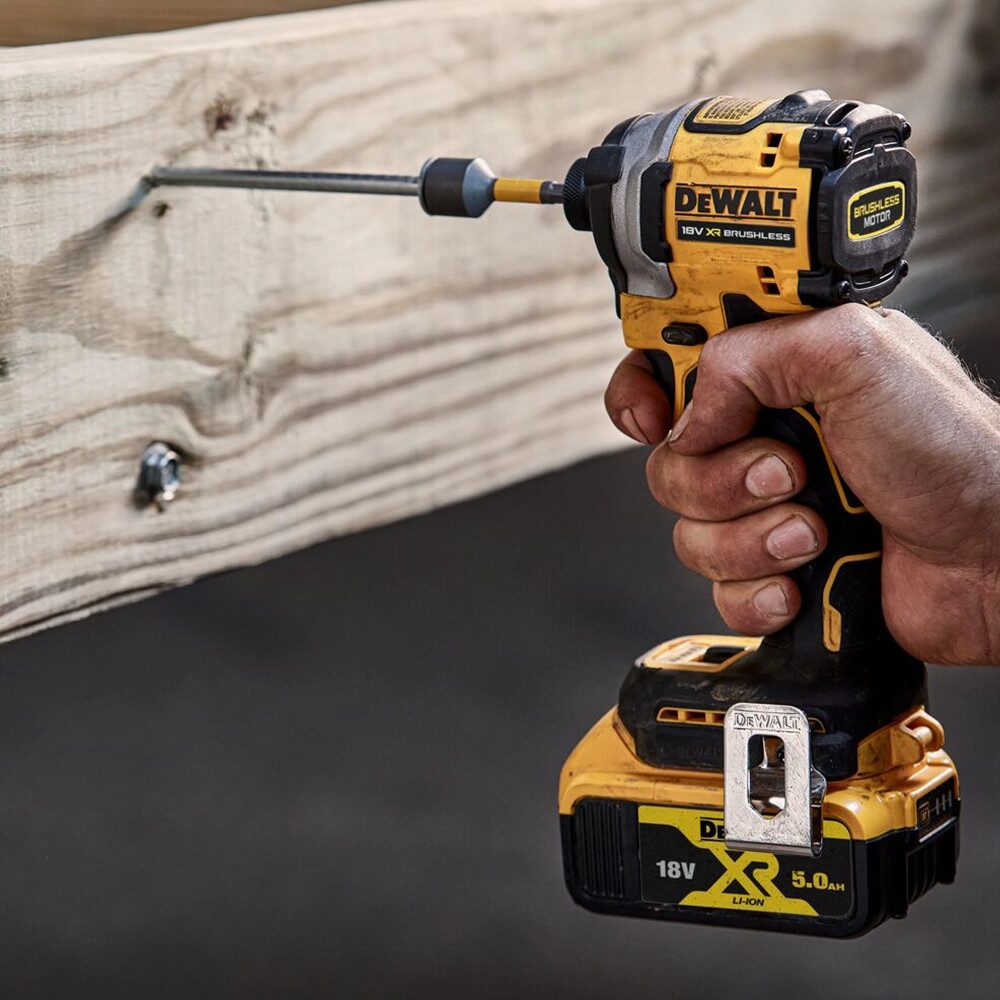
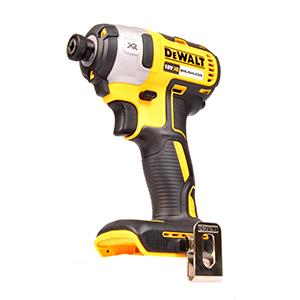
Although they look similar to drills, impact drivers are designed specifically for driving screws and fixings.
Instead of using a traditional clutch, impact drivers generate rotational impacts that produce significantly higher torque than a combi drill.
This makes them ideal for driving long screws, coach screws, timber fixings and structural fasteners.
Best For
- Decking
- Timber framing
- Structural fixings
- Long screws
- Repetitive fastening
Advantages
- Extremely high torque
- Reduced wrist strain
- Faster screwdriving
- Compact design
Limitations
- Not suitable as a primary drill
- Requires hex shank accessories
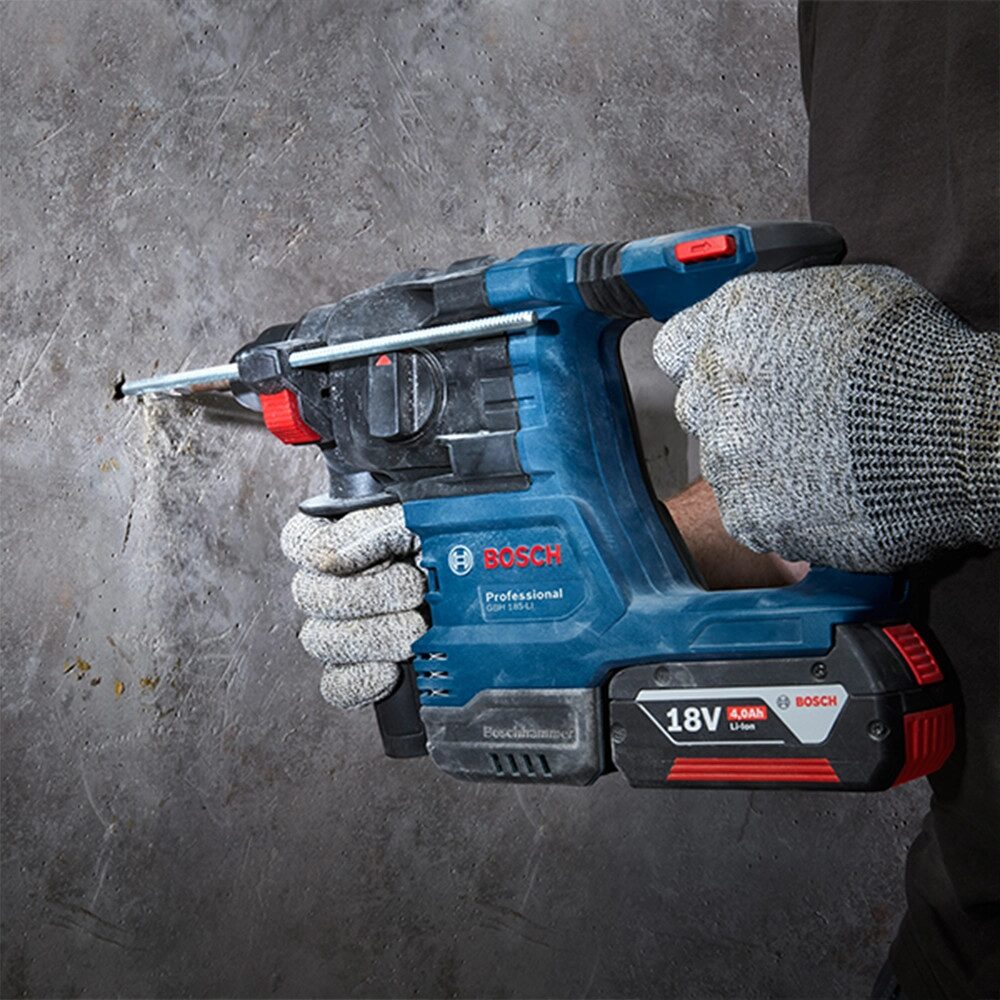
SDS Plus Drills
When standard hammer drills reach their limits, SDS Plus drills take over.
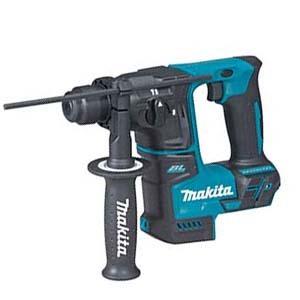
Rather than relying on mechanical impacts, SDS drills use a pneumatic hammer mechanism that delivers far greater impact energy. This makes them ideal for drilling concrete, stone and heavy masonry.
Many SDS drills also feature chiselling functions for light demolition work.
Best For
- Concrete drilling
- Masonry work
- Chasing walls
- Breaking out tiles
- Demolition applications
Advantages
- Extremely powerful
- Fast drilling in masonry
- Reduced user effort
- Chiselling capability
Limitations
- Larger and heavier
- Not ideal for everyday drilling
- Requires SDS accessories
SDS Plus vs SDS Max
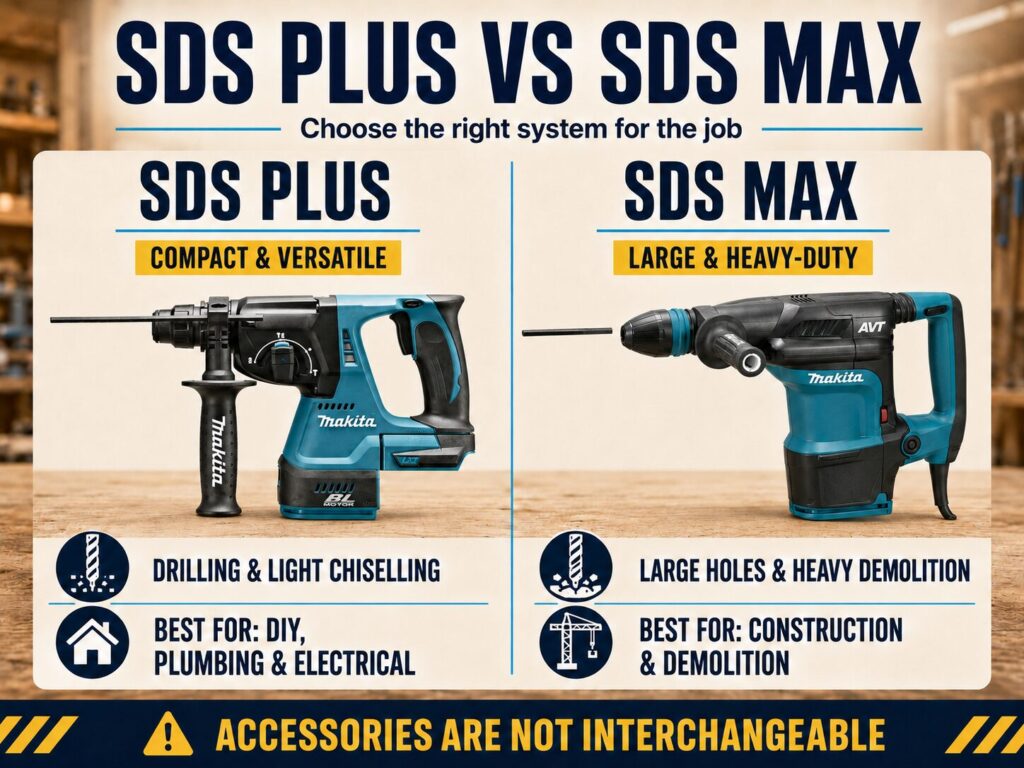
SDS Plus and SDS Max drills are both designed for drilling into hard masonry, concrete and stone. However, they use different-sized accessories and are intended for different levels of work.
What Is SDS Plus?
SDS Plus drills are the smaller and more versatile option. They are commonly used for drilling fixing holes in brick and concrete, creating larger holes for pipes and cables, and carrying out light chiselling or chasing work.
Their lighter and more compact design makes them easier to control, particularly when working overhead or using the drill for longer periods.
SDS Plus drills are generally best for:
- Drilling fixing holes into brick and concrete
- Electrical and plumbing installation work
- Removing small areas of tiles or plaster
- Light chasing and chiselling
- General building and renovation work
What Is SDS Max?
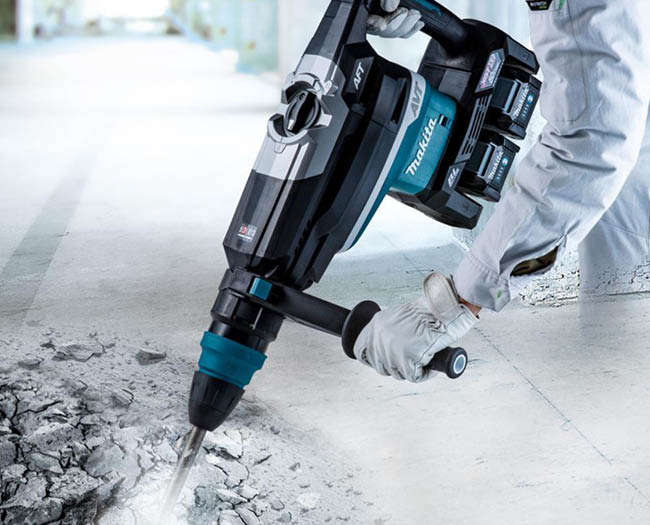
SDS Max drills are larger and more powerful, with a heavier-duty chuck system and larger accessories. They are designed for demanding concrete drilling, large-diameter holes and sustained chiselling or demolition.
The larger shank allows the drill to transfer greater impact energy to the accessory. However, SDS Max drills are heavier, more expensive and usually unnecessary for ordinary DIY or light installation work.
SDS Max drills are generally best for:
- Drilling large-diameter holes in concrete
- Heavy-duty masonry and construction work
- Breaking concrete and masonry
- Removing substantial areas of tiles or render
- Sustained chiselling and demolition
SDS Plus and SDS Max Comparison
| Feature | SDS Plus | SDS Max |
|---|---|---|
| Tool size | Compact to medium | Large and heavy-duty |
| Typical work | Drilling and light chiselling | Large drilling and heavy demolition |
| Accessory shank | Smaller SDS Plus shank | Larger SDS Max shank |
| Impact energy | Lower | Higher |
| Control and manoeuvrability | Easier to handle | Heavier and more demanding |
| Typical user | DIY users and most trades | Construction and demolition trades |
| Accessories interchangeable? | No | No |
SDS Plus and SDS Max accessories are not interchangeable because their shanks and chuck systems are different. Check the drill type and its recommended drilling capacity before purchasing drill bits or chisels.
For most DIY, plumbing, electrical and general building jobs, an SDS Plus drill provides the best balance of power and control. SDS Max is the more appropriate choice for large holes, demanding concrete work or extended demolition.
Combi Drill vs Impact Driver: What’s The Difference?
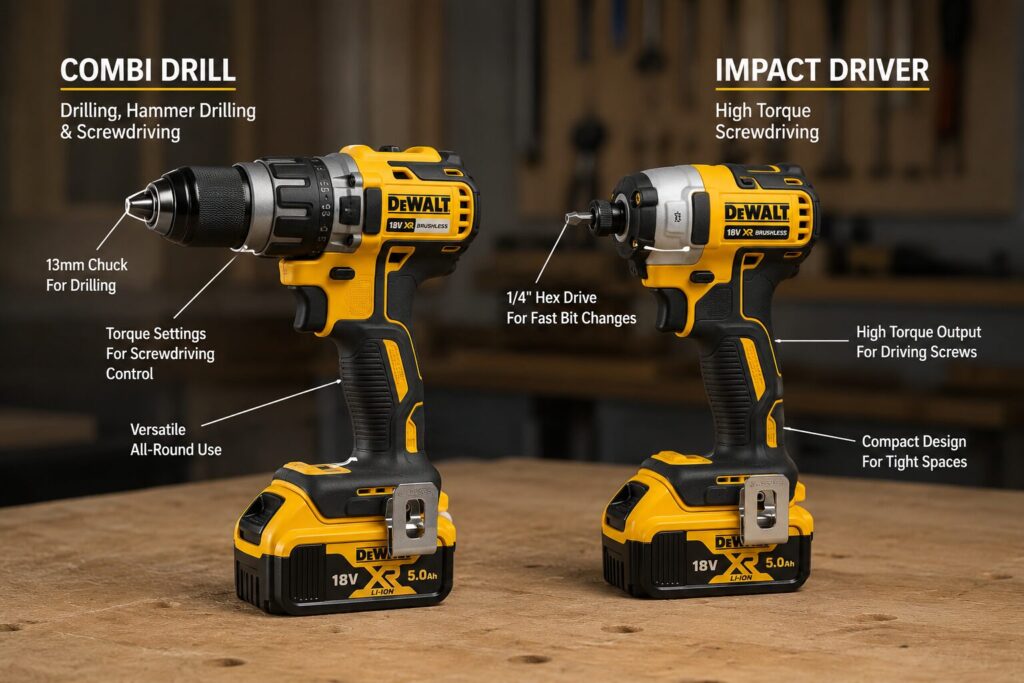
One of the most common questions buyers ask is whether they need a combi drill or an impact driver.
The answer is that they perform different tasks.
| Feature | Combi Drill | Impact Driver |
|---|---|---|
| Drilling wood | ✓ | Limited |
| Drilling metal | ✓ | Limited |
| Drilling masonry | ✓ | ✗ |
| Driving screws | Good | Excellent |
| Torque | Medium | Very High |
| Chuck Type | 13mm Chuck | 1/4in Hex |
| Everyday Use | Excellent | Specialist |
A combi drill is the better all round tool.
An impact driver becomes invaluable if you regularly drive large screws or structural fixings.
Many professional tradesmen carry both.
Shop Related Categories
Corded vs Cordless Drills
Cordless technology has improved dramatically over the last decade, making cordless drills the preferred choice for most users.
Cordless Drill Advantages
- Complete portability
- No extension leads
- Faster setup
- Safer on site
- Huge battery platform compatibility
Corded Drill Advantages
- Unlimited runtime
- Lower upfront cost
- Consistent power output
- Suitable for workshops
For most modern users, cordless drills offer the best combination of convenience and performance.
What Power Drill Should I Buy?
Best Drill For DIY Users
For most homeowners and DIY enthusiasts, an 18V cordless combi drill offers everything needed for common household jobs.
Whether you’re assembling furniture, installing shelves or drilling into brick walls, a quality combi drill provides the versatility required.
Best Drill For Tradesmen
Professional users should compare torque, drilling capacity, tool weight and battery options according to their work. A brushless combi drill paired with 4.0Ah or 5.0Ah batteries provides a useful balance of runtime and weight for many trade applications.
Brushless motors provide improved runtime, increased efficiency and longer tool life.
Best Drill For Heavy Duty Construction
An SDS Plus drill is generally suitable for concrete drilling, installing anchors and lighter chiselling. Large-diameter holes, sustained demolition and demanding concrete work may require an SDS Max drill or dedicated breaker.
The increased impact energy allows much faster drilling with less effort.
What Do Drill Specifications Mean?
When comparing drills, understanding the specifications can help separate marketing claims from genuine performance differences.
Voltage
Voltage indicates the power platform of the tool.
| Voltage | Typical Use |
|---|---|
| 12V | Light DIY |
| 18V | General DIY and Trade |
| 36V+ | Heavy Duty Applications |
Voltage should not be used as the only measure of performance. Motor design, battery technology, torque, speed and drilling capacity also affect what a drill can handle.
Torque
Torque measures rotational force.
Higher torque allows a drill to drive larger screws and handle tougher materials.
| Drill Type | Specifications To Compare |
|---|---|
| Drill Driver | Soft torque, hard torque, speed and drilling capacity |
| Combi Drill | Torque, speed, impact rate and masonry capacity |
| Impact Driver | Maximum fastening torque, impact rate and speed |
| SDS Drill | Impact energy in joules and maximum drilling diameter |
Battery Capacity
Battery capacity is measured in amp hours.
| Battery | Typical Use |
|---|---|
| 2.0Ah | Lightweight tasks |
| 4.0Ah | General use |
| 5.0Ah | Trade work |
| 8.0Ah+ | Extended runtime |
Higher capacities provide longer runtime but increase weight.
Brushless Motors
Brushless motors are now widely used in professional cordless drills. Compared with a similar brushed design, they can provide improved efficiency, longer runtime and reduced maintenance. Actual performance still depends on the complete tool and battery system.
Benefits include:
- Longer runtime
- Increased efficiency
- Less maintenance
- Improved power delivery under load
- Extended tool life
Other Drill Specifications Explained
When comparing drills, voltage and torque are only part of the picture. The following specifications can help you understand how a drill will perform in real working conditions.
No-Load Speed
No-load speed is measured in revolutions per minute (RPM) and shows how quickly the chuck rotates without resistance. Lower speeds provide greater control for driving screws and drilling larger holes, while higher speeds are useful for drilling smaller holes in materials such as timber and metal.
Single-Speed vs Two-Speed Gearboxes
A single-speed drill operates within one speed range. A two-speed gearbox allows you to select between:
- First gear – Lower speed with greater torque for screwdriving and larger drill bits
- Second gear – Higher speed for drilling smaller holes in timber and metal
Two-speed gearboxes provide greater versatility across different applications.
Chuck Size
The chuck holds the drill bit or accessory. Most cordless drills use a 10mm or 13mm keyless chuck. A 13mm chuck accepts larger drill bits and is commonly found on more powerful combi drills and drill drivers.
SDS drills use a dedicated SDS chuck rather than a standard three-jaw chuck, so they require compatible SDS accessories.
Maximum Drilling Capacity
Manufacturers normally list the maximum recommended drilling diameter for materials such as timber, metal and masonry. These capacities provide a more useful indication of what a drill can handle than torque alone.
Always check the capacity for the specific material, as a drill may be able to create a much larger hole in timber than in steel or concrete.
Impact Rate
The impact rate shows how many impacts a combi drill or impact driver can deliver per minute.
On a combi drill, a higher impact rate can support faster drilling in brick and masonry. On an impact driver, it helps the tool drive screws and fasteners when resistance increases. Impact rates should be compared between similar tool types.
Impact Energy
SDS drill performance is commonly measured in joules. This indicates the energy delivered with each hammer blow. Higher impact energy is generally better suited to larger holes, harder concrete and demanding chiselling work.
However, a higher figure usually means a larger and heavier tool, so the most powerful SDS drill is not always the most practical choice.
Clutch Settings
Adjustable clutch settings allow you to limit the amount of torque delivered while driving screws. Lower settings help prevent smaller screws from being driven too deeply or damaging the material.
The drill mode bypasses the clutch to provide full power for drilling.
Tool Weight
Check whether the listed weight includes the battery. A heavier drill may offer greater performance, but a compact and lightweight model can be easier to control during overhead, repetitive or confined-space work.
Kickback Control
Some professional drills include electronic kickback control. This can detect sudden tool rotation if the drill bit binds and reduce or stop the motor. It does not remove every risk, but it can provide additional protection when using larger bits or drilling demanding materials.
Best Drill By Trade
Different trades place different demands on their tools. While a combi drill is often the most versatile option, some trades benefit from pairing it with an impact driver or SDS Plus drill for maximum efficiency.
Best Drill For Carpenters and Joiners
Carpenters and joiners spend much of their day drilling timber, fitting hardware, assembling structures and installing fixings.
A brushless 18V combi drill is often the best all round choice, providing enough power for drilling timber and driving screws while remaining compact enough for precise work. Many carpenters also carry an impact driver to speed up repetitive screwdriving tasks and reduce wrist strain when working with long fixings.
Recommended drill type:
- 18V Brushless Combi Drill
- Impact Driver for second tool
Best Drill For Electricians
Electricians need a drill that is compact, lightweight and versatile enough for drilling cable routes, fitting containment and installing accessories.
A compact brushless combi drill is usually the ideal choice. It offers sufficient power for drilling timber, metal and masonry while remaining comfortable for overhead work. Many electricians pair this with an impact driver for faster fixing installation throughout the day.
Recommended drill type:
- Compact 18V Brushless Combi Drill
- Compact Impact Driver
Best Drill For Plumbers
Plumbers regularly drill through timber joists, kitchen units, pipe clips and masonry walls.
A powerful brushless combi drill is essential for general installation work. For larger pipe penetrations and fixing brackets into masonry, many plumbers also carry an SDS Plus drill.
Recommended drill type:
- 18V Brushless Combi Drill
- SDS Plus Drill for masonry work
Best Drill For Builders and General Tradesmen
Builders encounter a wide range of materials throughout the working day, including timber, brick, blockwork and concrete.
Because of this, versatility is key. A high performance brushless combi drill should form the core of any builder’s kit, while an SDS Plus drill is invaluable when working with concrete, anchors and heavy duty fixings.
Recommended drill type:
- High Torque Brushless Combi Drill
- SDS Plus Drill
Best Drill For Kitchen Fitters
Kitchen fitters require accuracy, control and enough power to install cabinets, worktops and fixtures without damaging finished surfaces.
A compact brushless drill driver or combi drill is usually the best choice. Many fitters also rely heavily on impact drivers for installing cabinet screws quickly and efficiently.
Recommended drill type:
- Compact Drill Driver or Combi Drill
- Impact Driver
Best Drill For Landscapers and Fencers
Landscapers and fencing contractors often work with large fixings, treated timber and outdoor structures.
An impact driver becomes particularly valuable for driving long screws and structural fixings. A combi drill remains essential for drilling pilot holes and general installation work.
Recommended drill type:
- 18V Brushless Combi Drill
- High Torque Impact Driver
Best Drill For Mechanics and Engineers
Mechanics and engineers frequently drill metal, install fixings and work in confined spaces.
A compact drill driver often provides everything required, offering excellent control and manoeuvrability. An impact driver is useful for screws and smaller hex-shank fastening accessories. Mechanics dealing with wheel nuts, larger bolts or stubborn automotive fasteners will normally require an impact wrench.
Recommended drill type:
- Compact Drill Driver
- Compact Impact Driver
- Impact Wrench for automotive nuts and bolts
Best Drill For DIY Users
For homeowners and occasional users, simplicity and versatility are usually the priority.
An 18V cordless combi drill provides the best balance of drilling, screwdriving and masonry capability in a single tool. It can handle everything from flat pack furniture and shelving to light renovation projects around the home.
Recommended drill type:
- 18V Cordless Combi Drill
Quick Summary
| Trade | Best Drill |
|---|---|
| Carpenter | Combi Drill + Impact Driver |
| Electrician | Compact Combi Drill |
| Plumber | Combi Drill + SDS Plus Drill |
| Builder | Combi Drill + SDS Plus Drill |
| Kitchen Fitter | Compact Combi Drill + Impact Driver |
| Landscaper | Combi Drill + Impact Driver |
| Mechanic | Drill Driver + Impact Wrench |
| DIY User | 18V Combi Drill |
The best drill isn’t necessarily the most powerful model available. The right choice is the one that matches the materials, fixings and tasks you perform most often. Choosing the correct drill for your trade will improve productivity, reduce fatigue and help you achieve better results every day.
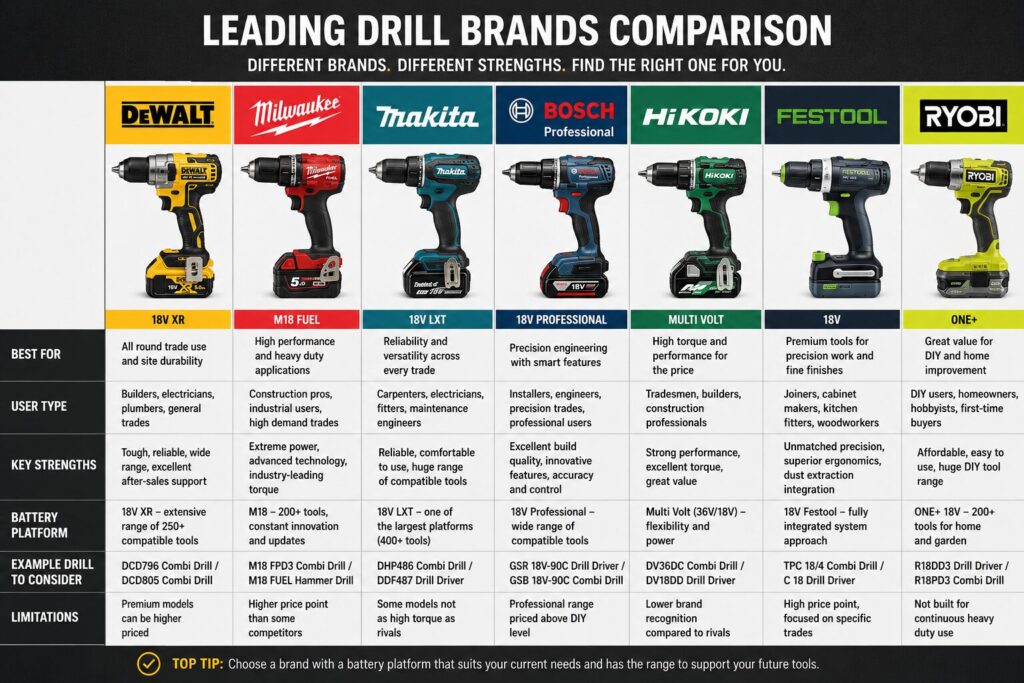
Which Drill Brand Is Right For You?
With so many cordless drill brands available today, choosing the right manufacturer can be just as important as choosing the right type of drill. While most leading brands offer combi drills, drill drivers, impact drivers and SDS drills, each brand has developed a reputation for excelling in different areas.
The best drill brand for you will depend on the type of work you do, your budget, and the battery platform you want to invest in long term.
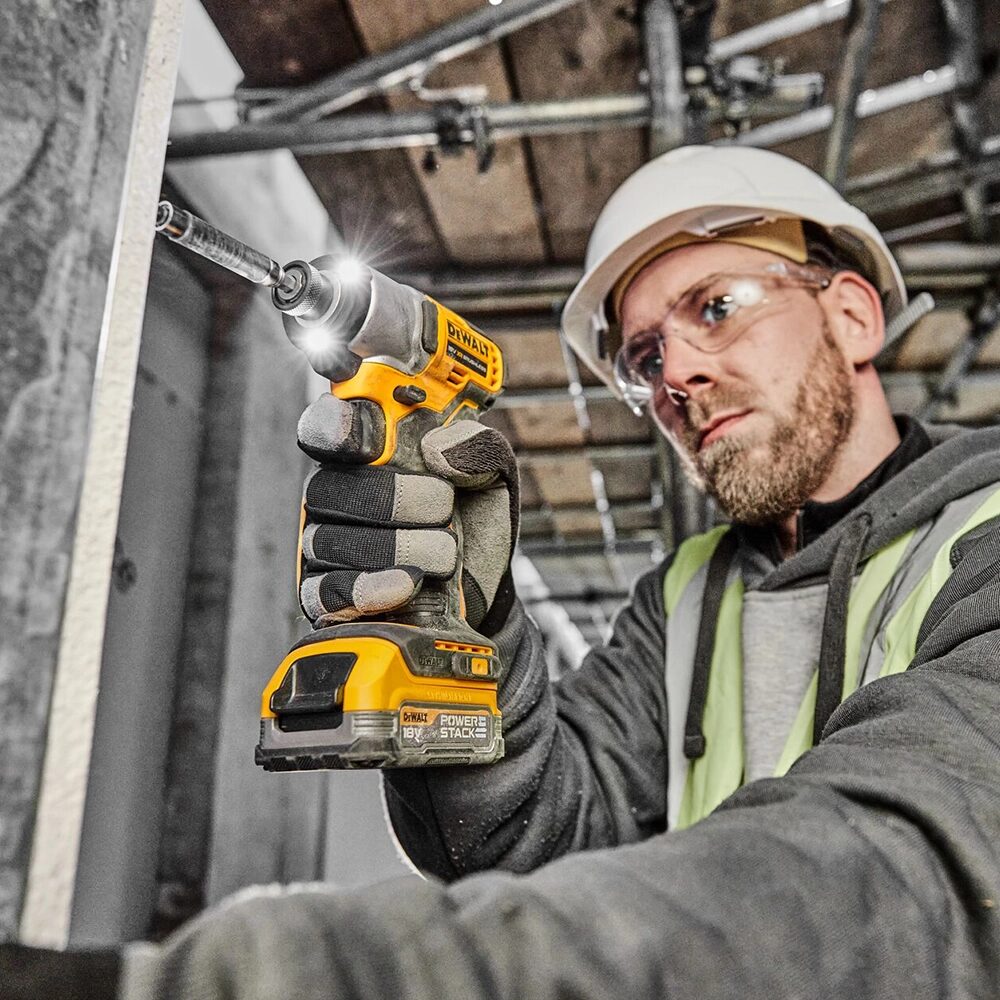
Dewalt Drills – The All Round Trade Favourite
Dewalt has become one of the most popular brands on UK building sites thanks to its combination of durability, performance and extensive cordless range.
The 18V XR platform includes everything from compact drill drivers for snagging work through to high torque combi drills and powerful SDS Plus drills for heavy construction applications. Dewalt drills are known for their robust build quality, making them particularly popular with builders, electricians, plumbers and general tradesmen.
If you’re looking for a reliable all round drill platform that can grow with your tool collection, Dewalt remains one of the safest investments available.
Best for:
- All round trade use
- General construction
- Builders
- Electricians
- Plumbers
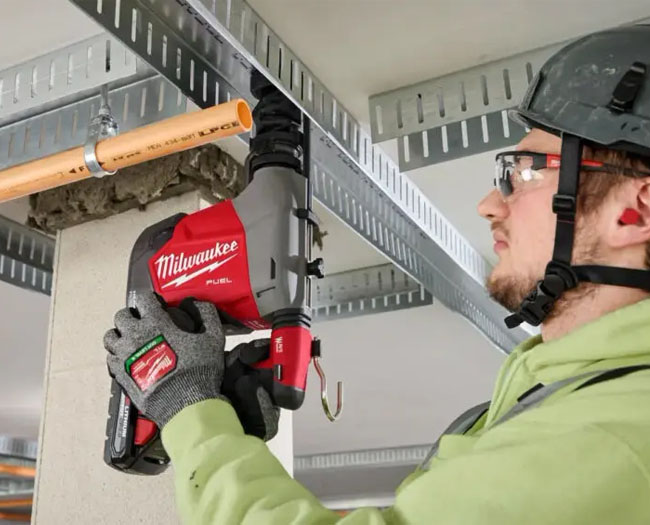
Milwaukee Drills – Built For Maximum Performance
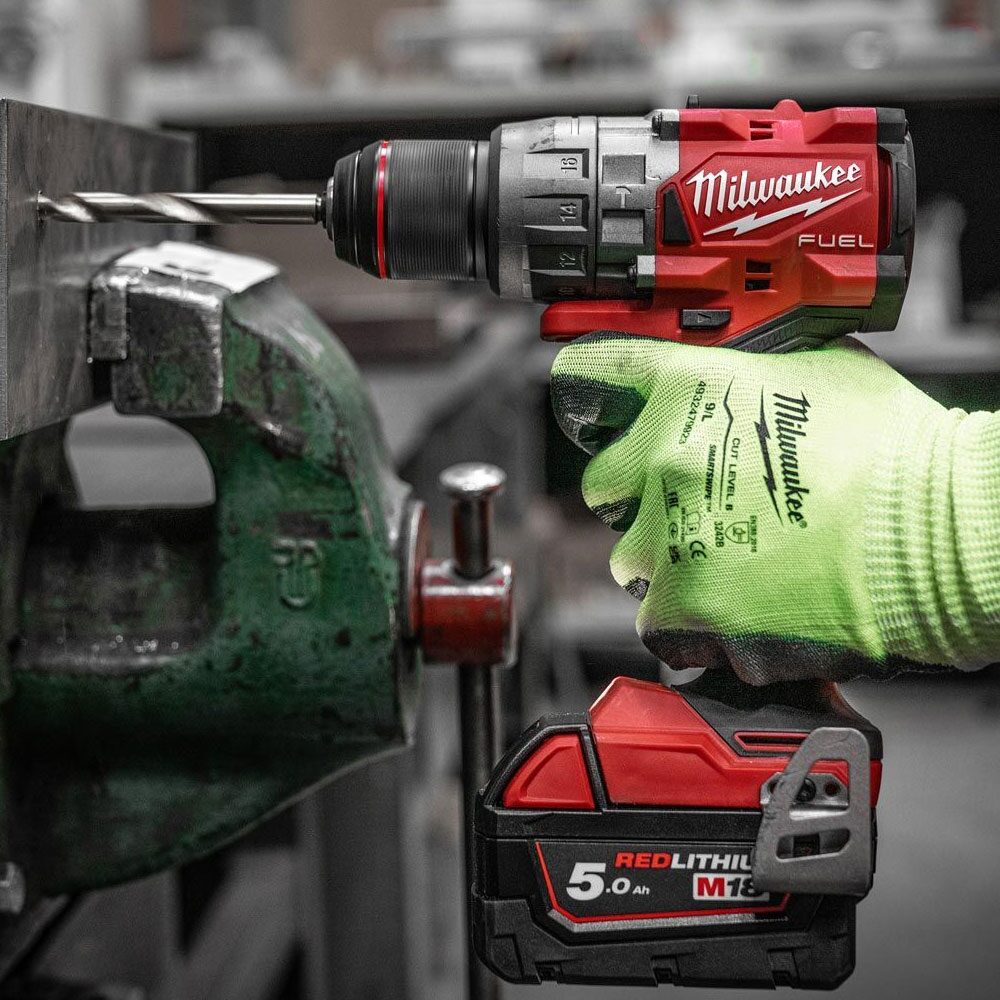
Milwaukee has developed a reputation for producing some of the most powerful cordless drills on the market.
The M18 platform offers exceptional torque figures, advanced electronics and industry leading battery technology. Their FUEL range combines brushless motors, intelligent tool protection systems and high capacity batteries to deliver performance that often rivals corded tools.
Milwaukee drills are particularly popular with professional users who demand maximum power, especially those regularly drilling large holes, driving structural fixings or working in demanding site environments.
Best for:
- Mechanical and industrial users
- Heavy duty trade work
- High torque applications
- Construction professionals
Makita Drills – Proven Reliability Across Every Trade
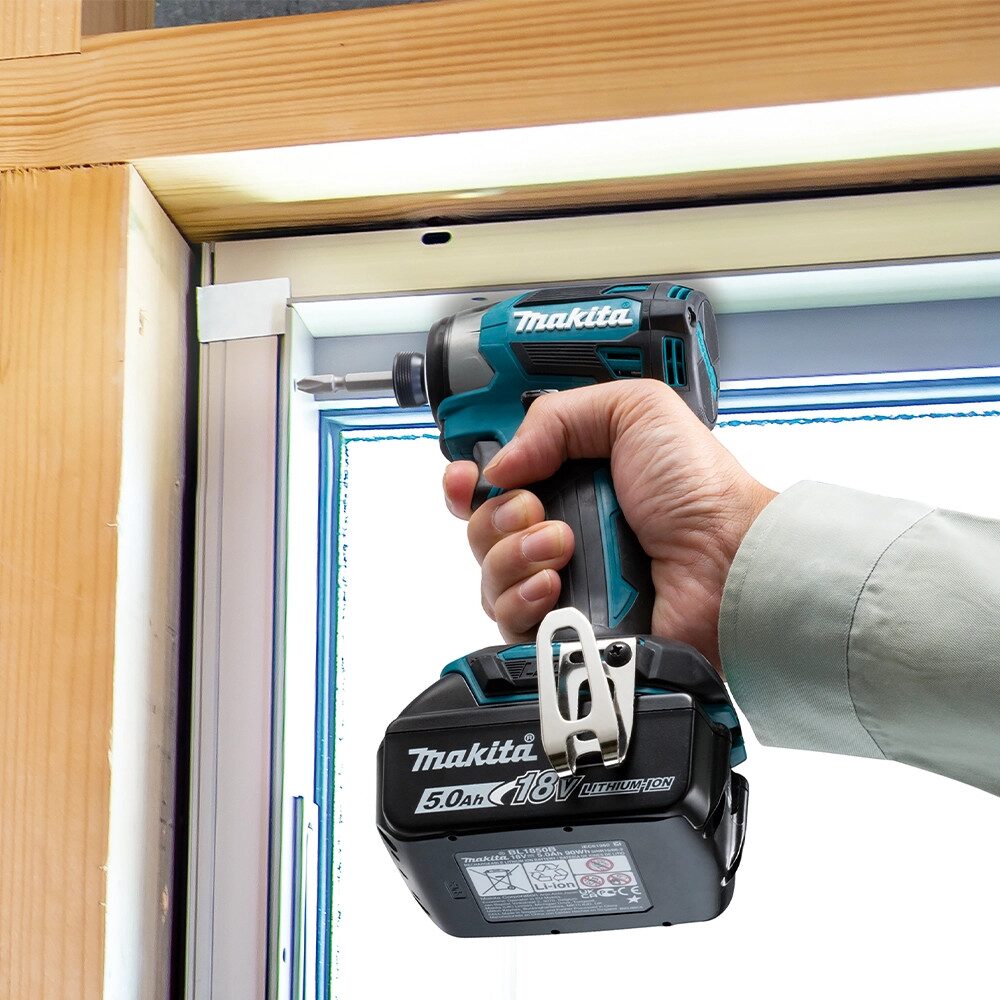
Makita has spent decades building a reputation for reliability, ergonomics and an incredibly broad cordless platform.
The 18V LXT range is one of the largest battery systems available, giving users access to hundreds of compatible tools. Makita drills are often praised for their comfortable handling, balanced design and dependable performance, making them a favourite among tradesmen who use their tools every day.
Whether you’re a carpenter, kitchen fitter, electrician or maintenance engineer, Makita offers a drill to suit virtually every application.
Best for:
- Users wanting a huge battery ecosystem
- Everyday professional use
- Carpenters and joiners
- Electricians
- Maintenance trades
Bosch Professional Drills – Precision Engineering Meets Performance
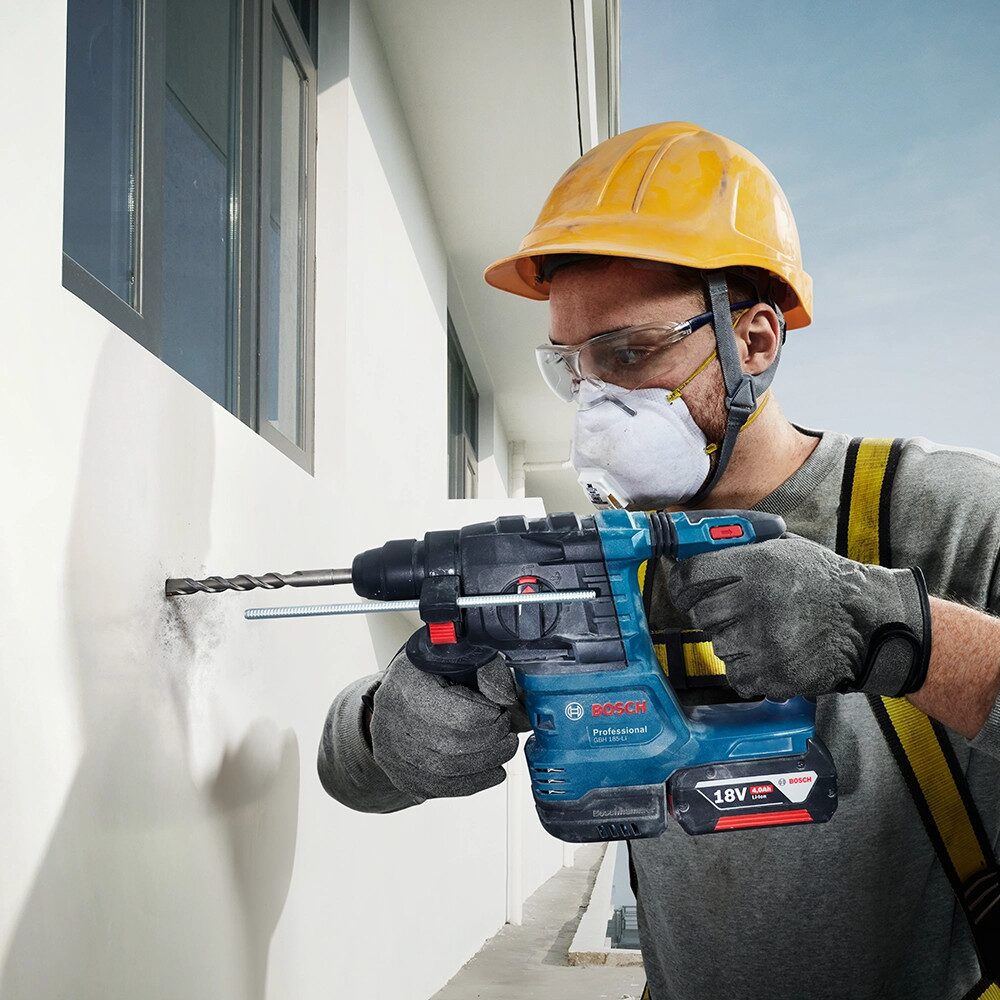
Bosch Professional, often recognised by its blue tools, combines German engineering with excellent reliability and innovation.
Their cordless drill range offers impressive power while often incorporating clever features designed to improve accuracy, control and user comfort. Bosch drills are particularly popular with installers, engineers and tradesmen who value precision alongside performance.
The Professional 18V System also provides access to an extensive range of compatible tools and accessories.
Best for:
- Professional tradesmen
- Precision drilling
- Installation work
- Engineering applications
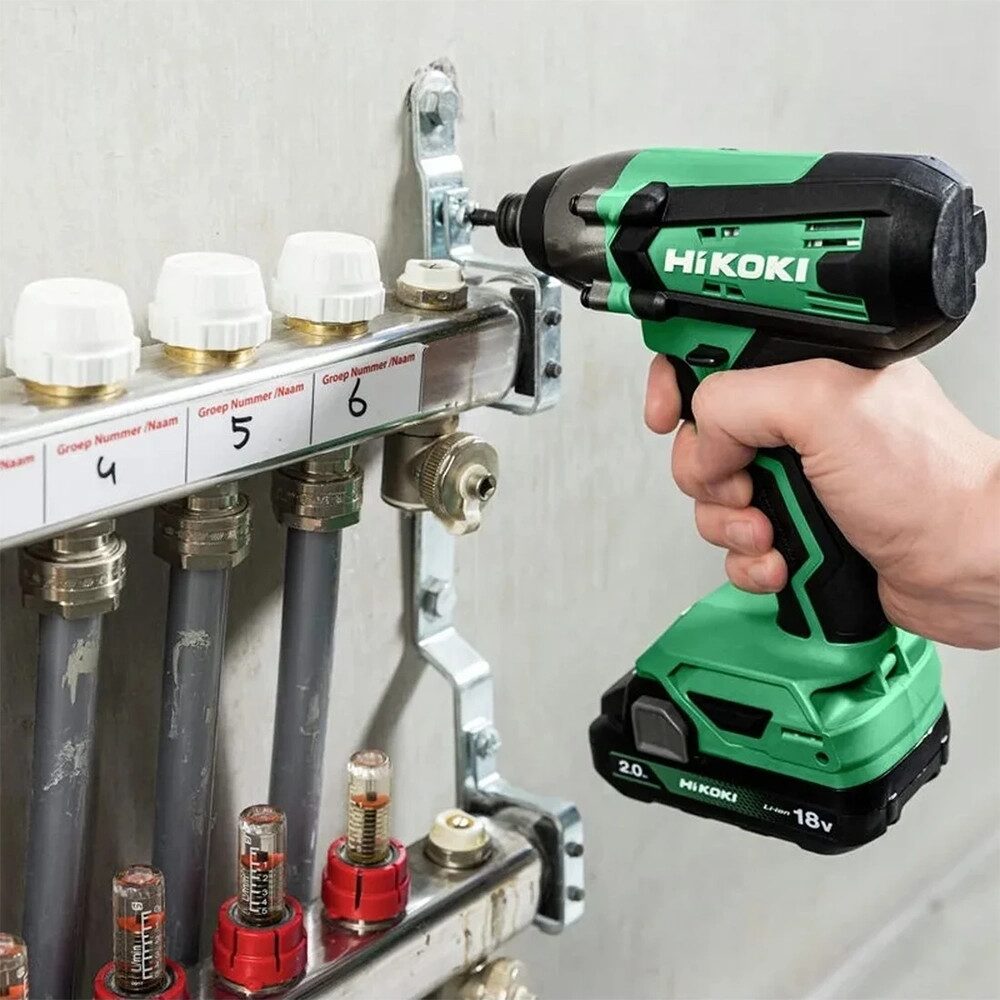
Hikoki Drills – Serious Performance Without The Premium Price
Formerly known as Hitachi Power Tools, Hikoki often flies under the radar compared to some larger brands, but their drills consistently impress users with their performance.
Many Hikoki combi drills deliver torque figures that compete directly with premium rivals while often offering exceptional value for money. Their Multi Volt platform also provides flexibility between cordless and high demand applications.
For professionals looking for top tier performance without necessarily paying top tier prices, Hikoki is well worth considering.
Best for:
- Users wanting strong performance per pound spent
- Value conscious professionals
- High torque drilling
- Construction trades
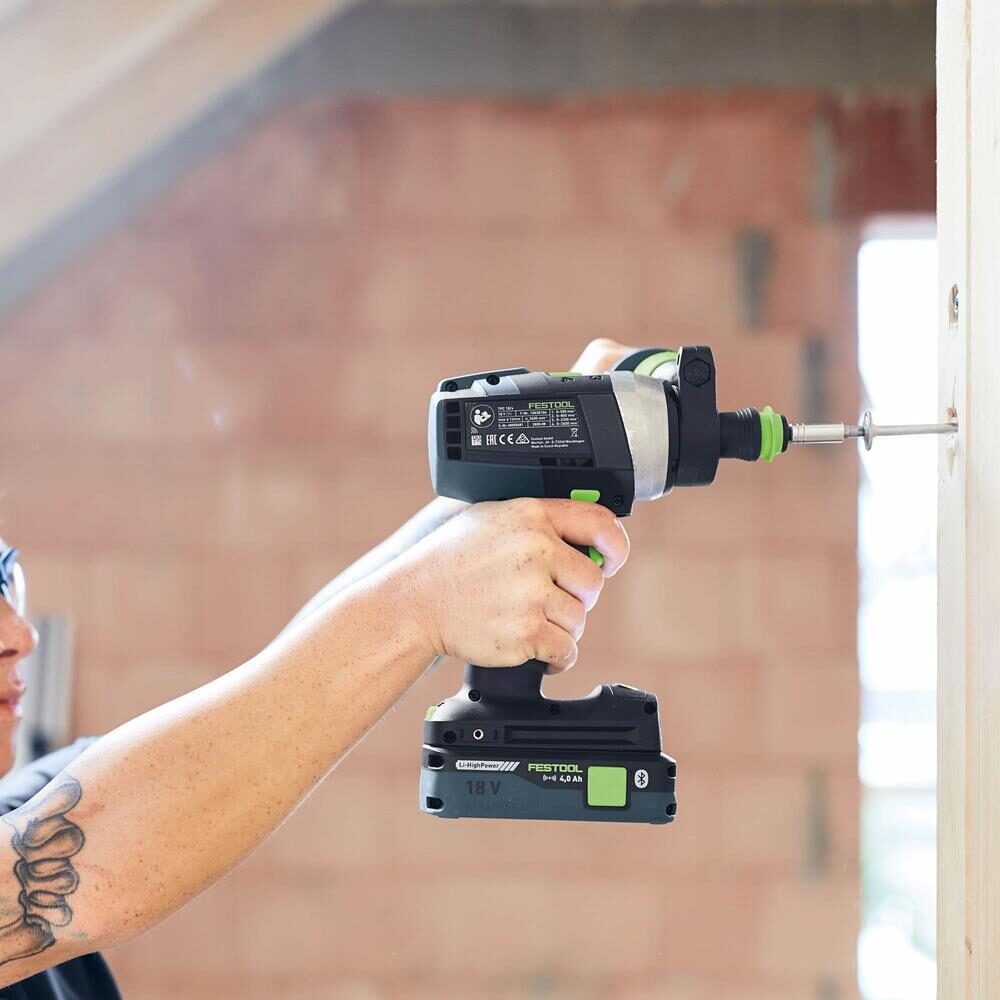
Festool Drills – Premium Tools For Precision Trades
Festool drills are designed with accuracy, control and finish quality in mind.
While they may not always chase the highest torque figures, Festool focuses on intelligent design, user comfort and exceptional build quality. Their drills are especially popular among cabinet makers, kitchen installers, joiners and finish carpenters where precision is often more important than outright power.
Combined with the wider Festool system of dust extraction and woodworking tools, they form part of a highly integrated professional workflow.
Best for:
- Precision applications
- Joinery
- Cabinet making
- Kitchen fitting
- Fine woodworking
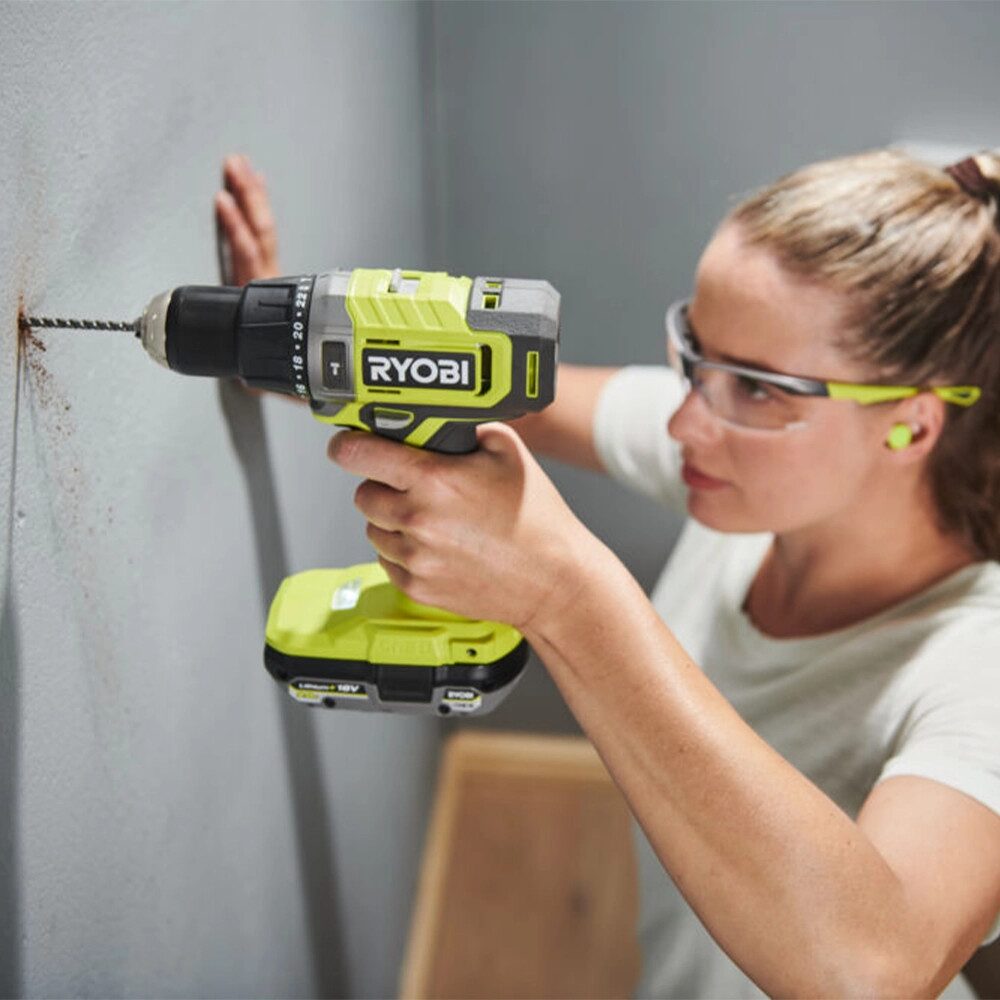
Ryobi Drills – Excellent Value For DIY Users
Ryobi has become one of the most popular cordless brands for homeowners and DIY enthusiasts.
The ONE+ battery platform allows a single battery to power a huge range of tools for the home, garden and workshop. While Ryobi drills are generally aimed at DIY users rather than full time tradesmen, many models offer excellent performance for household projects, renovations and weekend DIY tasks.
For users looking to build a versatile cordless collection without a professional level budget, Ryobi offers outstanding value.
Best for:
- First time tool buyers
- DIY users
- Home improvement projects
- Hobbyists
So Which Drill Brand Is Best?
There is no single “best” drill brand because different users have different requirements.
If you want a proven all round trade platform, Dewalt and Makita are excellent choices.
If maximum power is your priority, Milwaukee and Hikoki are hard to beat.
If precision and finish quality matter most, Bosch Professional and Festool stand out.
If you’re a homeowner or occasional DIY user, Ryobi offers exceptional value and versatility.
Ultimately, the best drill brand is the one that provides the performance you need while giving you access to a battery platform that can support your future tool purchases.
Common Drill Buying Mistakes
Buying An SDS Drill For General DIY
Many users assume bigger means better. In reality, SDS drills are often unnecessary for everyday household jobs.
Ignoring Battery Compatibility
Choosing a drill that shares batteries with future tools can save significant money.
Focusing Only On Power
The most powerful drill isn’t always the best choice. Weight, ergonomics and control are equally important.
Using An Impact Driver For Everything
Impact drivers excel at fastening but are not a replacement for a proper drill.
Buying The Cheapest Available Option
Quality drills generally last longer, perform better and offer improved reliability.
Frequently Asked Questions
What is the best drill for home use?
An 18V cordless combi drill is usually the best choice for homeowners because it can drill, drive screws and handle masonry work.
Do I need a combi drill or impact driver?
For most people, a combi drill should be the first purchase. An impact driver becomes useful when driving large numbers of screws.
Can a combi drill drill into brick?
Yes. The hammer function allows a combi drill to drill into brick and light masonry.
What is an SDS drill used for?
SDS drills are designed for concrete, stone, masonry and demolition applications.
Is a brushless drill worth it?
A brushless drill is usually worth considering for regular DIY or professional work because it can offer improved efficiency, runtime and durability. A less expensive brushed drill may still be sufficient for occasional use.
What voltage drill should I buy?
An 18V drill is the most versatile option for general DIY and trade work. A compact 12V drill may be preferable for lighter tasks, repetitive installation work and confined spaces.
Can I use one battery across multiple tools?
Yes, provided the tools and battery belong to the same compatible platform. Batteries are not generally interchangeable between different brands, voltages or incompatible product ranges, even when they look similar.
Final Verdict
Choosing the best drill comes down to understanding the work you do most often.
For general DIY and trade applications, an 18V cordless combi drill remains the most versatile and cost effective option.
If you regularly drill concrete or carry out lighter chiselling, an SDS Plus drill will save time and effort. Large-diameter holes, demanding concrete work and sustained demolition may require an SDS Max drill or dedicated breaker.
For users regularly driving large fixings, an impact driver can significantly improve speed and productivity.
Invest in a quality drill from a trusted manufacturer, choose a battery platform that suits your future needs, and you’ll have a tool that serves you for years to come.