


As more trades move away from generators and trailing leads, cordless tools are being pushed harder than ever on site.
Few tools place greater demands on a power platform than SDS drills and demolition hammers, where sustained power, impact energy, and thermal control matter far more than headline voltage figures.
Makita developed the 40V XGT platform specifically to meet these demands.
Rather than simply replacing existing 18V tools, 40V XGT is designed to take on the kind of heavy duty drilling and breaking work that was once firmly the territory of corded machines.
For trades working daily in concrete, masonry, and demolition, Makita 40V SDS drills and breakers are built to deliver consistent performance under load, improved runtime, and reduced operator fatigue on demanding jobs
Why does Makita 40V Cost More Than 18V?
Makita 40V tools sit at a higher price point than their 18V equivalents, and that difference becomes clearer when you look at what the platform is designed to do.
The XGT range is Makita’s next generation cordless system, engineered for high demand applications where tools are pushed continuously rather than intermittently.
To support this, 40V batteries use more cells and deliver higher sustained current, allowing tools to maintain power under heavy load without rapid voltage drop.
Internally, 40V SDS drills and breakers are built with more robust motors, gearing, and cooling systems to handle increased heat and impact forces.
This level of durability and thermal management adds manufacturing cost, but it directly translates to longer runtimes, consistent performance, and reduced downtime on site.
The XGT ecosystem is also newer and smaller than Makita’s long established 18V LXT range.
With lower production volumes, economies of scale are not yet as strong, which further contributes to higher pricing.
In short, 40V costs more because it is designed to replace corded performance in the most demanding applications, not to simply improve light duty cordless tools
Makita 40V SDS & Breaker Range Breakdown
Makita’s current 40V SDS and breaker lineup covers everything from precision drilling through to large scale demolition.
Each tool is designed around a specific type of site work, allowing trades to choose the right level of power without compromise.
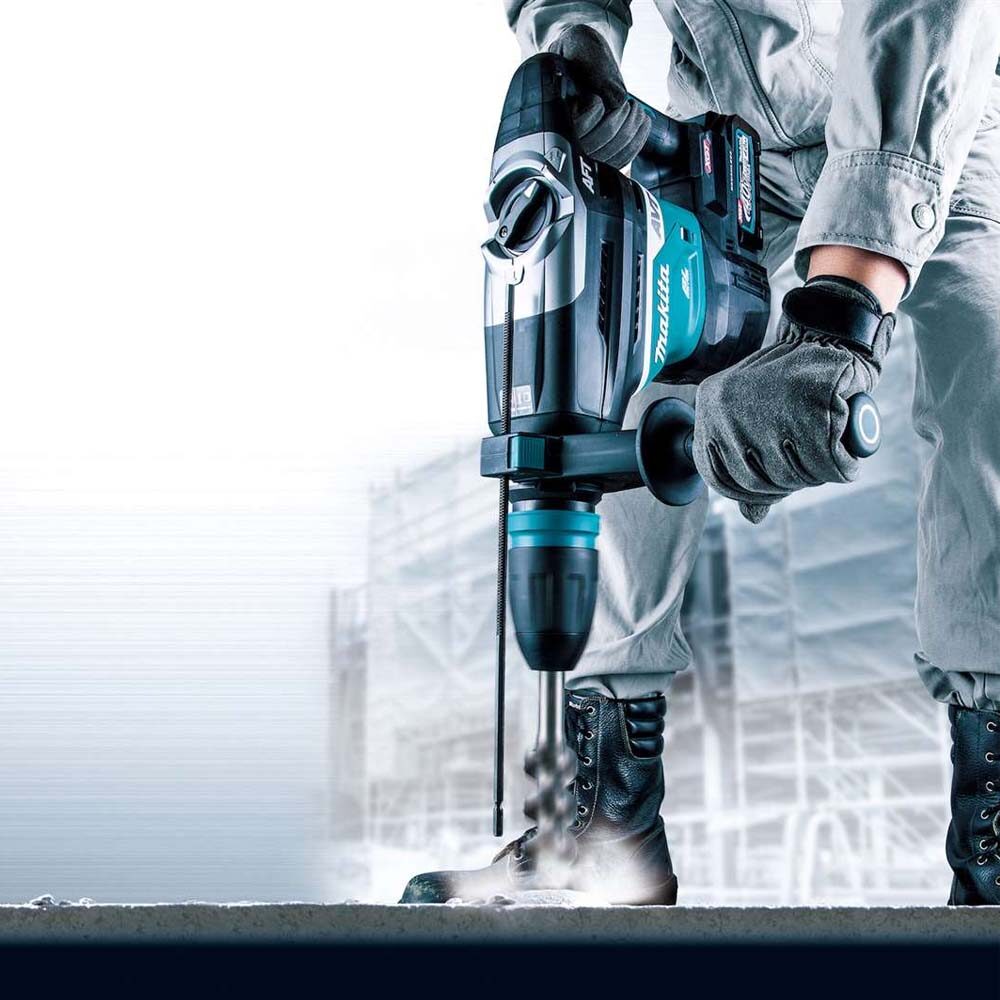
Makita HR007GZ 40V XGT SDS Plus Rotary Hammer
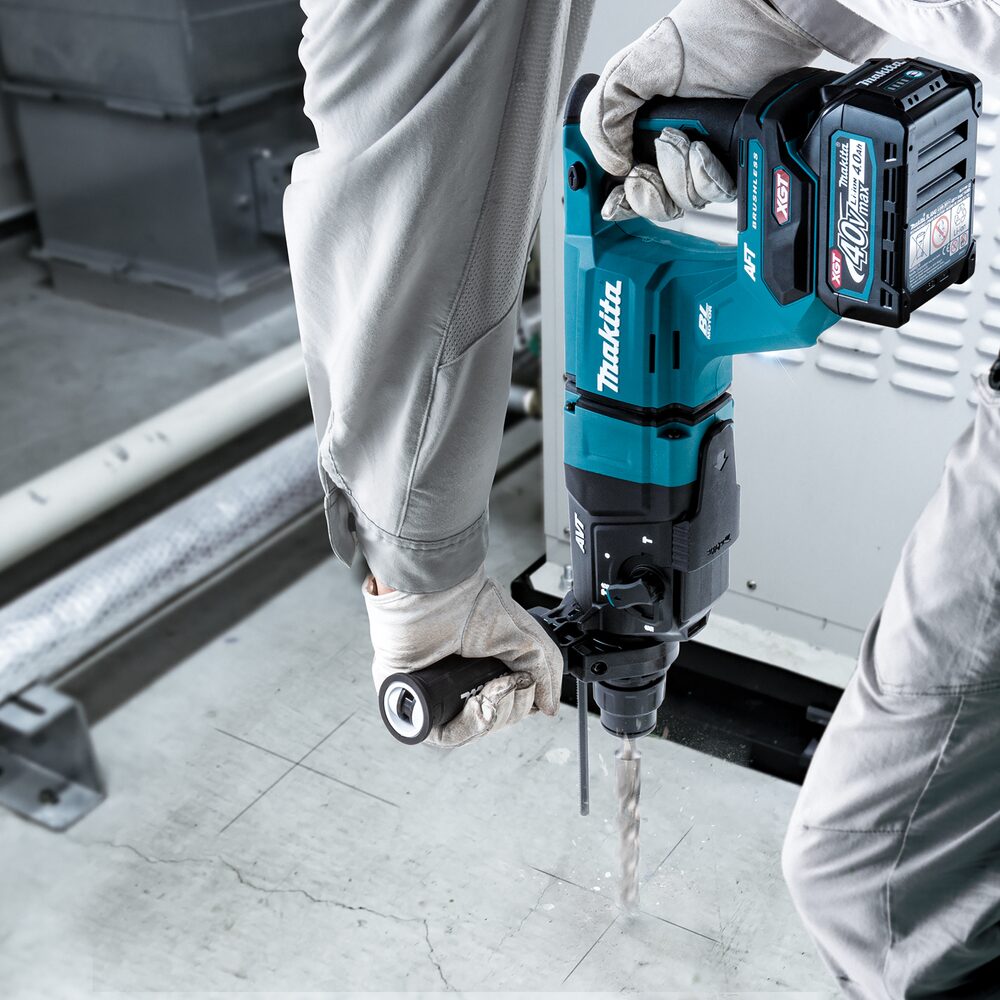
The HR007GZ sits at the controlled drilling end of the 40V range and is built for trades who spend long days drilling fixings, anchors, and service holes in concrete and masonry.
Using an SDS Plus chuck and delivering 3.0 joules of impact energy, it provides fast, consistent drilling while maintaining excellent control.
Active Feedback Sensing Technology helps shut the tool down if rotation suddenly slows, reducing the risk of kickback when drilling into reinforced concrete or hidden obstructions.
Anti Vibration Technology and constant speed control work together to reduce user fatigue during repeated drilling cycles, making it well suited to electricians, mechanical installers, and general construction trades.
The inclusion of AWS compatibility also allows automatic connection to dust extraction, helping keep work areas cleaner and safer.
This model represents the step up from 18V when drilling becomes a full-time task rather than an occasional requirement
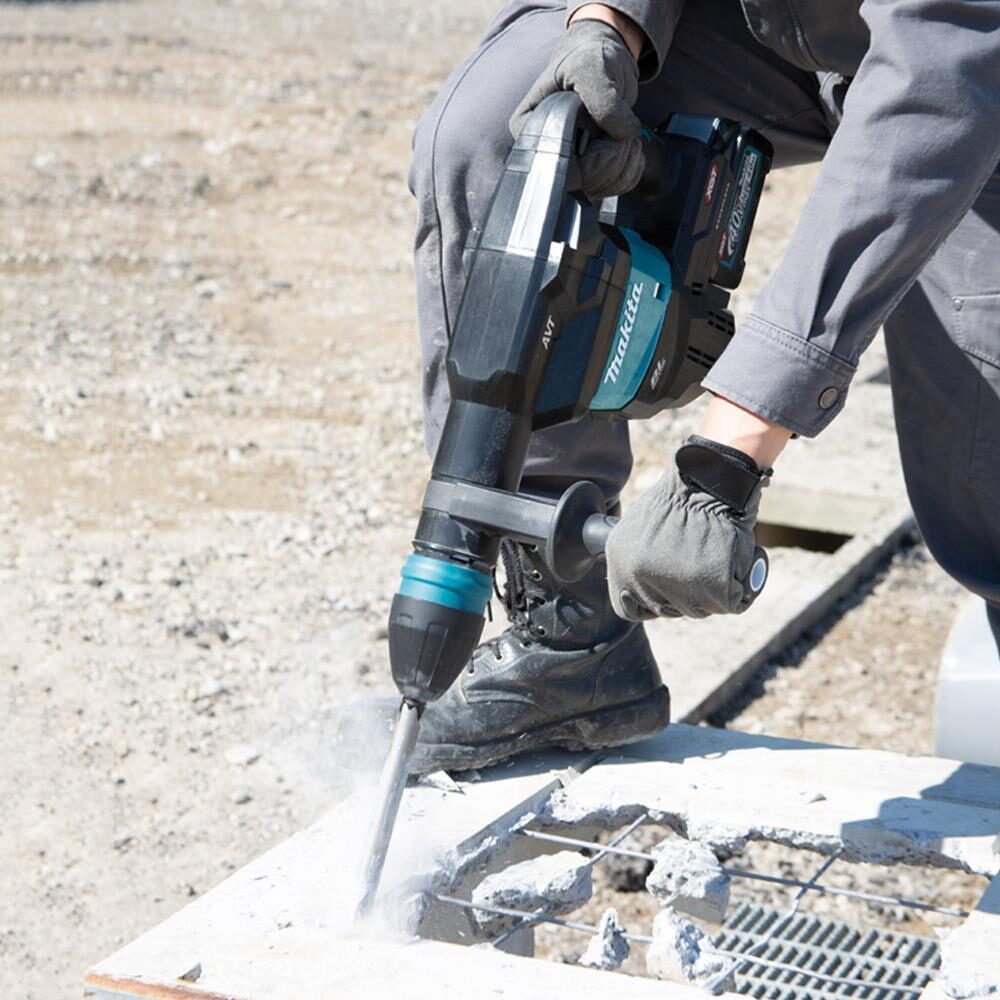
Makita HM001GZ02 40V XGT SDS Max Demolition Hammer
The HM001GZ02 moves firmly into demolition territory and is designed as a cordless alternative to mid range mains breakers.
With SDS Max compatibility, it is intended for chiselling, chasing, and breaking concrete rather than drilling.
The tool combines constant speed control with an anti vibration housing to reduce fatigue during extended use, particularly in internal strip out and renovation work.
A soft no load function automatically reduces motor speed when idling, helping to suppress vibration and improve overall control.
Multiple bit angle settings and variable speed selection allow the user to adapt the tool to different materials and working positions.
For trades carrying out regular demolition but wanting the freedom of cordless operation, this model shows where 40V begins to outperform traditional battery platforms
Makita HM004GZ04 Twin 40V XGT Heavy Duty Demolition Hammer
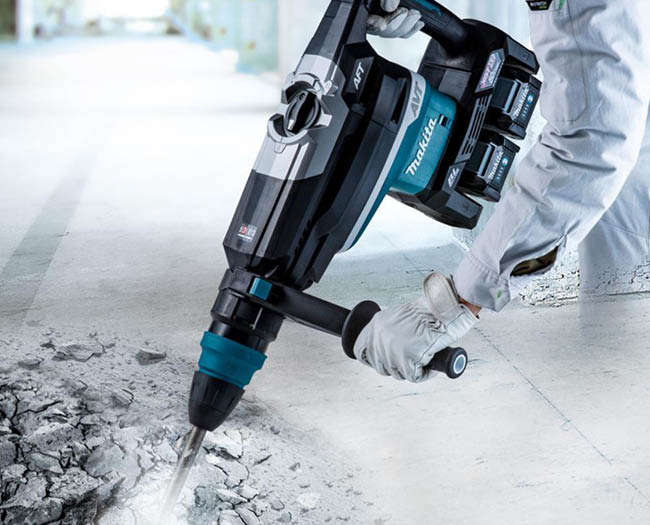
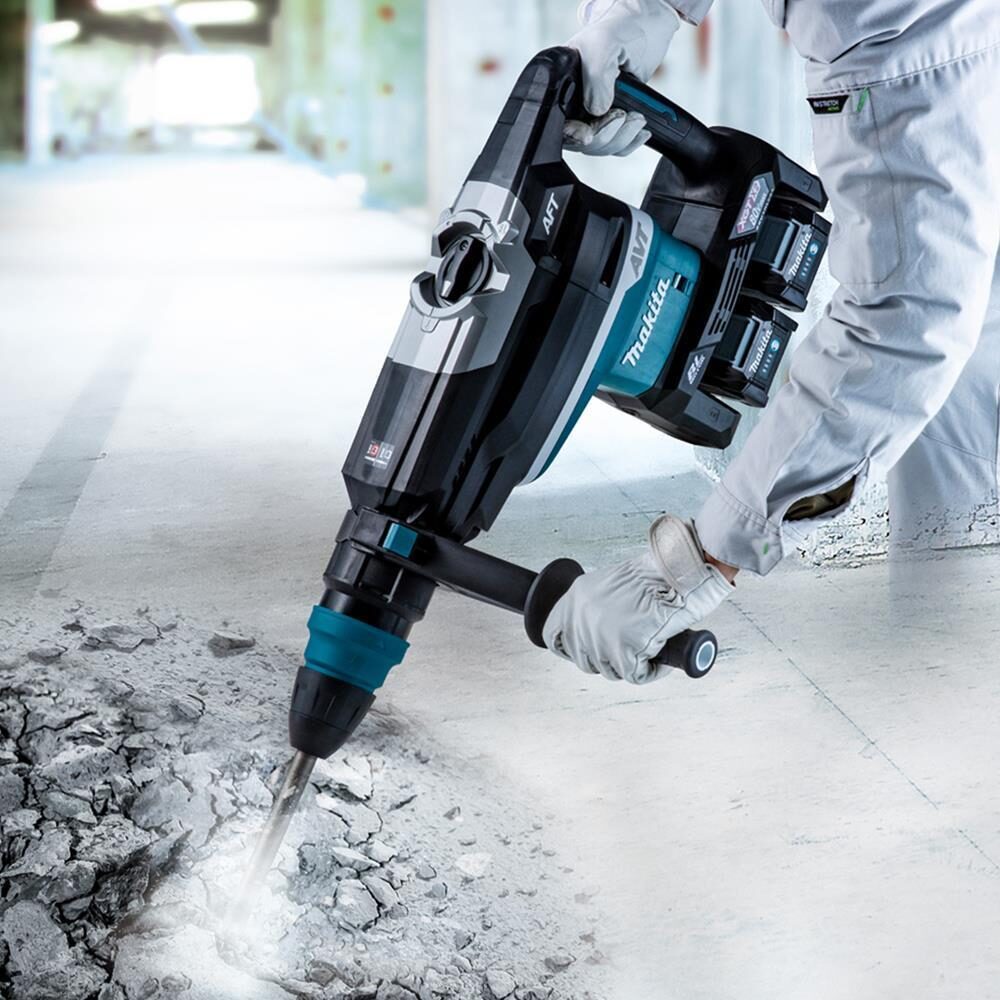
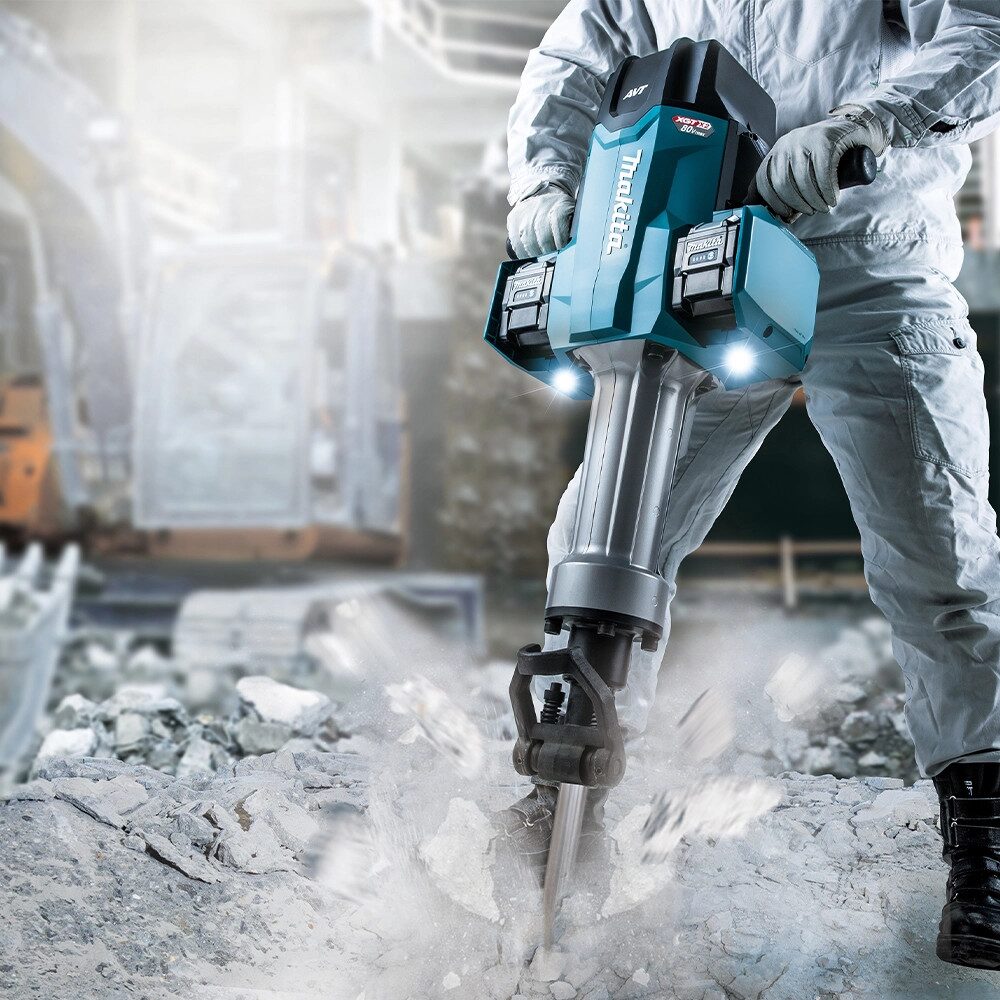
At the top of the range, the HM004GZ04 demonstrates what cordless demolition can now achieve.
Powered by two 40V XGT batteries working together, this tool delivers impact energy levels comparable to heavy duty mains breakers.
With up to 72.8 joules of impact energy, it is designed for large scale demolition, roadworks, and structural breaking tasks.
Makita’s Anti Vibration Technology significantly reduces transmitted vibration, even at high impact levels, helping to protect the operator during prolonged use.
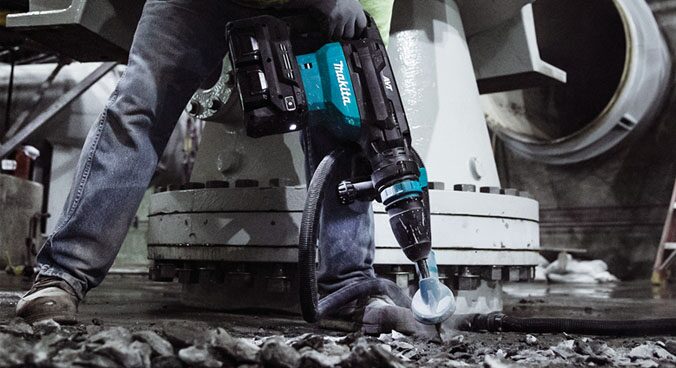
Auto Start Wireless System compatibility allows automatic dust extraction control, while constant rotation control and restart protection improve safety during demanding work.
This model is aimed squarely at professionals who previously had no choice but to rely on corded or petrol powered equipment for high output demolition
How Makita 40V vs 18V Feels on Site
In everyday use, the difference between 18V and 40V is most noticeable when tools are placed under sustained load.
18V platforms remain ideal for lighter SDS drilling, occasional concrete work, and general site tasks where portability and weight are priorities.
For many trades, 18V still covers the majority of daily work efficiently.
Makita 40V tools excel when drilling deep or repeated holes, carrying out prolonged chiselling, or breaking dense concrete where maintaining power over time matters.
Rather than peaking and fading, 40V tools continue delivering consistent performance throughout the task.
For many professionals, the most practical solution is running both platforms side by side, using 18V for routine work and 40V for high demand concrete and demolition applications
Makita 40V SDS drills and breakers are built for sustained power, durability, and professional level performance, making them ideal for demanding concrete and demolition work where 18V platforms begin to reach their limits
