


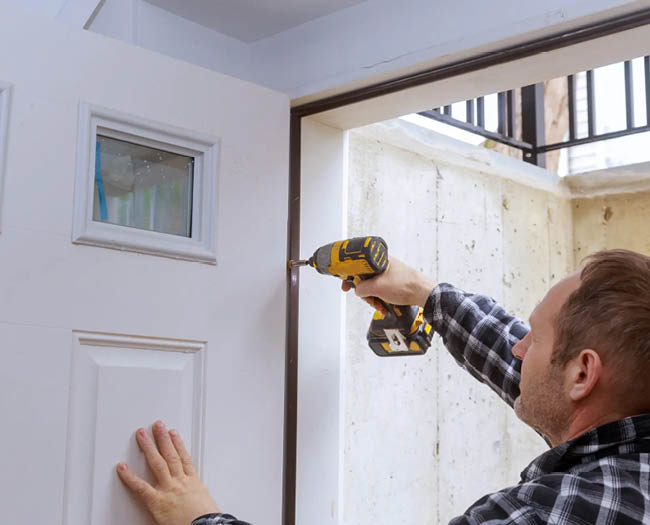
Hanging a door is one of those jobs that looks simple but punishes small mistakes. Get it right and the door swings clean, closes properly, and looks spot on. Rush it and you will end up with uneven gaps, sticking edges, or a latch that never lines up.
The good news is that with the right setup and a methodical approach, hanging a door is a straightforward job that most tradesmen and DIYers can handle with confidence.
This guide walks you through the full process step by step, from checking the frame to fitting the handle.
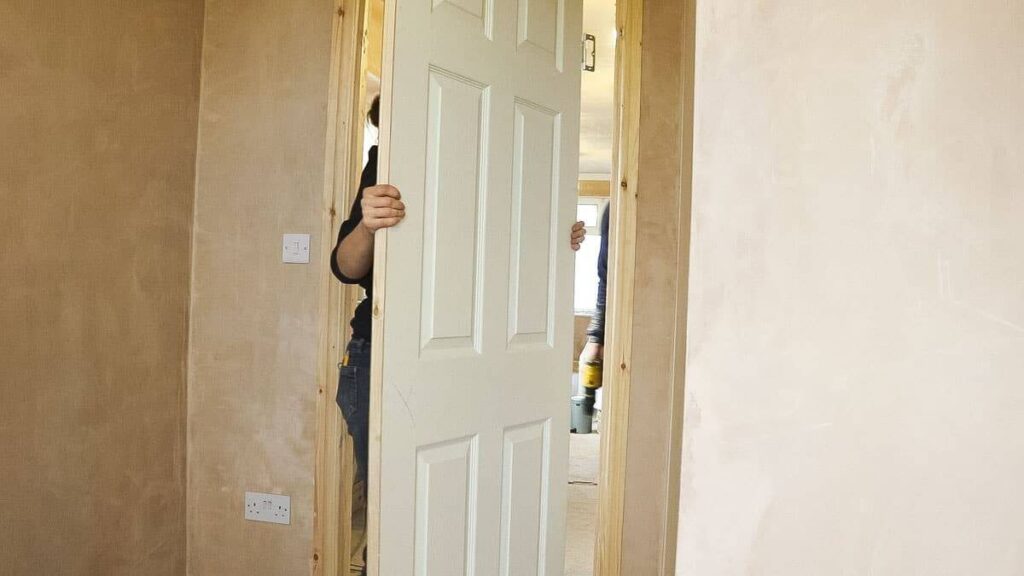
What You’ll Need to Hang a Door
Before you start, make sure you have everything ready.
Materials:
Having everything to hand will make the job quicker and far more accurate.
How to Hang The Door
Step 1: Check the Door Frame
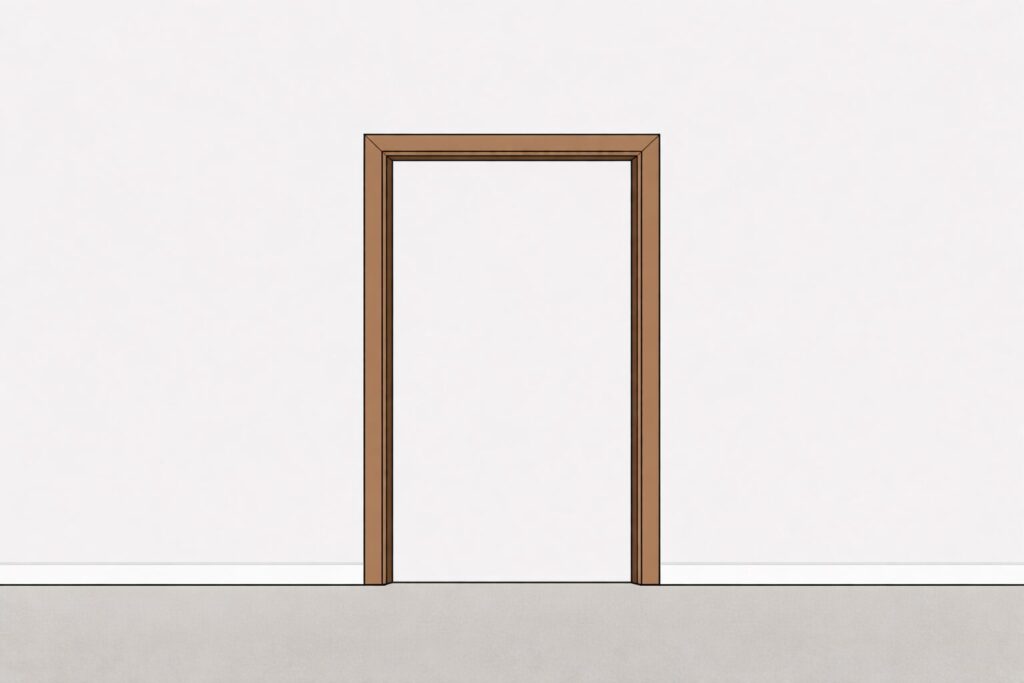
Before touching the door, check the opening properly.
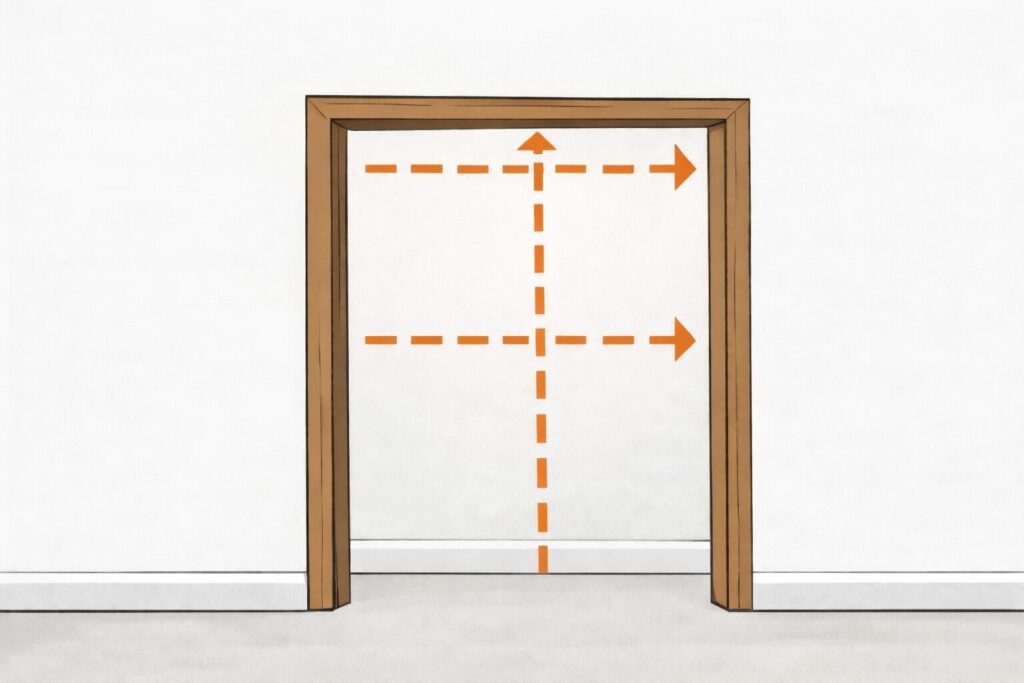
Measure the height and width of the frame in multiple places to spot any variation. Use a spirit level to check if the frame is plumb and square. Check the floor level, as this affects the gap at the bottom of the door.
If the frame is out, you will need to compensate when fitting the door, so do not skip this step.
Step 2: Size the Door
Stand the door in the opening using wedges underneath to support it.
You are aiming for consistent gaps:
Around 2mm on the sides and top
Around 6–10mm at the bottom depending on flooring
Mark any areas that need trimming and remove material carefully using a plane or saw.
Take your time here, as accurate sizing makes the rest of the job much easier.
Step 3: Mark Hinge Positions
Standard hinge positions are:
Top hinge: 150mm–180mm from the top
Bottom hinge: 200mm–230mm from the bottom
Middle hinge: centred between the two
Mark these positions clearly on the edge of the door.
Accurate marking here ensures the door hangs evenly and carries weight properly.
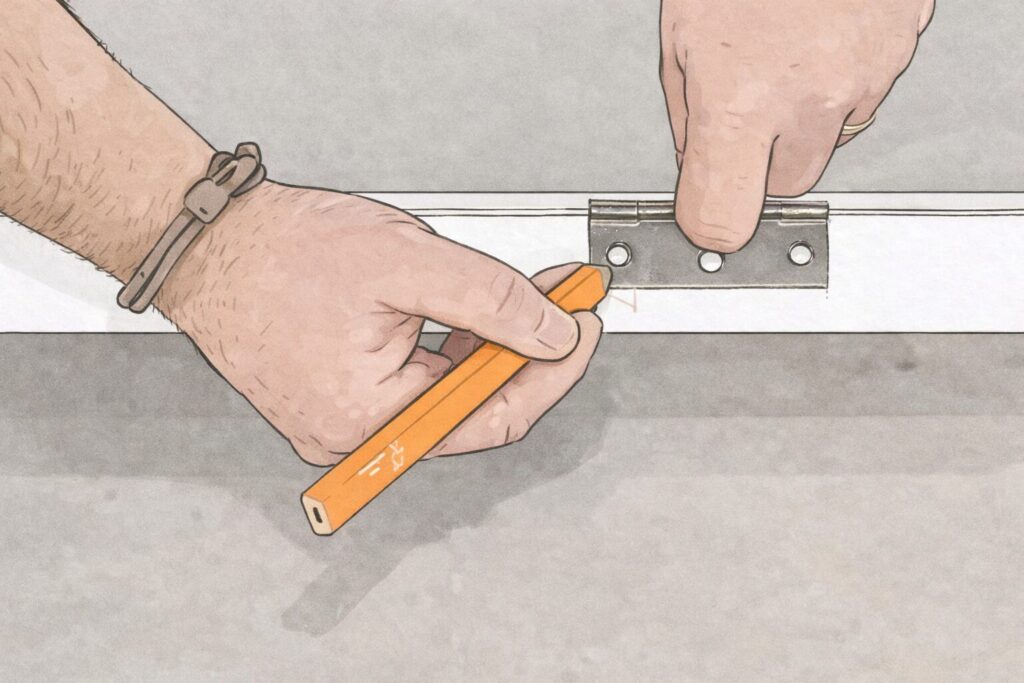
Step 4: Cut the Hinge Recesses
Place each hinge on your marks and draw around it with a sharp pencil or knife.
Score the outline to create clean edges.
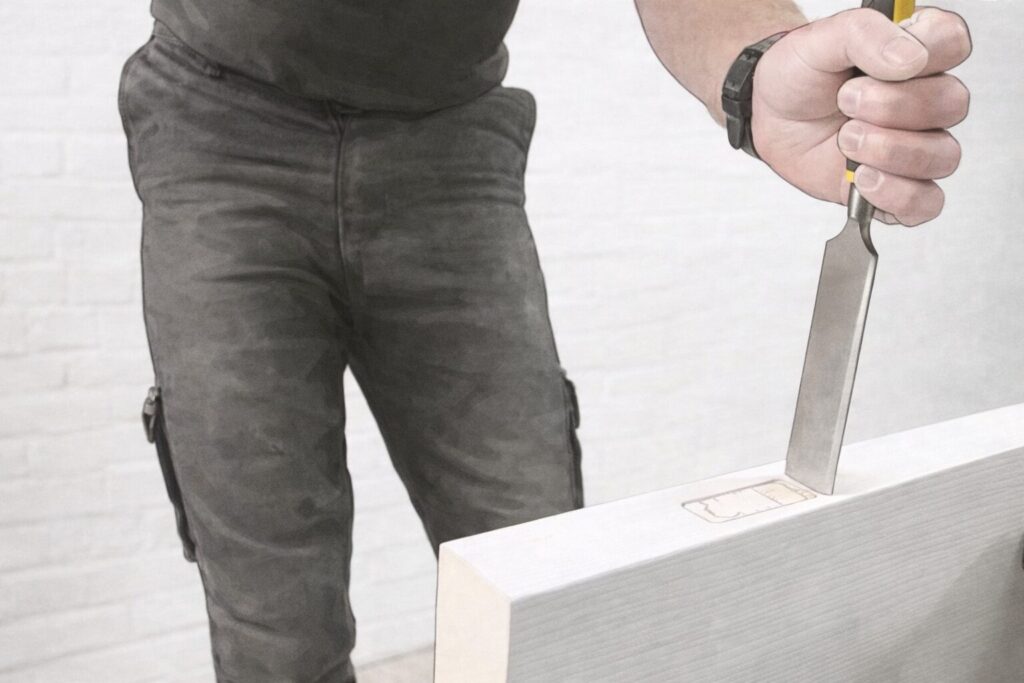
Use a chisel to remove material to the exact depth of the hinge leaf.
Take your time with this step, as messy or uneven recesses will affect how the door sits.
Step 5: Fix Hinges to the Door
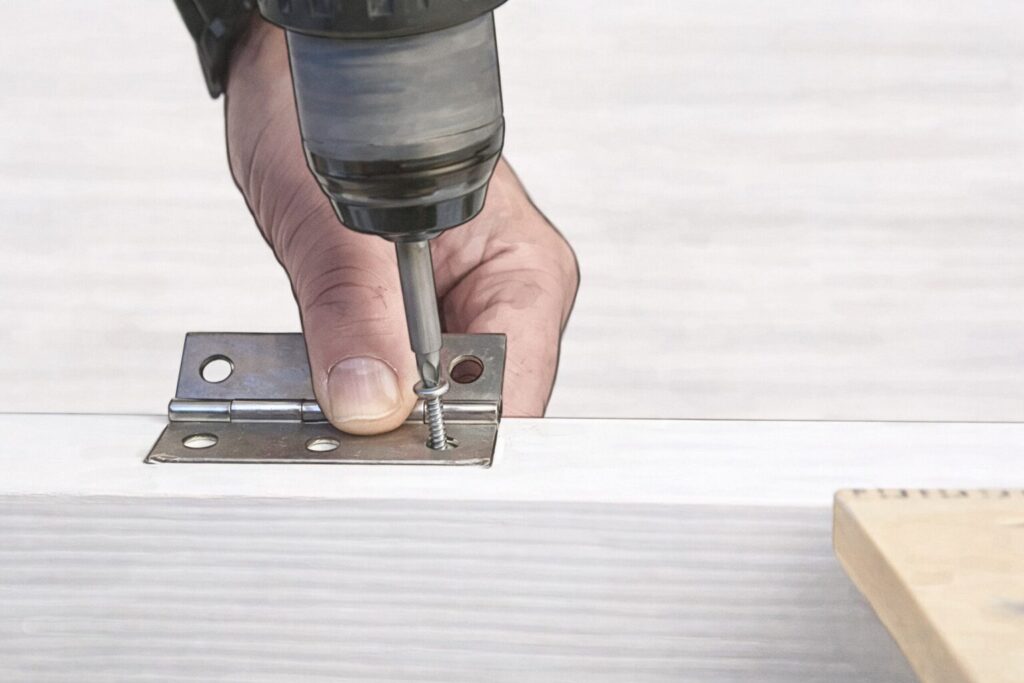
Screw the hinges into the door first.
Always drill pilot holes to prevent splitting the timber.
Make sure each hinge sits flush with the surface.
A clean fit here ensures smooth movement later on.
Step 6: Transfer Hinge Positions to the Frame
Stand the door back in the opening using wedges.
Adjust it until the gaps are even all the way around.
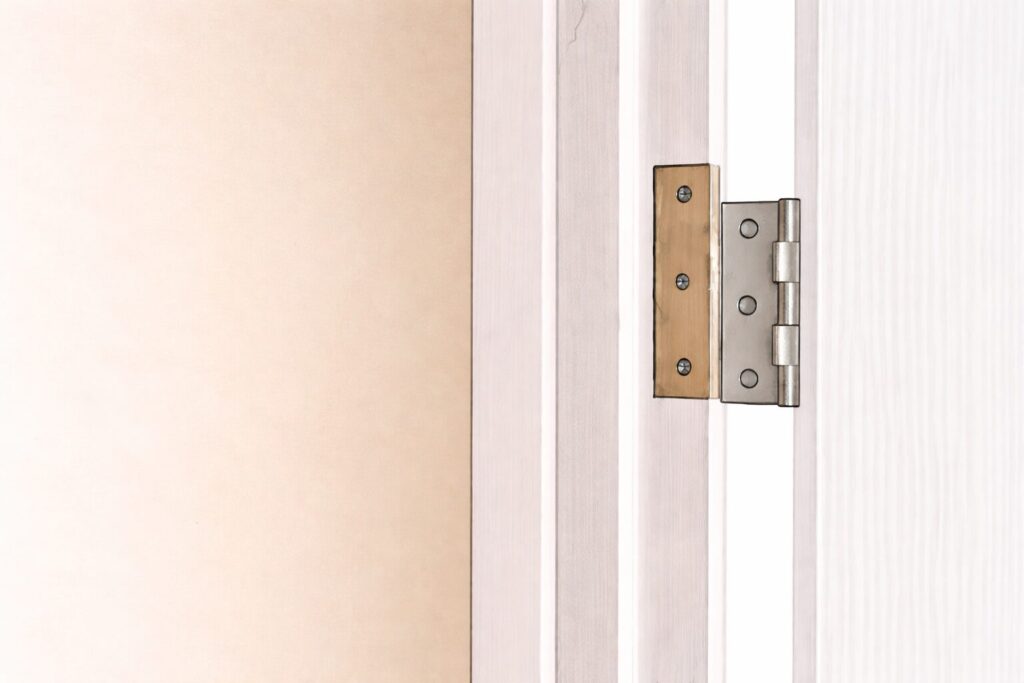
Mark the hinge positions directly onto the frame.
Accuracy here saves a lot of adjustment later.
Step 7: Cut the Frame Recesses
Repeat the same process as before.
Mark the hinge positions clearly.
Score the outline for a clean finish.
Chisel out to the correct depth.
Keep everything neat and precise.
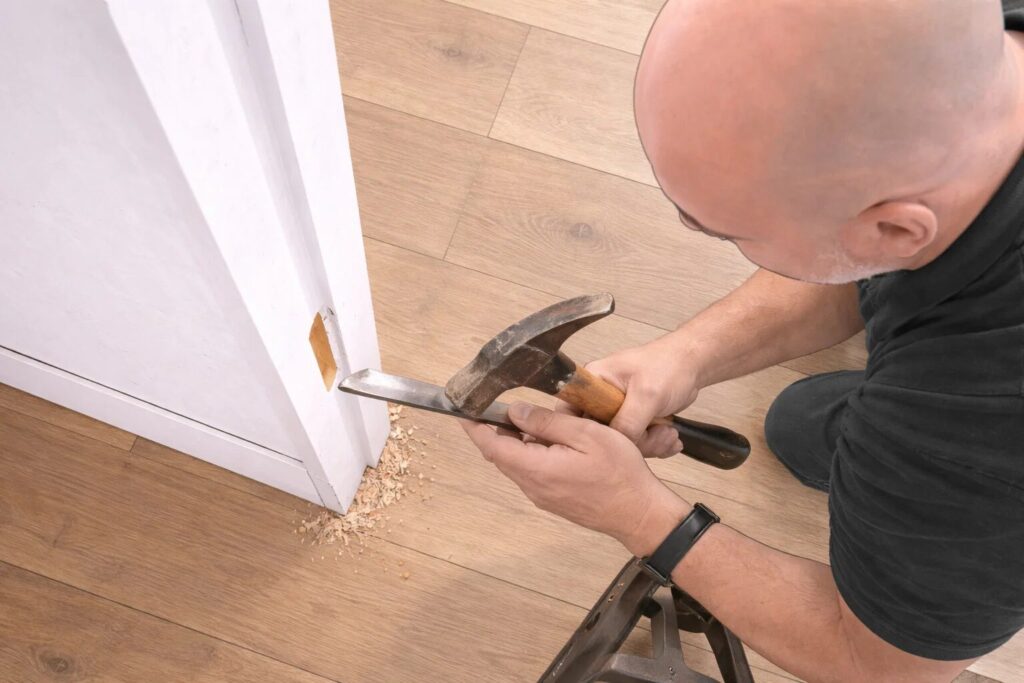
Step 8: Hang the Door
Position the door back into the frame.
Start by fixing the top hinge, then move to the others.
Check alignment and gaps as you go rather than fully tightening everything at once.
This makes it easier to adjust if needed.
If you need further assistance on fitting your hinges, we have a in depth guide you can watch here
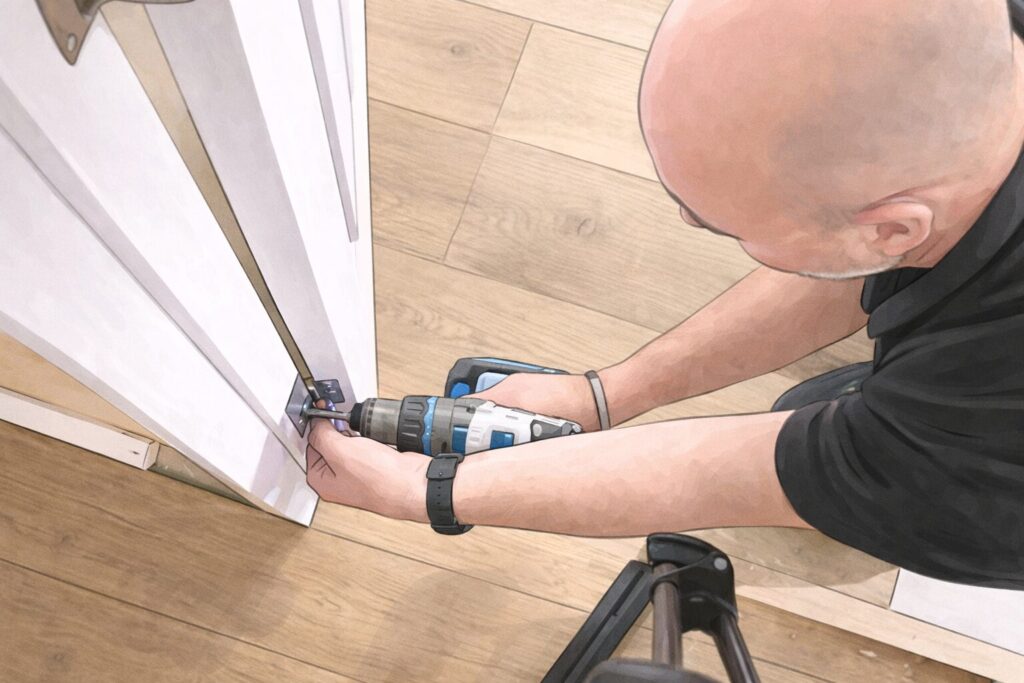
Step 9: Check and Adjust
Open and close the door several times and check:
Are the gaps even all around?
Is the door rubbing anywhere?
Does it stay in position when left open?
If needed, remove the door and plane small amounts off the edges to fine tune the fit.
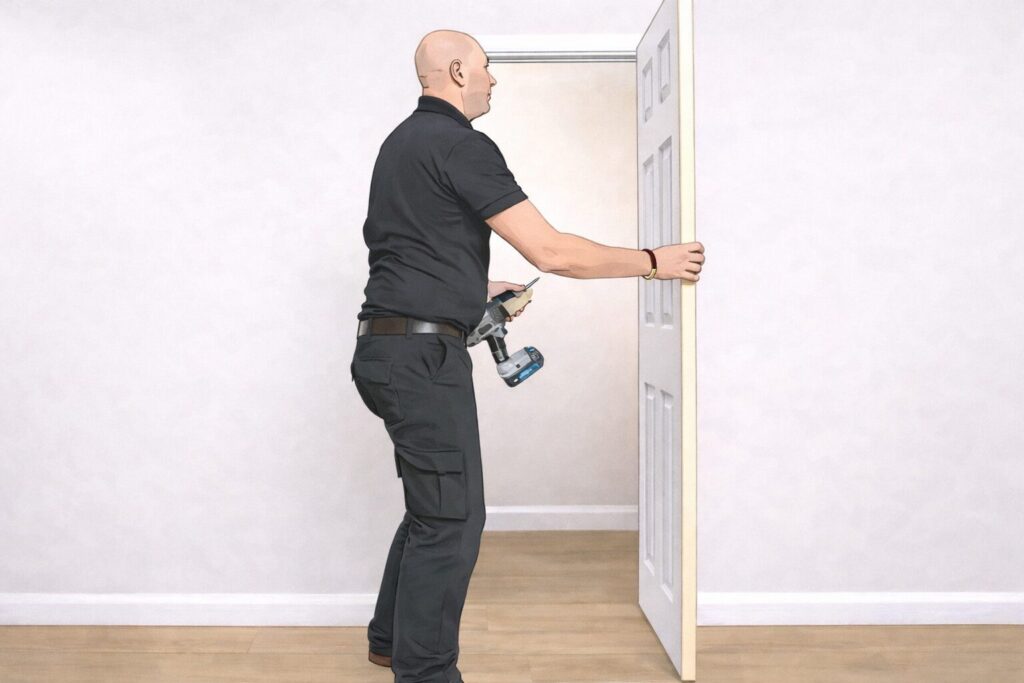
Step 10: Fit the Latch and Handle
With the door hung and aligned, the final step is fitting the latch and handle. This is where precision matters, as even small misalignments can affect how smoothly the door operates.
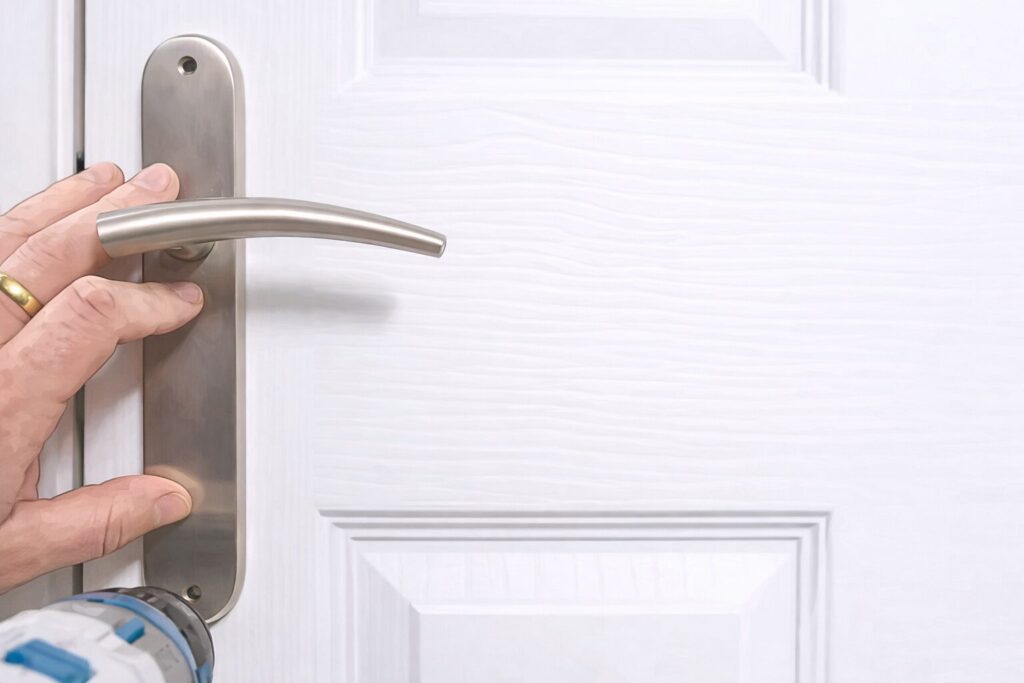
Step 10.1: Mark the Handle Height
Start by marking the height of the handle on the door.
A standard height is typically between 900mm and 1000mm from the floor, but this can be adjusted to match existing doors in the property.
Use a tape measure and pencil to mark both sides of the door, ensuring the marks are level and consistent.
Step 10.2: Mark and Drill the Latch Hole
Position the latch plate against the edge of the door and mark the centre point for the spindle and latch.
Use a suitable drill bit to create the main latch hole through the face of the door.
Then drill into the edge of the door to house the latch mechanism itself, ensuring the depth matches the latch body.
Step 10.3: Cut the Faceplate Recess
Insert the latch temporarily and draw around the faceplate on the edge of the door.
Remove the latch and use a chisel to carefully cut a shallow recess so the faceplate sits flush with the surface.
Take your time here to avoid over-cutting, as a neat finish will improve both appearance and function.
Step 10.4: Install the Latch Mechanism
Slide the latch into position and secure it with screws.
Make sure the angled side of the latch faces the direction the door closes, allowing it to engage smoothly with the strike plate.
Step 10.5: Fit the Door Handles
Insert the spindle through the latch and attach the handles on both sides of the door.
Align everything carefully before tightening the screws to ensure the handle sits straight and operates freely.
Step 10.6: Fit the Strike Plate
Close the door gently to mark where the latch meets the frame.
Use this mark to position the strike plate on the door lining.
Chisel out a recess so the plate sits flush, then screw it into place securely.
Step 10.7: Test and Adjust
Open and close the door several times to check the latch engages smoothly.
If the latch sticks or doesn’t align properly, make small adjustments to the strike plate position until the action feels clean and consistent.
Common Mistakes to Avoid
Most door problems come down to simple errors.
Cutting hinge recesses too deep, which causes loose hinges. Not leaving enough gap at the bottom for flooring. Ignoring whether the frame is square or plumb. Forgetting pilot holes and splitting the timber.
Avoid these and the job becomes much easier.
Pro Tips for a Perfect Finish
Always dry fit the door before cutting anything
Use sharp chisels for cleaner hinge recesses
Work with wedges instead of trying to hold the door by hand
Check the door swing direction before starting
Small details like these make a big difference to the final result.
Final Thoughts
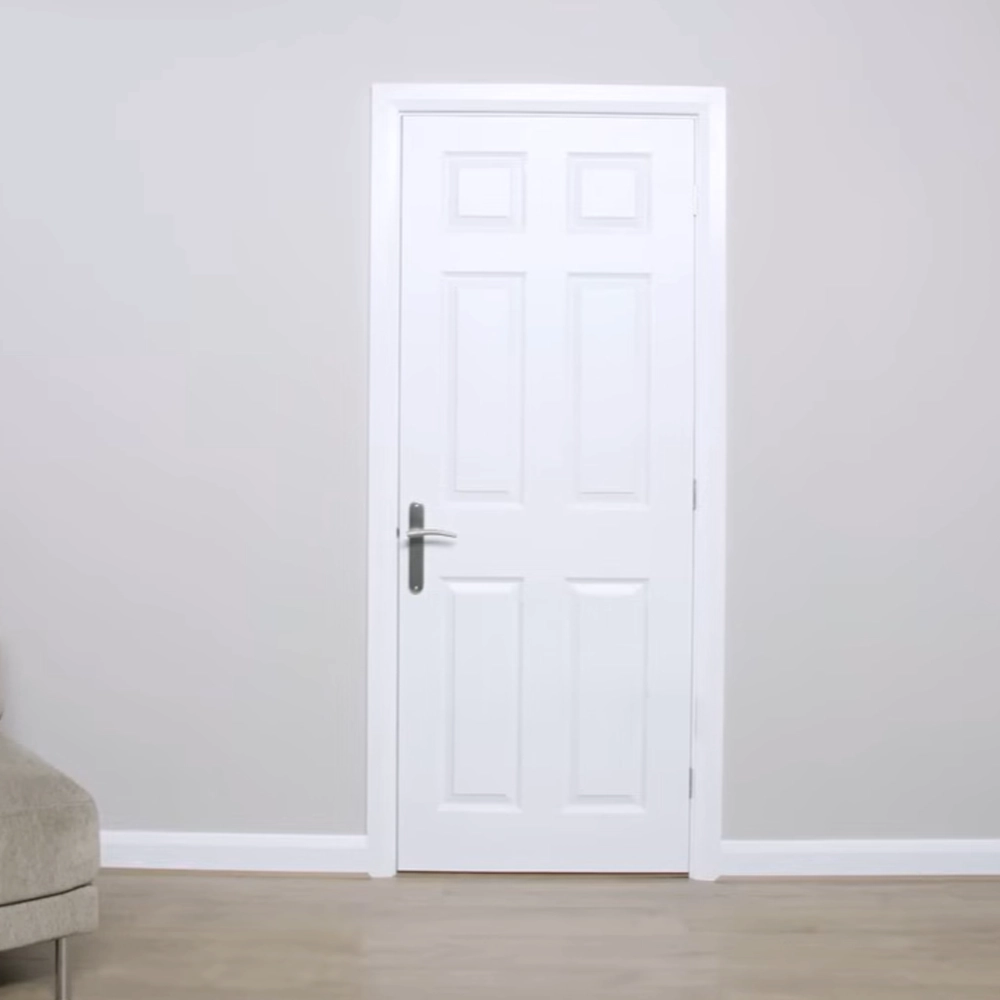
Hanging a door is all about accuracy and patience. Take your time with the setup, measure carefully, and focus on clean hinge work.
Get those right and the rest of the job falls into place.
Whether you are fitting a single internal door or working through a full property, following this process will give you a professional finish every time.
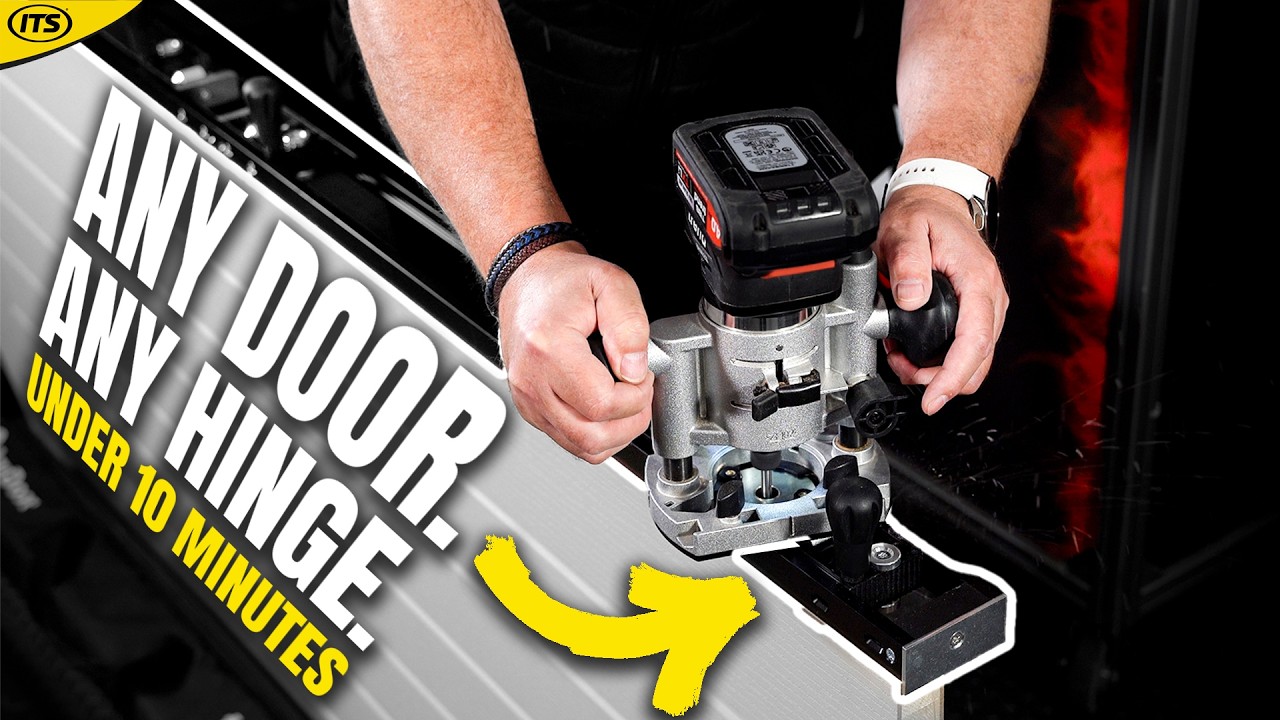
Prefer to see it done? Watch our full step by step guide here👇
Great article! This has given me full confidence to do this myself – thanks!
Thanks, Graham. Great to hear the guide helped – let us know how you get on once it’s fitted!