


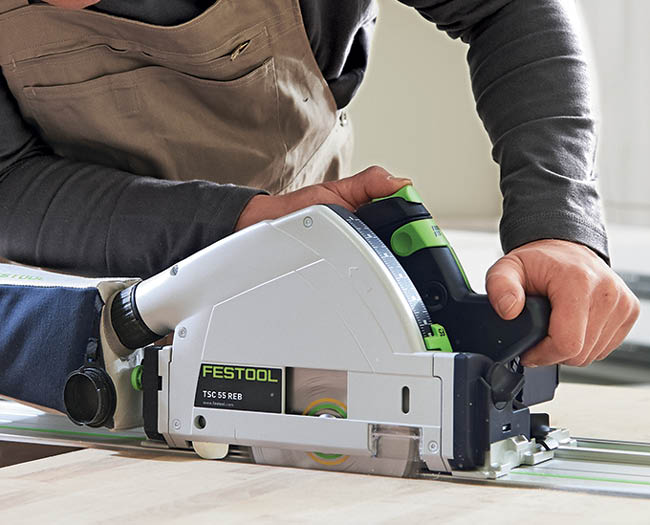
Whether you’ve just bought your first Festool TS 55 or you’re replacing an older model, taking a few minutes to set it up properly will make a huge difference to the accuracy, finish, and performance of your cuts.
One of the biggest advantages of the Festool TS 55 system is its guide rail accuracy. When correctly adjusted, the saw delivers clean, splinter free cuts with minimal setup time, making it a favourite amongst joiners, kitchen fitters, cabinet makers, and site carpenters.
In this guide, we’ll walk you through the essential setup process, from adjusting the saw on the guide rail to trimming the splinter guard and making your first test cut.

What You’ll Need Before You Start
Before setting up your TS 55, make sure you have:
- Festool TS 55 Plunge Saw
- Festool Guide Rail
- Sharp, correctly installed saw blade
- Dust extractor or vacuum
- Test piece of timber or sheet material
- Safety glasses and hearing protection
Always disconnect the saw from the power supply before making adjustments.

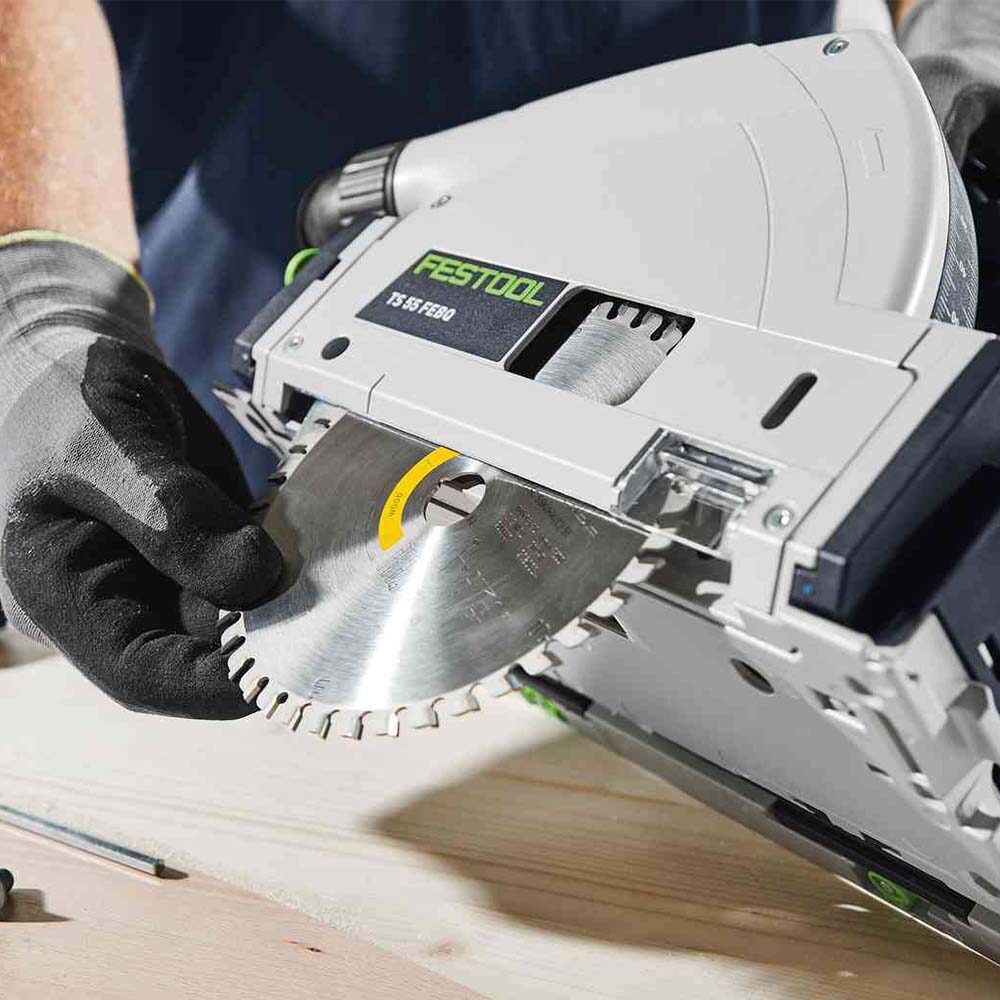
Step 1: Check The Blade Installation
Before fitting the saw to the rail, inspect the blade.
Ensure the blade is securely fitted and tightened correctly. Check that the blade is suitable for the material you’re cutting and that there are no signs of damage or excessive wear.
A dull blade can cause burning, tear out, poor cut quality, and increased strain on the saw.
If you’re working primarily with sheet materials, MDF, plywood, or finished timber, a fine tooth blade will deliver the cleanest finish.
Step 2: Fit The Saw To The Guide Rail
Place the saw onto the guide rail.
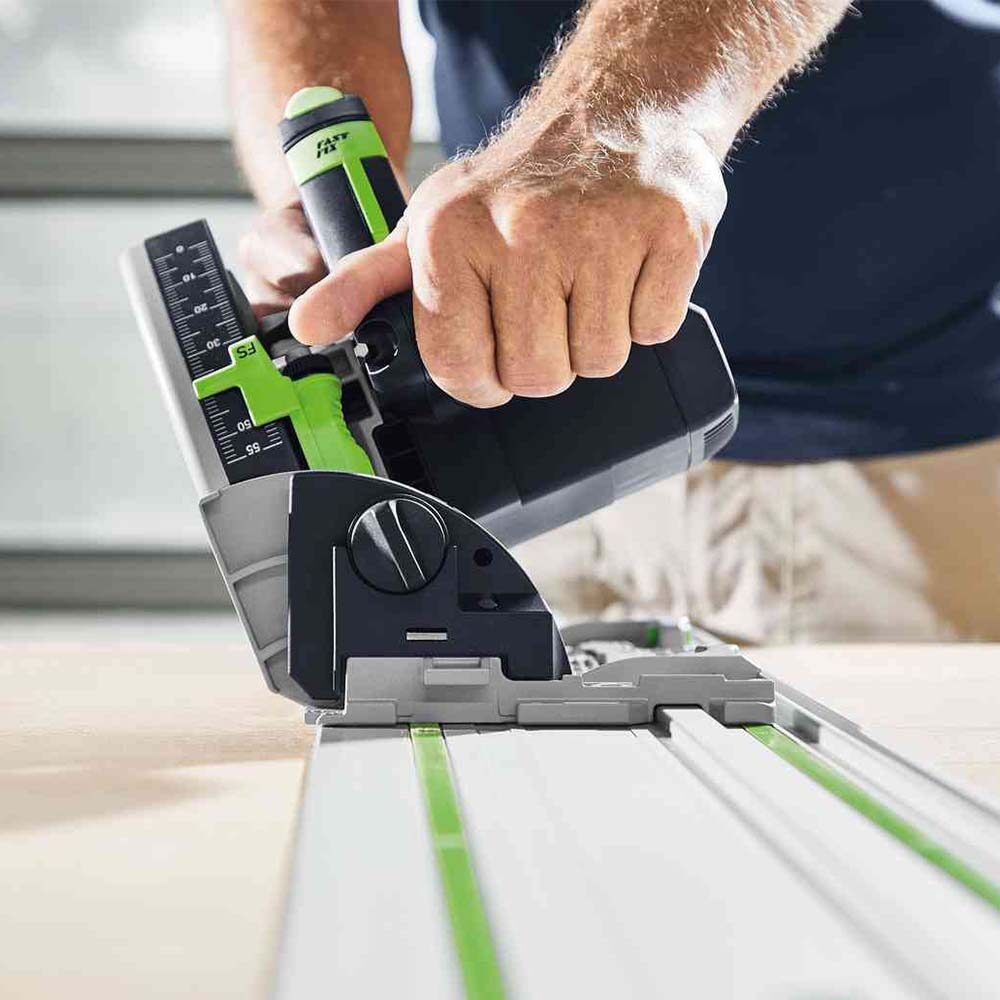
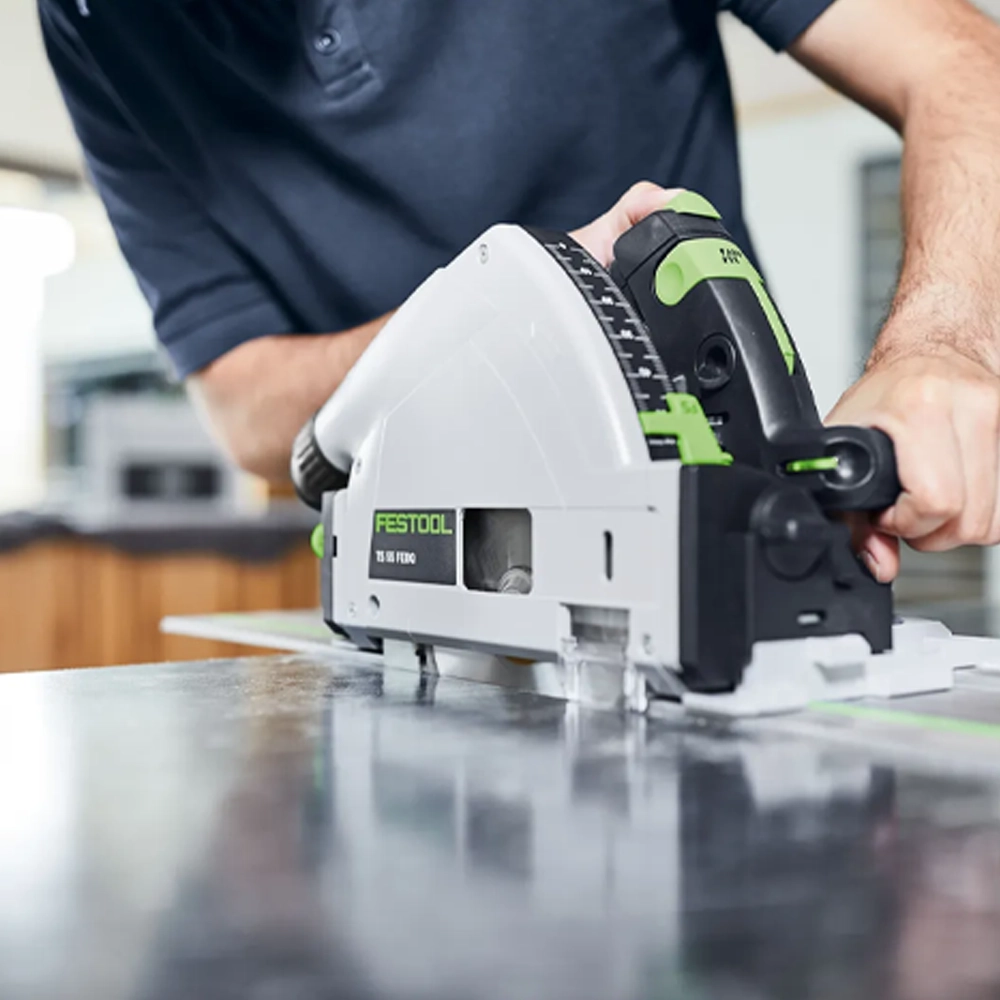
You’ll notice two green adjustment cams located on the base of the saw. These are designed to remove any play between the saw and the guide rail.
Turn the cams gradually until the saw slides smoothly along the rail without any side to side movement.
The goal is not to make the saw tight.
It should glide freely while maintaining firm contact with the guide rail.
If the saw feels stiff or difficult to push, back the adjustment off slightly.
A properly adjusted TS 55 should move effortlessly while remaining perfectly aligned throughout the cut.
Step 3: Trim The Guide Rail Splinter Guard
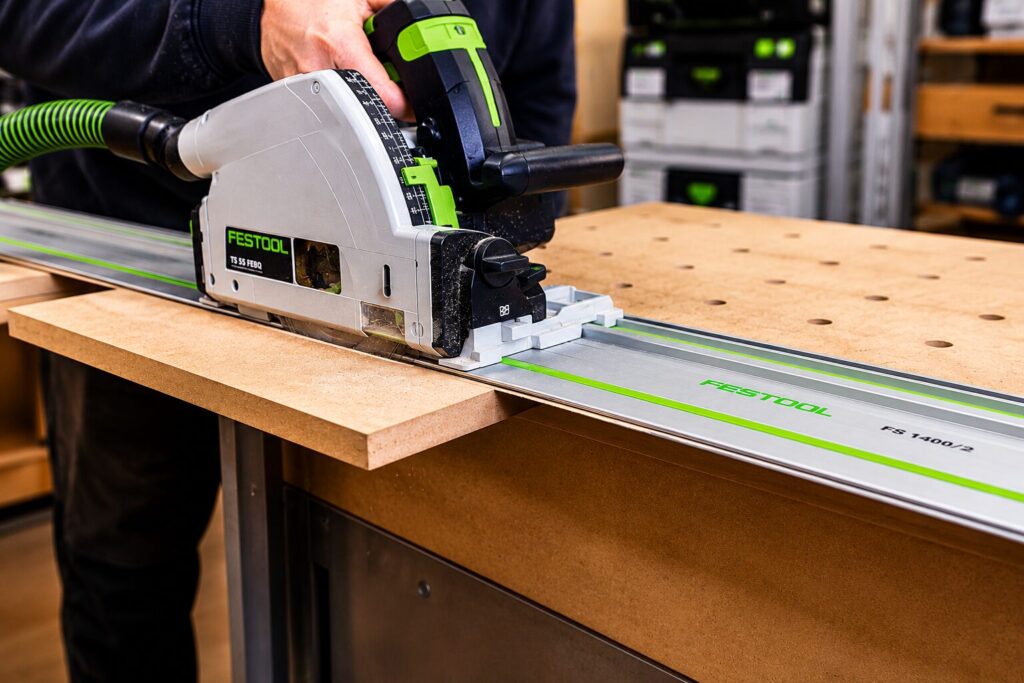
The transparent splinter guard running along the edge of the guide rail acts as both a cut line indicator and an anti splinter edge.
Before using a new guide rail, it must be trimmed to match your saw.
Place the guide rail on a sacrificial piece of timber or sheet material.
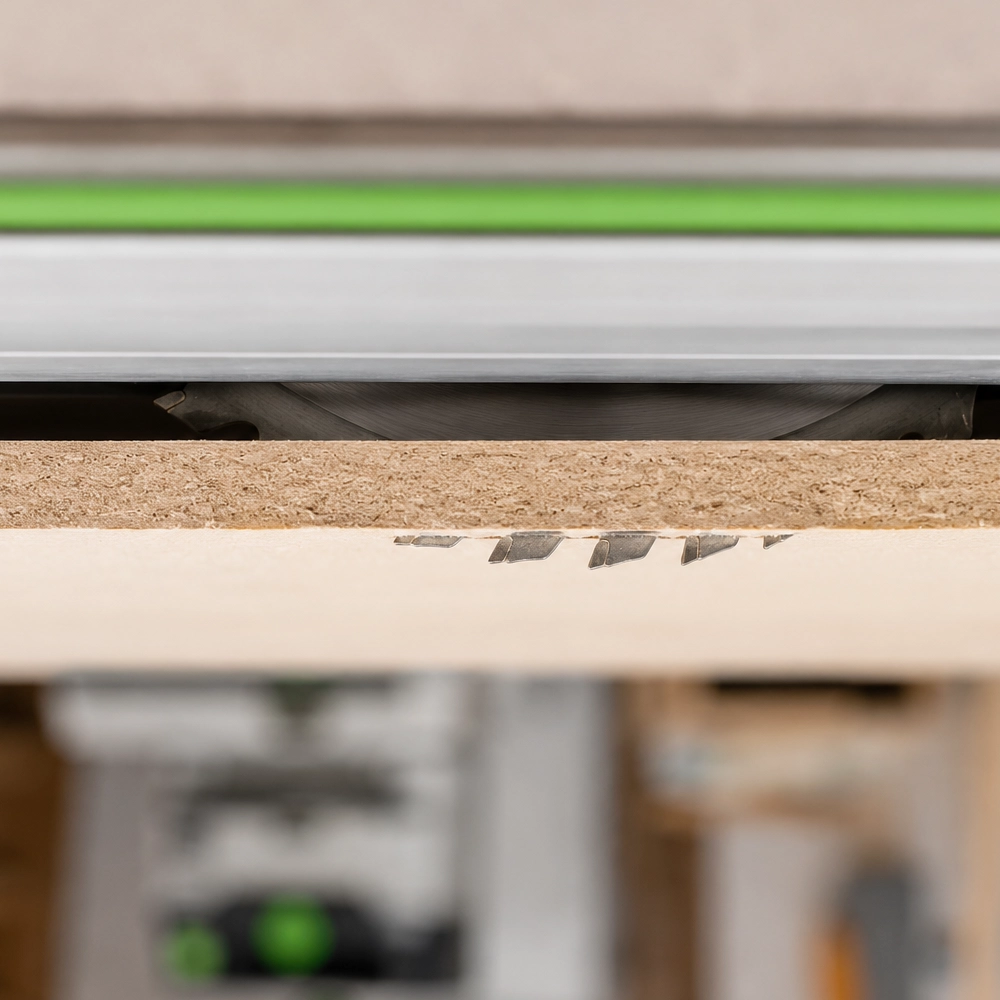
Set the saw cutting depth to approximately 5mm deeper than the material beneath the rail.
Start the saw and make a full length cut along the entire guide rail.
This trims the splinter guard perfectly to your blade, creating an exact reference line for future cuts.
Once completed, the edge of the splinter guard now shows exactly where the blade will cut.
Step 4: Set The Correct Cutting Depth
One of the biggest mistakes users make is setting the blade too deep.
Adjust the cutting depth so the blade projects just a few millimetres below the workpiece.
This provides:
- Cleaner cuts
- Reduced tear out
- Less strain on the motor
- Improved blade life
- Better dust extraction
The TS 55 depth scale makes adjustment quick and straightforward, whether you’re cutting with or without the guide rail.
Step 5: Connect Dust Extraction
Dust extraction is one of the standout features of the Festool system.
Connect a Festool dust extractor or suitable vacuum before making cuts.
Effective extraction offers several advantages:
- Improved visibility of the cut line
- Cleaner working environment
- Reduced airborne dust
- Better blade cooling
- Improved cutting efficiency
When paired with a Festool extractor, the TS 55 can remove the vast majority of dust generated during cutting.

Step 6: Make A Test Cut
Before cutting expensive materials, make a test cut on a scrap piece.
Check for:
- Smooth travel along the rail
- Clean cut edges
- Accurate alignment with the splinter guard
- Correct blade depth
- Effective dust extraction
If the cut is clean and accurate, you’re ready to start work.
Common TS 55 Setup Mistakes
Overtightening The Rail Adjustment Cams
Many users assume tighter is better.
Overtightening causes unnecessary friction and can make the saw difficult to push through cuts.
Skipping The Splinter Guard Trim
Failing to trim a new guide rail means the cut line indicator won’t be accurate.
Using A Dull Blade
Even the best plunge saw cannot compensate for a worn blade.
Setting Excessive Cutting Depth
Running more blade below the material than necessary increases tear out and reduces efficiency.
Ignoring Dust Extraction
Dust build up affects visibility, cut quality, and long term tool performance.
Frequently Asked Questions
Do I Need To Trim Every Festool Guide Rail?
Yes. Every new guide rail should be trimmed before first use to ensure the splinter guard matches your blade exactly.
How Tight Should The TS 55 Be On The Guide Rail?
The saw should slide freely while having no noticeable side to side movement.
Can I Use The TS 55 Without A Guide Rail?
Yes, but you’ll lose much of the accuracy and finish quality that makes the TS 55 system so effective.
Why Is My TS 55 Not Cutting Straight?
The most common causes are guide rail play, damaged splinter guards, worn blades, or incorrect rail positioning.
When Should I Replace The Splinter Guard?
Replace the splinter guard if it becomes damaged, excessively worn, or no longer provides clean cut edges.
Final Verdict
The Festool TS 55 is one of the most accurate plunge saws available, but like any precision tool, it performs best when correctly set up.
Taking a few minutes to adjust the guide rail cams, trim the splinter guard, set the correct cutting depth, and connect dust extraction will ensure cleaner cuts, improved accuracy, and a better overall experience on site.
Get the setup right once, and every cut that follows becomes quicker, cleaner, and more precise.
Whether you’re fitting kitchens, cutting sheet materials, building cabinetry, or tackling site work, the TS 55 is designed to deliver professional results from the very first cut.
SHOP NOW