An impact driver is one of the most useful power tools you can add to your kit, especially if you regularly drive long screws, structural fixings or coach screws. While they look similar to drill drivers, they are built for a completely different purpose.
Instead of relying solely on rotational force, an impact driver uses a combination of rotation and rapid impacts to generate much higher torque. This makes it easier to drive screws into tough materials with less effort and less strain on your wrists.
Whether you’re building decking, fitting kitchens, constructing timber frames or tackling DIY projects around the home, an impact driver can save time, reduce fatigue and make difficult jobs much easier.
In this guide, we’ll explain exactly what an impact driver does, when you should use one, how it compares to other power tools and what features to look for when choosing the right model.
What Is An Impact Driver?
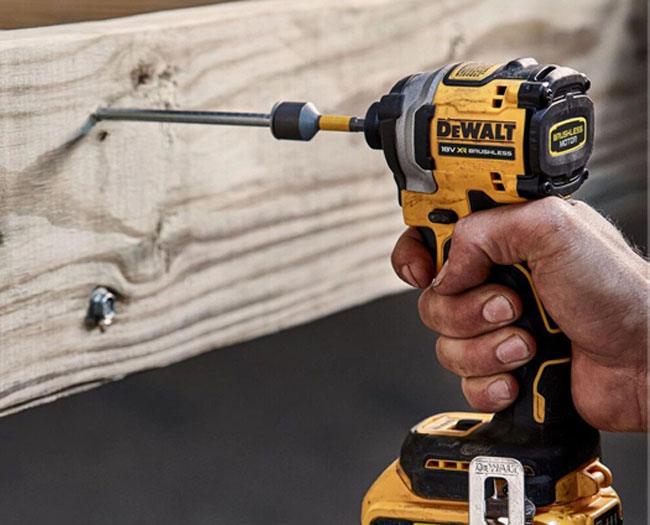
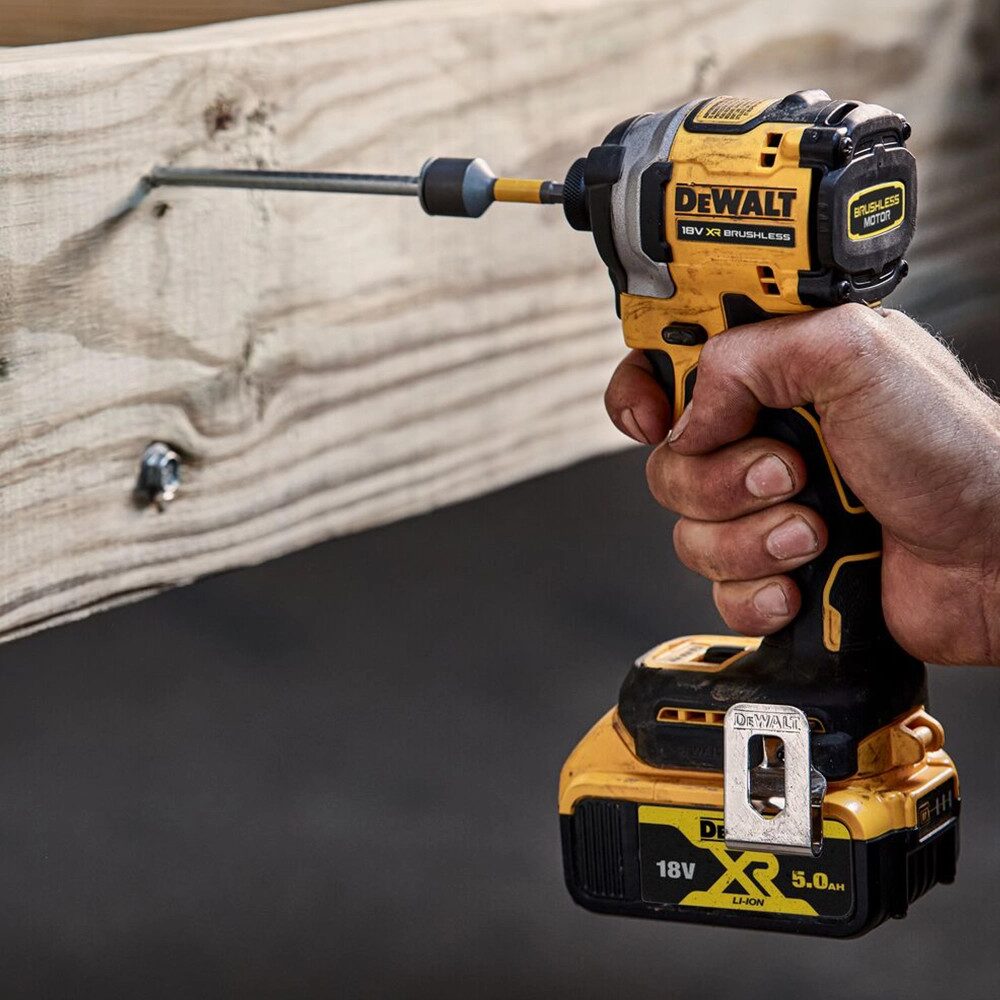
An impact driver is a compact cordless power tool designed primarily for driving screws, bolts and other threaded fixings.
Unlike a drill driver, which delivers continuous rotational force, an impact driver uses an internal hammer-and-anvil mechanism that engages as resistance increases, delivering rapid rotational impacts and allowing the tool to tackle demanding fixings.
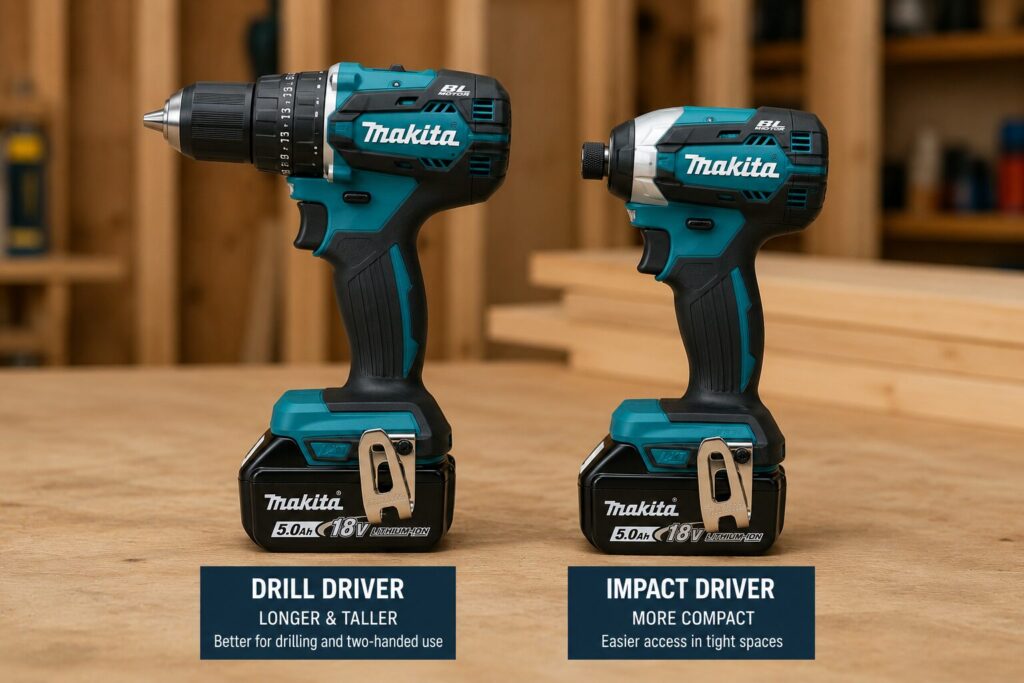
Most impact drivers use a quick-change ¼” hex chuck instead of a traditional three-jaw drill chuck. This makes changing screwdriver bits incredibly quick and also allows the tool to be much shorter from front to back, making it easier to work in confined spaces.
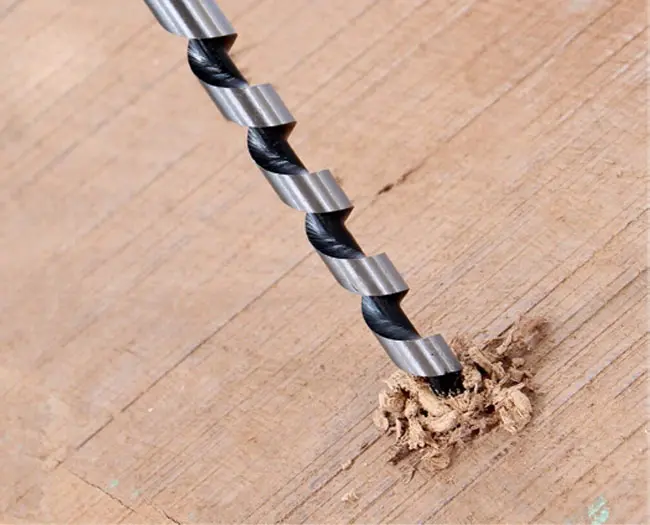
Although impact drivers can drill small holes using hex-shank drill bits, drilling isn’t their main purpose. They excel at fastening, making them the preferred choice for many carpenters, roofers, landscapers and general builders.
Simply put:
- Drill drivers are designed for drilling and controlled screwdriving.
- Impact drivers specialise in driving screws and demanding fixings.
Once you’ve used an impact driver on a large decking or framing project, it’s easy to understand why they’re such a common sight on building sites.
What Is An Impact Driver Used For?
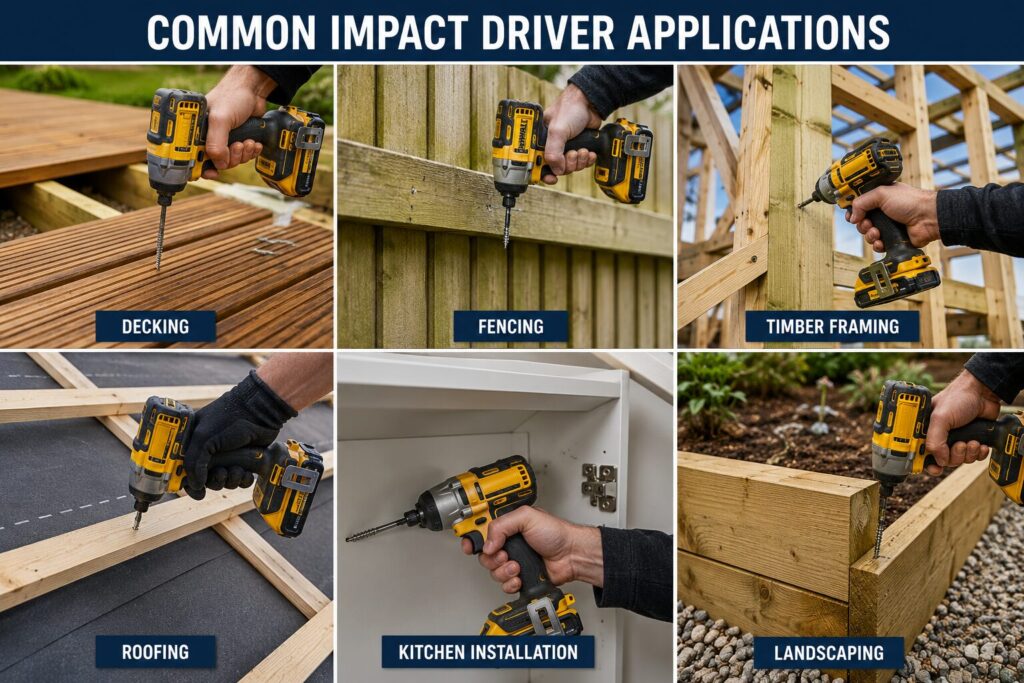
Impact drivers are designed for jobs that require high torque and repetitive fastening. If you’re constantly driving screws into timber or assembling large structures, an impact driver will usually outperform a standard drill driver.
Some of the most common applications include:
Timber Framing
Structural timber screws can be difficult to drive using a drill driver, particularly when working with treated timber or CLS. An impact driver makes the job considerably easier.
Decking
Decking projects often involve driving hundreds of screws in a single day. An impact driver speeds up installation while reducing user fatigue.
Fencing
Whether you’re fixing fence panels, rails or gravel boards, the additional torque helps drive long exterior screws with ease.
Roofing
Roofers regularly use impact drivers for fixing battens, sheet materials and structural timber because they’re lightweight, compact and powerful.
Kitchen Installation
Cabinet fitting involves driving hundreds of screws, often inside confined spaces. The shorter body of an impact driver makes access much easier than a drill.
Landscaping
Building sleepers, pergolas, raised beds and timber retaining walls all involve large structural fixings that suit an impact driver perfectly.
General Construction
From stud walls to flooring and site joinery, an impact driver is one of the most frequently used cordless tools on site.
Is An Impact Driver Right For The Job?
| Job | Drill Driver | Impact Driver |
|---|---|---|
| Decking | ⭐⭐ | ⭐⭐⭐⭐⭐ |
| Timber Framing | ⭐⭐ | ⭐⭐⭐⭐⭐ |
| Cabinetry | ⭐⭐⭐⭐⭐ | ⭐⭐⭐ |
| Pilot Holes | ⭐⭐⭐⭐⭐ | ⭐⭐ |
| Coach Screws | ⭐ | ⭐⭐⭐⭐⭐ |
Impact Driver vs Drill Driver
Although they look similar, these tools are designed to do different jobs.
A drill driver provides smooth rotational power and precise clutch settings, making it ideal for drilling holes and light screwdriving.
An impact driver focuses almost entirely on driving fixings quickly and efficiently.
| Feature | Impact Driver | Drill Driver |
|---|---|---|
| Main purpose | Driving screws & fixings | Drilling holes & driving screws |
| Torque | Very High | Medium |
| Chuck | ¼” Hex | 13mm Three-Jaw Chuck |
| Best for | Long screws & structural fixings | Wood, metal & general drilling |
| Precision | Medium | High |
| Drilling | Limited | Excellent |
If you’re only buying one cordless tool, a combi drill is normally the better all-round choice.
However, if you already own a drill, an impact driver is probably the next tool you should add to your collection.
Impact Driver vs Combi Drill
A combi drill combines three functions in one tool:
- Drilling
- Screwdriving
- Hammer drilling into masonry
An impact driver only performs one of these jobs, but it performs it exceptionally well.
The combi drill remains the most versatile cordless power tool available, making it ideal for DIY users and anyone wanting a single tool for multiple jobs.
The impact driver becomes the better choice once screwdriving becomes the main task.
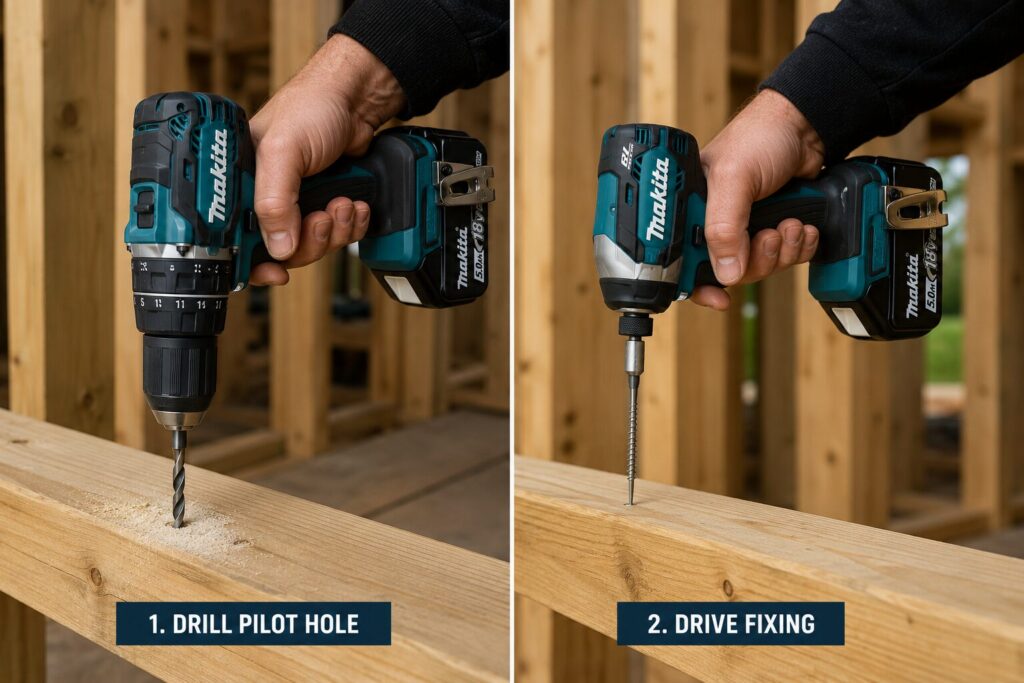
Many tradespeople carry both tools because it eliminates the need to constantly swap between drill bits and screwdriver bits.
One tool drills the pilot hole.
The other immediately drives the fixing.
This simple workflow saves a surprising amount of time over the course of a day.
Impact Driver vs Impact Wrench
These tools share similar technology but are built for completely different applications.
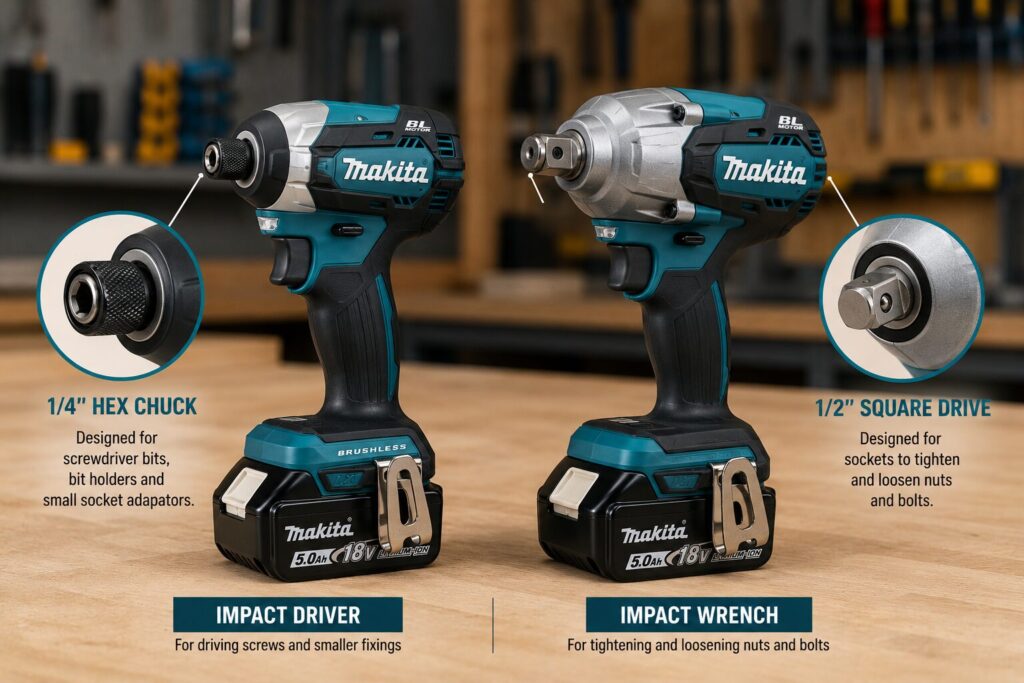
An impact driver uses ¼” hex bits and is designed for screws and smaller fixings.
An impact wrench uses a square drive anvil for sockets and is intended for tightening and loosening nuts and bolts.
| Feature | Impact Driver | Impact Wrench |
|---|---|---|
| Drive Type | ¼” Hex | ½”, ⅜” or ¾” Square Drive |
| Main Use | Screws & timber fixings | Nuts & bolts |
| Size | Compact | Larger |
| Common Users | Carpenters, builders, joiners | Mechanics, steelworkers, tyre fitters |
If you’re working with timber, buy an impact driver.
If you’re removing wheel nuts or tightening large bolts, you’ll need an impact wrench.
Shop Related Categories
How Does An Impact Driver Work?
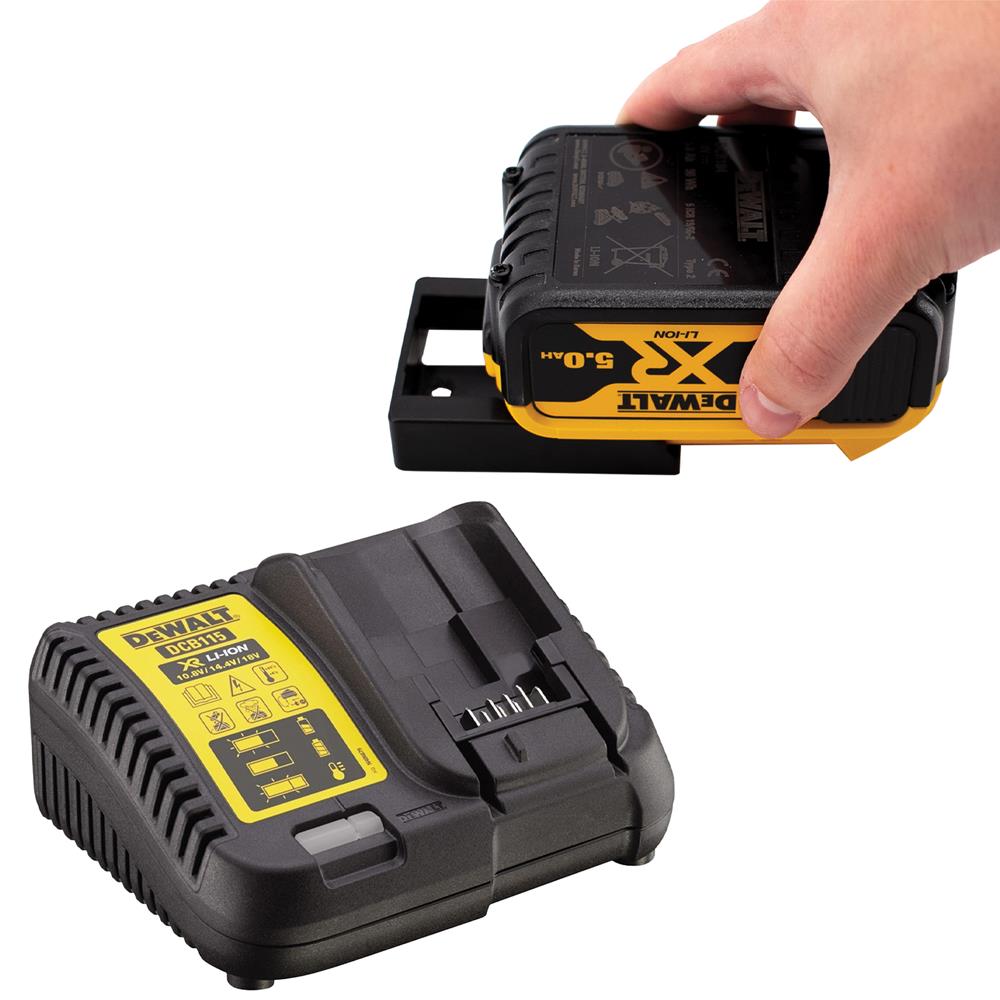
An impact driver starts by rotating like a normal drill.
As resistance increases, an internal hammer-and-anvil mechanism automatically engages.
Rather than pushing forwards like a hammer drill, the mechanism delivers rapid rotational impacts around the axis of the bit.
These impacts happen thousands of times per minute and generate significantly more torque than a conventional drill driver.
This provides several benefits:
- Less chance of the bit slipping.
- Reduced wrist strain.
- More torque.
- Faster driving speeds.
- Better performance with long screws.
- Less stalling.
This is why impact drivers can drive large structural screws that would often overwhelm a standard drill driver.
Can An Impact Driver Drill Holes?
Yes, but only within certain limits.
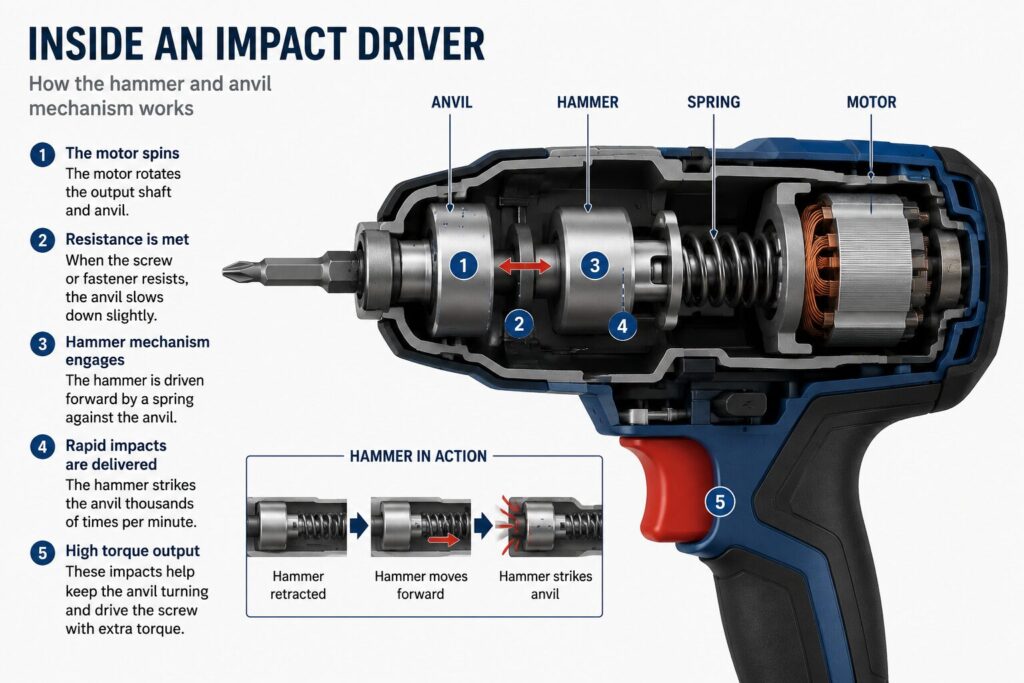
Impact drivers accept hex-shank drill bits, allowing them to drill holes in timber, metal and some plastics.
However, they aren’t designed to replace a drill driver.
Because impact drivers lack a conventional chuck and fine clutch control, they’re less accurate for drilling.
They also can’t accept standard round-shank drill bits without an adaptor.
For occasional pilot holes they’re perfectly adequate.
For regular drilling, a drill driver or combi drill remains the better option.
When Should You Use An Impact Driver?
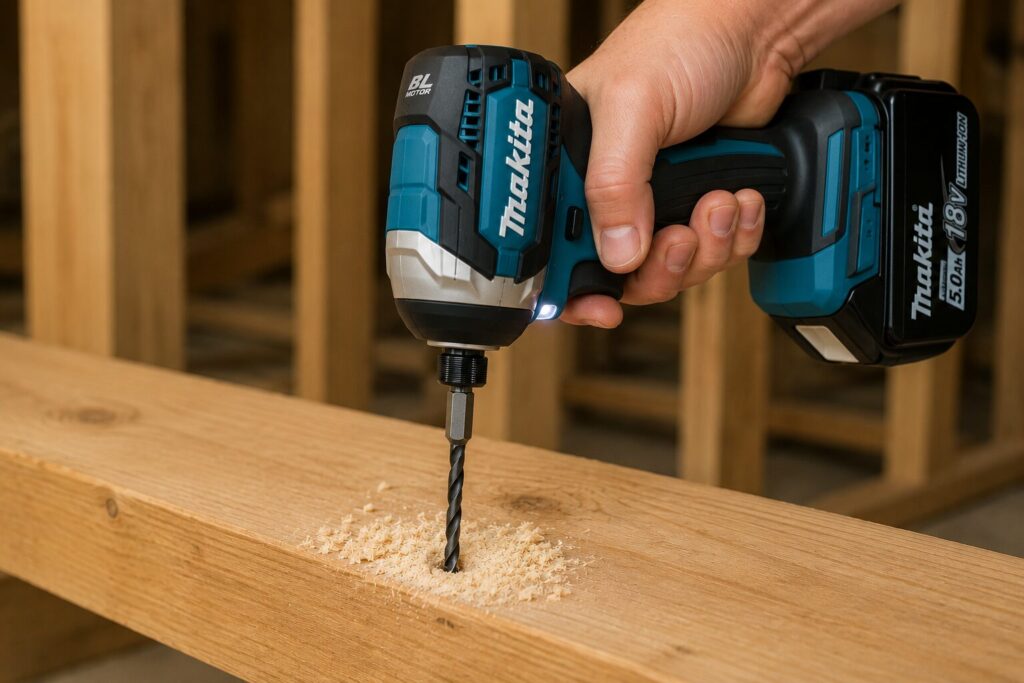
You should choose an impact driver whenever driving fixings becomes the main task.
They’re particularly useful for:
- Decking.
- Timber framing.
- Roofing.
- Landscaping.
- Sleepers.
- Pergolas.
- Timber fencing.
- Cabinet installation.
- Site carpentry.
- Flooring.
- Drylining.
- Structural timber screws.
- Coach screws.
- Repetitive screwdriving.
Because the tool produces high torque with relatively little effort from the user, it’s ideal for long working days where hundreds of screws need driving.
Many professionals use an impact driver far more often than their drill.
When Shouldn’t You Use An Impact Driver?
Despite their versatility, impact drivers aren’t suitable for every task.
Avoid using one for:
- Precision cabinet hardware.
- Small brass screws.
- Delicate furniture.
- Electrical faceplates.
- Fine woodworking.
- Masonry drilling.
- Large hole saws.
- Core drilling.
The additional torque can easily overdrive smaller screws or damage delicate materials.
For those jobs, a drill driver or cordless screwdriver offers much greater control.
What Size Impact Driver Do I Need?
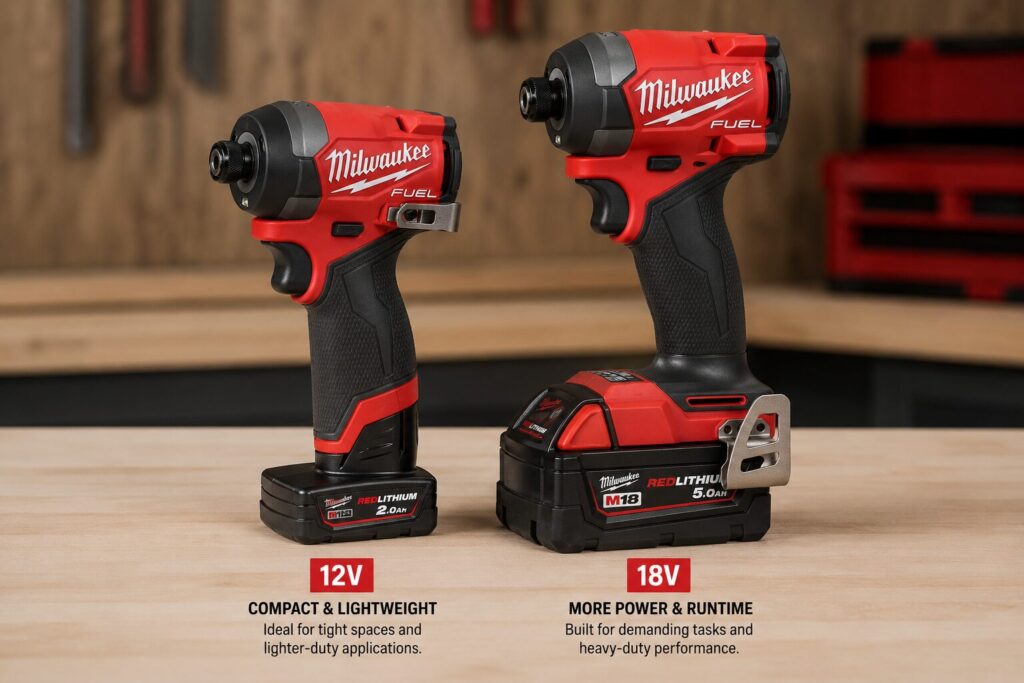
For most people, the choice comes down to battery platform rather than physical size.
12V Impact Drivers
Ideal for:
- Kitchen fitters
- Electricians
- Cabinet makers
- Light DIY
Lightweight and compact but with less overall power.
18V Impact Drivers
Ideal for:
- DIY
- Carpentry
- Construction
- Landscaping
- Roofing
Offers the best balance between power, runtime and tool selection.
High Output Platforms
Designed for professionals who regularly tackle demanding structural work and require maximum torque throughout the day.
For most users, an 18V brushless impact driver is the best all-round investment.
| User | Recommended Tool |
|---|---|
| DIY | Compact 18V |
| Carpenter | Brushless 18V |
| Kitchen Fitter | 12V |
| Landscaper | High Torque 18V |
| Roofer | Brushless 18V |
Recommended Screw Sizes
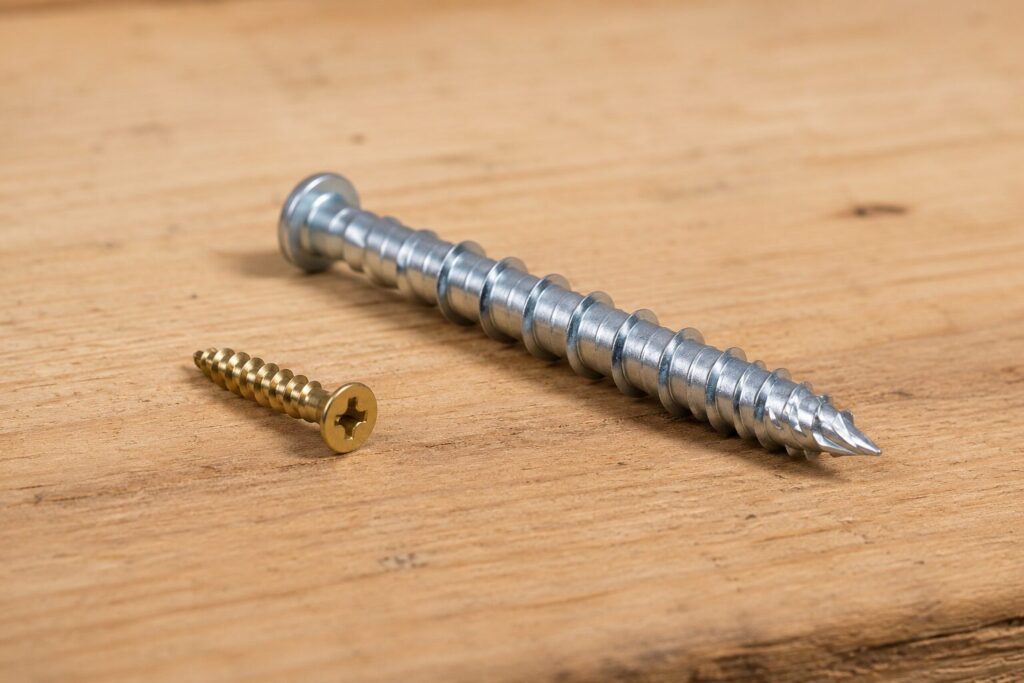
While there are no strict rules, screw length is a good indicator of whether a drill driver or an impact driver is the better choice. Smaller screws are usually driven comfortably with a drill driver, while longer screws require more torque and are much easier to drive with an impact driver. Structural timber screws almost always benefit from the extra power an impact driver provides.
General Screw Length Guide
| Screw Length | Recommended Tool |
|---|---|
| Under 40mm | Drill Driver |
| 40-80mm | Either |
| 80mm+ | Impact Driver |
| Structural Screws | Impact Driver |
Features To Look For
When comparing impact drivers, several features are worth paying attention to.
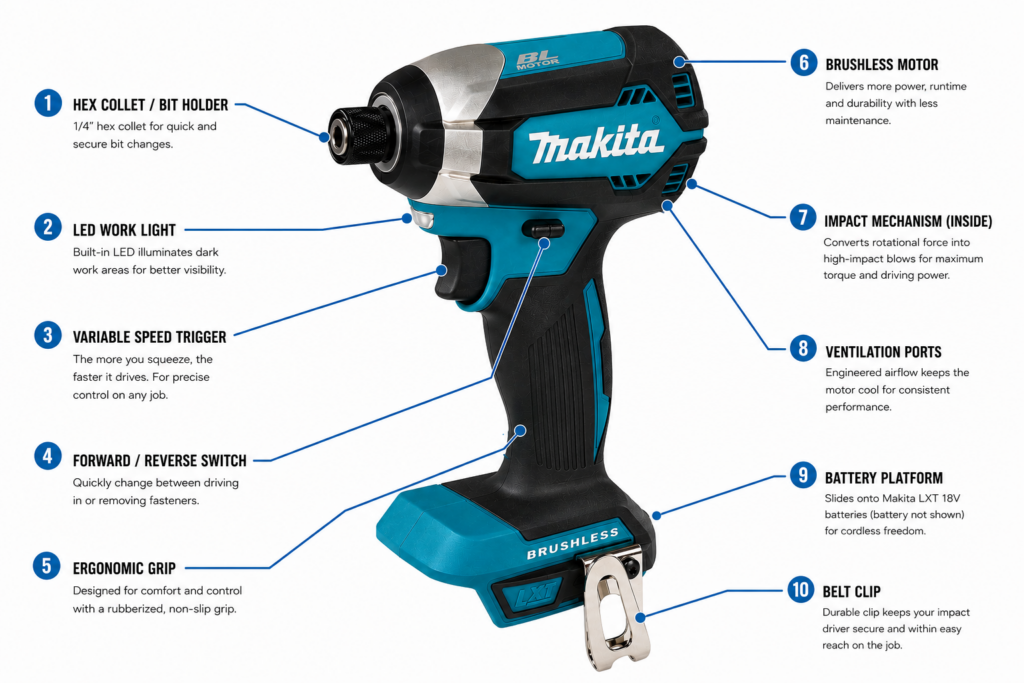
Brushless Motor
Runs cooler, delivers more power and generally offers longer runtime.
Variable Speed Trigger
Allows greater control when starting screws.
Multiple Speed Modes
Useful when switching between delicate fixings and structural screws.
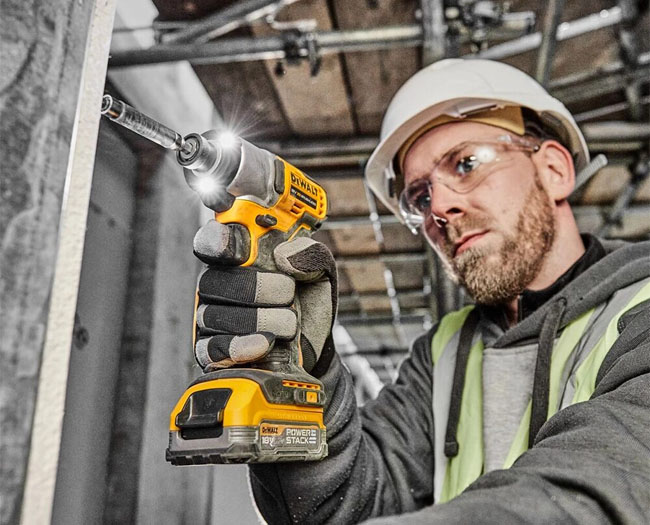
LED Work Light
Makes working inside cupboards, lofts and roof spaces much easier.
Compact Head Length
Improves access in confined spaces.
Belt Hook
Ideal for ladder work and site use.
Battery Platform
Choosing a tool that shares batteries with your existing cordless tools can save a significant amount of money.
Essential Accessories
An impact driver performs best when paired with the correct accessories.
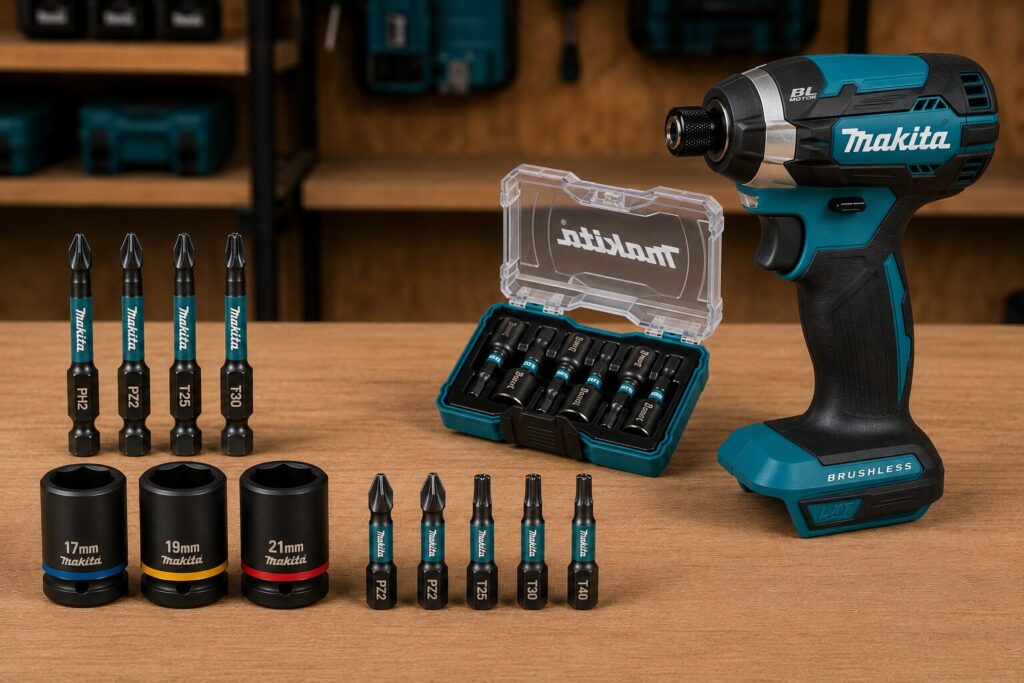
Recommended accessories include:
- Impact-rated screwdriver bits
- Magnetic bit holders
- Nut setters
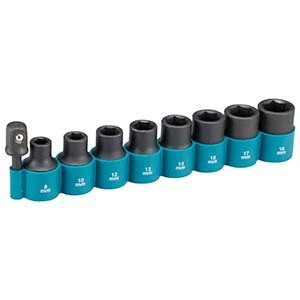
- Socket adaptors
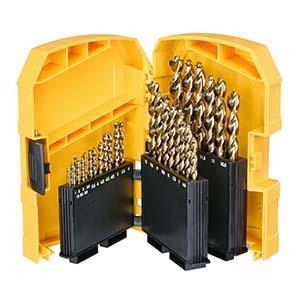
- Hex-shank drill bits
- Structural screws
- Torx bits
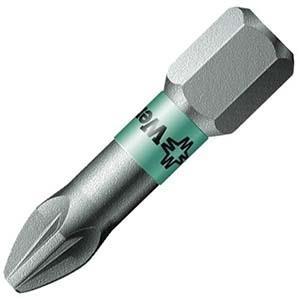
- PZ2 bits
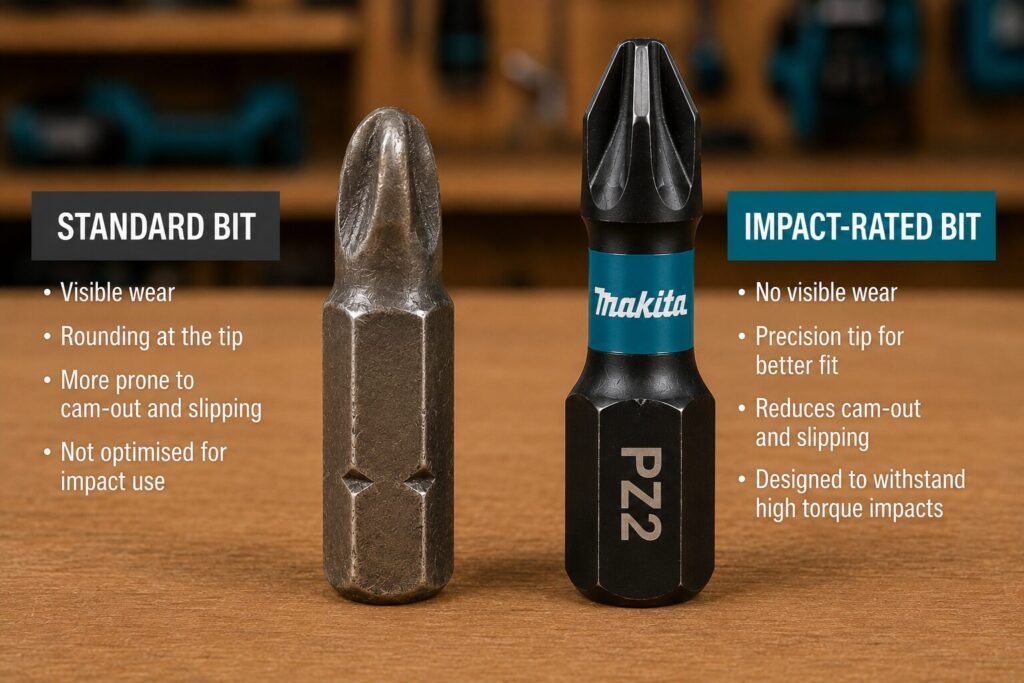
Avoid using standard screwdriver bits whenever possible, as they wear out much faster under repeated impacts.
Common Impact Driver Mistakes
Even experienced users occasionally make these mistakes.
- Using standard screwdriver bits.
- Starting screws at full speed.
- Using the wrong bit size.
- Overdriving screws.
- Choosing an impact driver instead of a drill for precision work.
- Forgetting pilot holes in hardwood.
Avoiding these simple mistakes will improve both the quality of your work and the lifespan of your accessories.
Frequently Asked Questions
Can an impact driver drill holes?
Yes, using hex-shank drill bits, although a drill driver is better suited to regular drilling.
Do I need an impact driver if I already own a drill?
If you regularly drive long screws or structural fixings, absolutely.
What is the difference between an impact driver and a drill?
A drill driver rotates continuously and is designed for drilling holes and driving screws. An impact driver combines rotation with rapid hammering action to deliver much higher torque, making it ideal for driving long screws, structural fixings and stubborn fasteners.
Can an impact driver remove bolts?
Yes, with suitable socket adaptors, although heavy-duty bolts are better tackled with an impact wrench.
Can an impact driver damage screws?
It can if used incorrectly. The high torque can strip screw heads or overdrive fixings, so use the correct speed setting, maintain firm pressure and choose the right bit for the job.
Can I use normal screwdriver bits?
You can, but impact-rated bits are specifically designed to withstand repeated impacts and are generally the better choice for impact drivers.
Do I need impact-rated bits?
Yes. Impact-rated bits are designed to withstand the repeated hammering action of an impact driver and are far less likely to twist, wear or snap than standard screwdriver bits.
What size screws can an impact driver drive?
Impact drivers are ideal for screws over 80mm long and structural timber screws. They can also drive smaller screws, although a drill driver often provides better control for screws under 40mm.
Can beginners use an impact driver?
Absolutely. Modern impact drivers feature variable speed triggers and multiple power modes, making them easy to control. Starting on a lower setting helps build confidence.
Is an impact driver worth it for DIY?
If you build decking, sheds, fencing or undertake regular home improvement projects, it can save a huge amount of time and effort.
Final Thoughts
An impact driver isn’t designed to replace your drill. Instead, it complements it.
A drill driver remains the best choice for making accurate holes, while an impact driver excels at driving screws, coach screws and structural fixings with speed and ease.
For tradespeople, an impact driver is often one of the most-used cordless tools on site. For DIYers, it can make larger projects feel quicker, easier and far less tiring.
If you’re already invested in a cordless battery platform, adding an impact driver is one of the best upgrades you can make to your toolkit.